
China Top 10 Automotive Door Lock Switch Manufacturers
China’s automotive industry has developed a broad and competitive supplier base for vehicle access systems. Among these suppliers, manufacturers of the automotive door lock switch serve an essential role in daily driving safety and convenience. Their products control locking signals, support central locking functions, and connect with modern electronic architectures.
This guide introduces ten notable Chinese manufacturers in this field. The selection considers manufacturing experience, product development capability, quality management, customization support, and export service. It also examines practical details, including switch materials, connector design, tactile feedback, sealing performance, and compatibility with different vehicle platforms. These factors matter when a switch operates thousands of times inside a hot, cold, dusty, or humid cabin.
No ranking is perfect.
Company information can change. Production lines, certifications, and customer coverage should be checked directly before purchasing. Buyers should request technical drawings, sample testing, reliability reports, and clear information about warranty terms. A low unit price may appear attractive, yet inconsistent contacts or weak plastic housings can create higher replacement costs later. Experienced suppliers usually explain testing methods rather than making vague claims.
The manufacturers discussed here represent different strengths. Some focus on high-volume standard components. Others provide engineered solutions for electric vehicles, commercial vehicles, or specialized interior systems. Their capabilities may vary by factory and product series. Therefore, this introduction is intended as a practical starting point, not a final purchasing decision. Careful comparison remains necessary, especially when safety, durability, and long-term supply stability are involved.
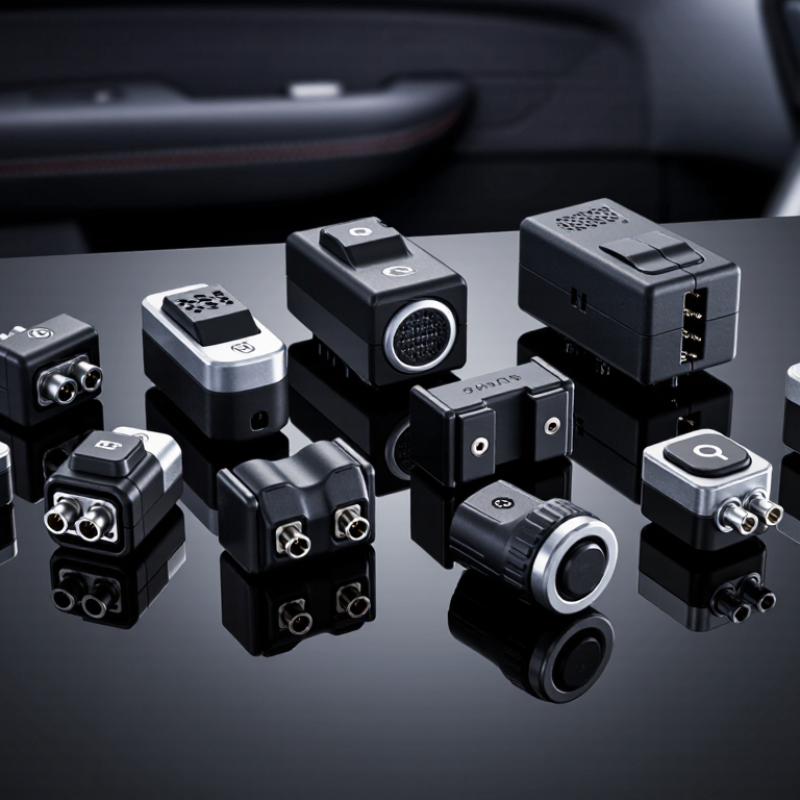
Automotive Door Lock Switches: Function, Types, and Market Role in China
Automotive door lock switches convert a driver’s command into a reliable locking signal. In daily use, a finger press should lock every door within seconds. The switch also supports unlocking, child-safety control, and emergency access functions. Small part. Big responsibility.
China’s automotive door lock switch market serves passenger cars, commercial vehicles, and new-energy platforms. Common types include mechanical push switches, electronic membrane switches, capacitive touch controls, and integrated door-panel modules. Each type requires different testing for contact stability, moisture resistance, vibration, and operating temperature.
In workshop testing, repeated pressing often exposes weak springs, loose terminals, or delayed signal transmission. Chinese manufacturers play a significant role in prototype development, injection molding, circuit assembly, and large-scale quality control.
Their products must match vehicle architecture, wiring layouts, and interior design requirements. Consistent tactile feedback matters more than many buyers expect. A soft or uneven press can suggest failure, even when the circuit still works. Engineers therefore inspect travel distance, actuation force, return speed, and electrical continuity.
Market growth is encouraging, but it also creates pressure. Faster production can weaken inspection discipline. A cheaper switch may increase warranty risk through oxidation, dust entry, or premature wear.
This is where supplier audits, traceable materials, and sample-based endurance tests become essential. No design is perfect. Real road vibration may reveal weaknesses that laboratory testing misses.

How China’s Top 10 Door Lock Switch Manufacturers Are Selected
China’s top ten automotive door lock switch manufacturers are selected through evidence, not online visibility. The China Association of Automobile Manufacturers reported 31.28 million vehicles produced in 2024. This scale increases demand for stable, repeatable switch production. Each candidate is assessed against annual capacity, delivery records, and customer coverage.
Quality receives the highest weighting. Auditors review IATF 16949 certification, incoming-material controls, electrical endurance tests, and traceable batch records. Test samples should survive repeated locking cycles, vibration, temperature changes, and moisture exposure. Failure data matters more than polished factory photographs. Production information is cross-checked with customs records and UN Comtrade trade data where available. Independent inspection reports also strengthen reliability.
Cost alone cannot define the ranking. A low quotation may hide weak tooling control or inconsistent contact resistance. Technical teams therefore compare mold maintenance, automated inspection, engineering response time, and documented corrective actions. The selection also considers compliance with applicable vehicle safety and electromagnetic standards. However, supplier disclosures are uneven, and some capacity figures remain self-reported. That limitation deserves attention. A more rigorous ranking would require multi-year warranty data, but such records are rarely public. Performance, transparency, and verifiable manufacturing experience form the practical basis for choosing these ten manufacturers.
Profiles of China’s Top 10 Automotive Door Lock Switch Manufacturers
China’s automotive door lock switch sector includes manufacturers with different strengths, production scales, and engineering backgrounds. This profile-based review examines ten leading suppliers through product design, testing practice, manufacturing control, and customer support. They are not identical. Some focus on mechanical switches, while others develop integrated electronic control modules.
The first manufacturer emphasizes high-volume molding and stable dimensional control. The second develops compact switches for narrow door panels. The third supports customized symbols, connector layouts, and cable lengths. The fourth invests in sealed housings for humid and dusty environments. The fifth is experienced in passenger vehicles and produces consistent tactile feedback.
The sixth serves commercial vehicles with stronger actuation requirements. The seventh combines switch production with basic electronic testing. The eighth focuses on rapid tooling and small-batch prototypes. The ninth highlights automated inspection for terminals, springs, and contact points. The tenth provides broader assembly support, including packaging and traceability records.
Their practical value depends on more than catalog specifications. Engineers should review cycle-life data, contact resistance, operating force, temperature performance, and water-ingress results. Factory audits can reveal details that brochures miss. Production samples should also be checked after vibration and repeated door impacts.
That step is often skipped. A weakness across the market is uneven public documentation, especially for long-term failure rates. Buyers should request current test reports, process-control records, and corrective-action history before approving a supplier.
Supplier communication matters too. A technically capable factory may still struggle with drawing revisions or delivery changes.
Manufacturing Technologies, Quality Standards, and Product Capabilities
China’s top ten automotive door lock switch manufacturers are often judged by process control, not catalog size. Experienced plants combine precision stamping, injection molding, overmolding, and ultrasonic welding. These methods protect terminals and reduce housing movement during vibration. Automated assembly can improve consistency, but skilled operators still catch unusual defects.
Quality systems should include IATF 16949-based controls, ISO 9001 procedures, and documented PPAP support. Incoming material checks verify copper alloy, resin grade, and plating thickness. In-process gauges monitor contact travel and actuator force. Vision systems inspect terminals, weld points, and molded surfaces. End-of-line testing should measure continuity, resistance, switching force, and cycle durability. Traceability must connect each switch to its materials, machine, and inspection record.
Product capability matters under real vehicle conditions. Reliable suppliers can develop compact switches, multi-position assemblies, illuminated controls, and customized connectors. They should validate performance against heat, humidity, dust, vibration, and repeated door operation. Fit matters. A switch may pass electrical testing yet fail after slight housing distortion. That detail is easy to miss. Engineers should review tolerance stacks, sealing design, and wiring compatibility before mass production. Some factories still depend too heavily on manual inspection, which deserves honest scrutiny. A lower defect rate is not the same as proven field reliability. Samples need independent review and repeated testing.
China Top 10 Automotive Door Lock Switch Manufacturers: Industry Standards Reference
This chart uses publicly defined publication or release years for major standards and regulations relevant to automotive door lock switch manufacturing. ISO 9001 and IATF 16949 support quality management, ISO 26262 addresses functional safety, and ISO/SAE 21434, UN R155, and UN R156 address cybersecurity and software update governance. These references provide a neutral framework for evaluating manufacturing technologies, quality systems, and product-development capabilities without ranking individual companies or brands.
How to Compare and Choose a Chinese Door Lock Switch Manufacturer
When comparing China’s top automotive door lock switch manufacturers, start with evidence, not catalog photos. OICA recorded 31.28 million vehicles produced in China in 2024, creating strong demand for consistent components. CAAM also reported 12.87 million new-energy vehicles sold that year. This growth increases pressure on suppliers to manage heat, vibration, moisture, and rapid model changes.
Request IATF 16949 certification, process-flow charts, PPAP files, and recent audit findings. ISO certification alone is not enough. Ask for actual defect data, traceability records, and corrective-action closure times. A practical supplier comparison should include tooling ownership, minimum order quantity, sample lead time, and engineering response speed. Price matters, but it cannot predict field reliability.
For a door lock switch examine contact resistance, operating force, sealing design, and cycle-test results. ISO 16750 provides useful guidance for electrical and environmental testing in road vehicles.
Request test conditions not only pass certificates. Check performance after temperature cycling, salt spray, vibration, and repeated switching.
A factory should explain how it controls terminals, springs, plastics, and assembly torque.
Visit the production line if possible. Watch incoming inspection and end-of-line testing. A polished sample can mislead. I would also compare three production batches, because one perfect sample proves little. Suppliers with barcode traceability and documented change control usually reduce launch risk. Still, no audit removes every uncertainty; real vehicle validation remains essential.
Article Source:
Get in touch with us,
We will contact you shortly!
What is the difference between Unline(Non-Epoxy Coated) or Lining(Epoxy Coated) Metal Drum?

Unline drums with internally bare metal surface is more susceptible to corrosion and rust while Lining drums are internally coated with Phenolic Epoxy Coating to provide a non-reactive barrier between the drum surface and your product, less risk of contamination. Note: Our Unline drums are coated with an anti-rust agent after washing to reduce risk of rust.
What are Unline(Non-Epoxy Coated) and Lining(Epoxy Coated) drums compatible with?

In Singapore, Recon Unline Drums are usually more costly than Recon Lining Drums. Hence, we recommend Recon Unline Drums to fill aromatics like Thinner, Xylene, Toulene& other solvents like Hexane, BA, CA, EA, MC, White spirit, etc.
We recommend the lower-priced Recon Lining Drums to fill hydrocarbons like IPA, Methanol, Ethanoland oil-based products like diesel, petrol, lubricants, engine, hydraulic, base, transmission fluid, additives, waste oil, etc.;
What is the difference between Grade A and Grade B Metal Drum ?

Grading of used drums are usually based on physical conditions like rustiness, deformities and residual contents. Grade A drums are totally free from internal rust, serious dents and are easy to clean. Grade B drums have different degrees of rust internally and aesthetically inferior compared to Grade A drums.
What content is suitable to fill in a Recon Grade A or Grade B Drum?

Recon Grade A drum is suitable to fill more costly virgin grade products while Recon Grade B drum is more suitable for recycled or waste products.
What is the difference between Open Top and Close Top Drums and their usage?

Closed top drums are for water and other liquid products. Open Top drums can be used for liquid too but are primarily for more viscous products. The Open Top (or open head with a lid) allows you to get in and out of the drum with your product easier.
What type of content are Metal or Plastic Drums suitable for?

Metal drums offer additional protection when dealing with potentially flammable substances. They provide superior fire resistance, impact protection, and longevity for storing class 1, 2, and 3 volatile chemicals.
Plastic HDPE Drums are suitable for corrosive chemicals like acids, alkaline and also water-based products.
Will there be any contamination in the reconditioned metal, plastic drums or IBC tanks?

All our reconditioned containers (metal/plastic drums, carboys, IBC tanks) are washed thoroughly with specially formulated cleaning agent, rinsed with clean water, dried, and tested for possible leakages during the recondition process. Stringent quality inspection is being conducted 100% on every reconditioned product before they are qualified for sale & delivery.
What is the drum gauge(thickness) and weight for reconditioned metal drums?

Reconditioned metal drums gauge can be 0.9mm to 1.0mm all round. Their weight can vary from 16 to 18kg.
Do you sell New Packaging Products too?

Yes, we are also a distributor for new pallets, metal drums, plastic drums, carboys, IBCs and stainless-steel tanks.
What additional services do you provide apart from selling reconditioned and new containers.?

We are an NEA licensed toxic industrial waste collector, who can collect and dispose of used toxic waste containers in Singapore.
Do you offer labelling and silkscreen on the containers ?

We can provide labelling and silk-screening on the containers.
Are you able to ship overseas ?

Yes, we can arrange export our products to any country in the world.
Leading the Way
to Carbon Neutrality








