
China Top 10 Acrylic Impact Modifier Manufacturers

An Acrylic Impact Modifier can make brittle plastic products more resistant to cracking during impact, handling, or use. For manufacturers, choosing a supplier involves more than comparing a price per ton. Product consistency, dispersion, processing behavior, and technical support can all affect production results. A minor variation in pellet appearance may be worth checking, but it cannot replace controlled testing.

This guide to China’s top 10 Acrylic Impact Modifier manufacturers offers a practical starting point for supplier research. It considers factors buyers can investigate, including product range, stated applications, quality documentation, customization options, and communication. Details matter. A supplier’s published specifications should be reviewed alongside sample trials under the buyer’s actual processing conditions. Ask how the modifier performs at the intended dosage, whether it affects surface finish, and what support is available if results vary between batches. These questions help turn a shortlist into a more informed decision.

Rankings are not universal. A company that suits a large-volume processor may not fit a smaller buyer seeking flexible order quantities or close technical guidance. Public product information also has limits, and claims should be verified directly with manufacturers. Even a careful comparison has gaps. The profiles that follow are designed to help readers identify candidates, compare relevant capabilities, and prepare better questions before requesting quotations or samples.
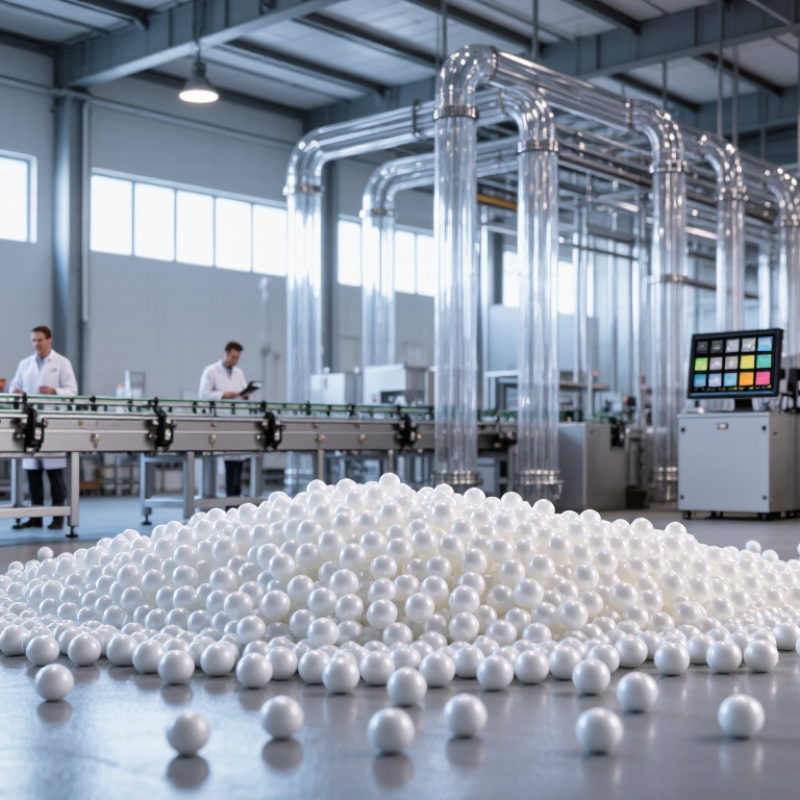
China Top 10 Acrylic Impact Modifier Manufacturers

What Acrylic Impact Modifiers Are and How They Work

Acrylic impact modifiers are usually core-shell particles blended into a plastic, often rigid PVC. Their soft acrylic-rich core deforms when struck, absorbing energy and helping slow cracks. The harder outer shell helps the particles disperse through the resin. In a clear sheet or window profile, that can mean less brittle fracture from a dropped tool or a cold-weather impact. Small particles matter. Performance still depends on particle size, dispersion, loading, and processing temperature; a poorly mixed compound can lose much of the benefit.

The scale of plastics use helps explain why this modification matters.

PlasticsEurope’s Plastics – the Fast Facts 2023 reports 400.3 million tonnes of global plastics production in 2022, excluding fibers. That figure covers many polymers, not impact modifiers, but it shows how small formulation choices can affect large material streams.

In practice, impact resistance should be checked on the finished part, not inferred from a resin datasheet alone. ASTM D256 provides a standardized notched Izod impact test, while temperature and specimen preparation can change results. Not magic, though. A modifier may improve toughness while affecting stiffness, melt behavior, or cost, so formulators need to test the actual application.


Key Applications Across Plastics and Building Materials

Acrylic impact modifiers help brittle plastics absorb sudden force without shattering. In rigid PVC, they are used in window profiles, pipes, siding, and decorative building panels. A profile may face a cold installation morning, a dropped tool, or repeated handling. Better impact resistance can reduce cracking, but the right formulation still depends on temperature, processing conditions, and the finished product’s design.

The OECD’s Global Plastics Outlook (2022) estimates that building and construction accounted for about 17% of global plastics use in 2019. That scale makes durable materials important, especially for products expected to serve outdoors for years. Acrylic modifiers can improve impact performance and weatherability in selected PVC applications. They are also used in some other rigid plastics, where manufacturers balance toughness with clarity, stiffness, cost, and processing speed. No modifier solves every failure mode. That is easy to overlook.

Tips: Match testing to the real use case. Check impact performance after weathering, not only on fresh samples. For profiles or panels, test corners and cut edges too; these details can reveal weaknesses that a simple flat specimen misses.

How China’s Acrylic Impact Modifier Manufacturers Are Evaluated

Evaluating China’s acrylic impact modifier manufacturers starts with the material, not the sales brochure. Buyers should request technical data for the intended PVC formulation and compare impact strength, melt flow, and processing stability under consistent conditions. A notched impact test can reveal how a modifier performs after blending and molding. Ask for test methods, specimen details, and repeat results; a single impressive figure is not enough. Small differences matter. Pellet size, moisture control, and batch variation can affect feeding and finished-part quality.

Factory capability deserves equal attention. Review incoming-material checks, production records, and batch traceability, then ask how off-specification lots are handled. A plant visit or independent audit may help verify what documents cannot show. Technical teams should be able to discuss dosage, mixing sequence, and troubleshooting without promising identical results across every machine. Samples are useful, but they should be tested on the buyer’s own equipment. That takes time. It also exposes a weakness in many comparisons: laboratory results may not predict a full production run. Evaluation should therefore include communication, lead-time consistency, and clear change notices, alongside performance data. No scorecard is perfect; weighting cost too heavily can hide costly processing problems.

Profiles of Ten Leading Manufacturers in China

China’s acrylic impact modifier sector includes producers with different strengths, rather than one uniform manufacturing model. These ten profiles describe common capabilities buyers may encounter; they are not an independently audited ranking.

Profile 1: A large-scale producer may emphasize steady output and routine batch testing. | Profile 2: A specialty compounder may adjust particle size for specific processing needs.

Profile 3: An export-focused plant may maintain detailed shipment and quality records. | Profile 4: A research-led manufacturer may test impact strength across several PVC formulations.

Profile 5: A regional supplier may offer shorter delivery routes and responsive technical support.

Profile 6: A smaller facility may handle customized orders, though capacity can vary. | Profile 7: A producer with modern extrusion lines may focus on consistent dispersion.

Profile 8: A materials-focused company may provide application guidance alongside product data. | Profile 9: A vertically integrated operation may manage more steps in-house.

Profile 10: A newer manufacturer may compete through flexible development and close customer communication.

Details matter.

Buyers should compare current test methods, production consistency, and technical documentation, not just advertised capacity. A specification sheet cannot answer every question; trials under real processing conditions remain useful. Some suppliers’ public information is limited, so independent verification is sensible.

How to Compare Manufacturers and Select a Supplier

When comparing acrylic impact modifier manufacturers in China, request matched samples, not polished headline figures. Ask for dosage, particle-size range, recommended processing window, and batch-to-batch test records. Compare impact strength using the same method, such as ASTM D256 or ISO 179, and keep specimen thickness and conditioning consistent. Small details matter. A lab result can still mislead if the test setup differs from your production line.

Plastics Europe’s Plastics—The Fast Facts 2024 reports 413.8 million tonnes of global plastics production in 2023. That scale makes supply continuity worth checking alongside performance: ask about monthly capacity, typical lead times, safety stock, and change-notification procedures. Request recent certificates of analysis and trial material from more than one production lot. Then run a plant trial on your own equipment, checking impact, surface appearance, fusion, and cycle stability. Not perfect, but useful. Price per kilogram alone can hide higher dosage or scrap costs. Compare total cost at the formulation and output rate you actually use. Ask suppliers to explain any gaps between their laboratory data and your trial results.

China Top 10 Acrylic Impact Modifier Manufacturers - How to Compare Manufacturers and Select a Supplier

A practical, evidence-based comparison matrix. The rows are evaluation criteria, not a ranked list of named manufacturers.

No. Comparison dimension Evidence to request How to compare Score
(1–5)
1 Product fit and chemistry Product technical data sheet identifying the modifier type (for example, acrylic-based or MBS), recommended polymer matrix, and intended application. Check that the grade is designed for your resin, processing method, and end-use requirements; do not compare products by name alone. —
2 Impact performance Test reports stating the formulation, modifier loading, specimen preparation, conditioning, test method, and results. Relevant methods may include ISO 179 or ISO 180, or ASTM D256, where appropriate to the material and test setup. Compare results only when the specimen, formulation, conditioning, and test method are comparable. Validate with trials using your own formulation. —
3 Processing and flow Recommended processing conditions and, if applicable, melt mass-flow rate data with test temperature, load, and method (such as ISO 1133 or ASTM D1238). Assess processing stability and throughput in your equipment. Melt-flow values are meaningful only when the test conditions and material are specified. —
4 Effect on other properties Application-relevant test results for properties such as tensile strength, flexural properties, heat performance, or appearance, with test methods and sample details. Compare the balance of impact improvement and any changes to the properties that matter to your finished product. —
5 Quality control and lot consistency A sample certificate of analysis (CoA), the lot-release specification, and an explanation of how production batches are identified and tested. Check that specifications are measurable and that CoA results can be traced to the supplied lot. Confirm the supplier's process for handling out-of-specification material. —
6 Technical support and sampling Sample availability, recommended trial dosage, application guidance, and a defined contact or process for troubleshooting. Evaluate support during laboratory and production trials, including how clearly the supplier responds to technical questions. —
7 Production capacity and lead time Written confirmation of available capacity, normal and peak-season lead times, minimum order quantity, and order-planning requirements. Verify the figures against your forecast and delivery schedule. Distinguish confirmed capacity from general estimates. —
8 Packaging, storage, and logistics Packaging options, net weight, storage and shelf-life guidance, shipping terms, and documentation available for export shipments. Check packaging suitability for transport and storage, and confirm that logistics arrangements meet your destination and handling requirements. —
9 Compliance and documentation Safety data sheet, product specification, and applicable regulatory declarations for the destination market and intended use. Request supporting evidence for any compliance claims. Confirm requirements for your market and application. A general declaration should not be treated as proof of compliance for every end use. —
10 Total cost and commercial terms Written quotation covering price basis, order quantity, payment terms, delivery terms, price validity, and any additional charges. Compare landed cost and supply terms, then consider cost alongside verified performance, quality consistency, and service. —

Scoring guide: Score each criterion from 1 (does not meet requirements) to 5 (strongly meets requirements), based on documented evidence and your own trials. Record the same information for each candidate supplier before making a selection.

Get in touch with us,
We will contact you shortly!

Get in touch with us by filling up the enquiry form. We will contact you shortly!

    What is the difference between Unline(Non-Epoxy Coated) or Lining(Epoxy Coated) Metal Drum?

    What are Unline(Non-Epoxy Coated) and Lining(Epoxy Coated) drums compatible with?

    What is the difference between Grade A and Grade B Metal Drum ?

    What content is suitable to fill in a Recon Grade A or Grade B Drum?

    What is the difference between Open Top and Close Top Drums and their usage?

    What type of content are Metal or Plastic Drums suitable for?

    Will there be any contamination in the reconditioned metal, plastic drums or IBC tanks?

    What is the drum gauge(thickness) and weight for reconditioned metal drums?

    Do you sell New Packaging Products too?

    What additional services do you provide apart from selling reconditioned and new containers.?

    Do you offer labelling and silkscreen on the containers ?

    Are you able to ship overseas ?

    Leading the Way
    to Carbon Neutrality

    Drumming sustainability into every aspect of our operations, we strive to create a greener and more conscious future for generations to come.
    Contact Us
    WhatsApp
    Email
    Join Our Newsletter

    Sign up for our newsletter for exclusive discounts and latest news of new launches!

      Logo Logo Logo Logo Logo
      Scroll to Top