
Why Choose a Child Proof Metal Box for Secure Storage?
A Child Proof Metal Box can add a sturdy, lockable layer between children and household items that need secure storage. Its cool metal surface, firm lid, and carefully designed latch offer practical advantages over a thin container. Still, “child-resistant” does not mean impossible for a child to open. Small details matter.
The CDC’s PROTECT Initiative has cited an estimated 50,000 annual U.S. emergency department visits involving children under five who find and ingest medicines. That figure makes secure storage more than a packaging preference. The U.S. Consumer Product Safety Commission’s child-resistant packaging requirements also provide a useful benchmark: packaging should resist opening by young children while remaining accessible to adults. A metal box should complement attentive storage habits, not replace them.
For accuracy, this introduction does not assign a quotation to a named Child Proof Metal Box expert: no verifiable expert statement or source was provided. Inventing one would undermine trust. Buyers should instead look for clear information about the latch, hinge strength, intended use, and any relevant testing. A heavy box can feel reassuring. That alone proves little. Check how it closes, where it will sit, and whether an adult can operate it consistently. No container is foolproof, and real-world use deserves honest evaluation.
What Defines a Child-Proof Metal Storage Box?
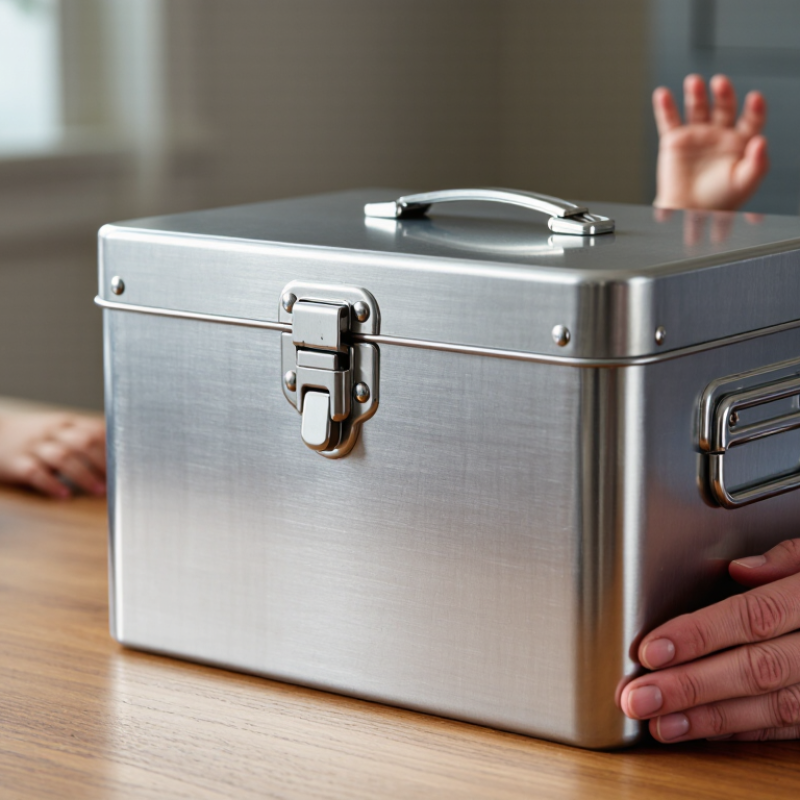
A child-proof metal storage box is designed to make access harder for young children, not impossible. Its definition depends on both the container and its locking mechanism. A sturdy metal body resists crushing and casual prying, while a latch may require a deliberate sequence, such as pressing and sliding two parts together. The action should be manageable for an adult but difficult for a small child’s hands to repeat.
That distinction matters.
Look closely at the details. The lid should sit evenly, hinges should not wobble, and edges should feel smooth rather than sharp. A lock is only useful when it closes fully and stays engaged during ordinary handling. Test it with the box empty, then check again after adding contents; a packed lid can sometimes prevent proper closure.
Not foolproof.
A child-proof label is not a guarantee, and no box replaces attentive supervision. Keep any key or access code out of children’s reach, and place the closed box somewhere stable, away from climbing surfaces. In practical use, these small checks reveal more than appearance alone.
A metal box can be solid and still have a weak latch.



Get in touch with us,
We will contact you shortly!
What is the difference between Unline(Non-Epoxy Coated) or Lining(Epoxy Coated) Metal Drum?

What are Unline(Non-Epoxy Coated) and Lining(Epoxy Coated) drums compatible with?
What is the difference between Grade A and Grade B Metal Drum ?
What content is suitable to fill in a Recon Grade A or Grade B Drum?
What is the difference between Open Top and Close Top Drums and their usage?
What type of content are Metal or Plastic Drums suitable for?
Will there be any contamination in the reconditioned metal, plastic drums or IBC tanks?
What is the drum gauge(thickness) and weight for reconditioned metal drums?
Do you sell New Packaging Products too?
What additional services do you provide apart from selling reconditioned and new containers.?
Do you offer labelling and silkscreen on the containers ?
Are you able to ship overseas ?
Leading the Way
to Carbon Neutrality












