
10 Best Steel Wire Rod Manufacturers Worldwide?
Choosing a reliable Steel Wire Rod Manufacturer requires more than comparing annual production figures. Quality begins with consistent chemistry, controlled rolling, and dependable delivery. In this guide, we examine ten influential manufacturers worldwide through practical purchasing criteria. These include tensile performance, surface condition, dimensional accuracy, certification, export experience, and customer support.
A strong supplier should provide traceable mill certificates and clear inspection records. Buyers may also review carbon content, coil weight, packaging methods, and storage protection. Small details matter. Rust marks, loose binding, or uneven coils can create problems during drawing and welding. Manufacturers serving construction, automotive, fastener, and cable industries face different technical demands. A supplier experienced with one application may not suit another.
The selection also considers production capacity, raw-material control, energy management, and the ability to meet international specifications. Independent audits and published technical data can strengthen credibility, but marketing claims still require careful verification. No ranking is perfect. Regional freight costs, currency changes, lead times, and local service can alter the final decision. That part is easy to underestimate.
Our discussion combines industry knowledge with practical evaluation experience. It focuses on evidence rather than reputation alone. Readers should confirm current certifications, available grades, and delivery terms before placing an order. The best manufacturer is not always the largest. It is the supplier that delivers stable performance when the material reaches the production line. That standard deserves close attention.
What Is Steel Wire Rod and Why Does Manufacturer Choice Matter?
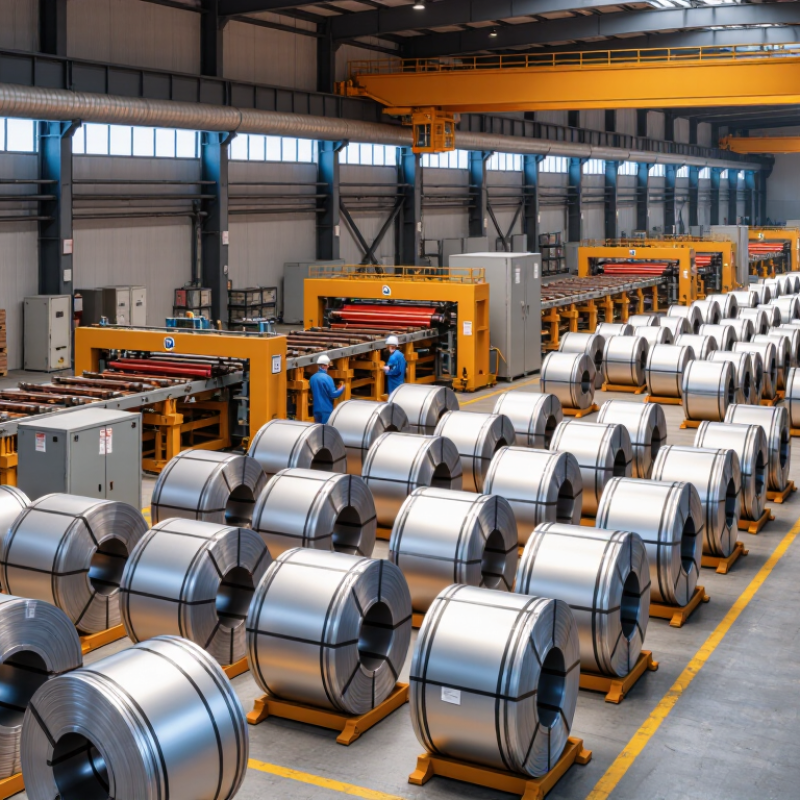
Steel wire rod is a hot-rolled, semi-finished steel product supplied in large coils. Common diameters begin near 5.5 millimeters and support drawing, welding, fastener, spring, and cable production. Its surface, chemistry, diameter consistency, and internal cleanliness directly affect later processing.
Manufacturer choice matters because wire drawing exposes small weaknesses quickly. Excessive scale can damage dies. Uneven ovality can create unstable reductions. Incorrect carbon content may produce brittle or overly soft wire. A dependable producer should provide heat numbers, mill test certificates, dimensional records, and clear traceability from billet to coil. Real quality is measurable.
Plant inspections should examine cooling control, descaling, coil handling, and sampling methods. Look closely at coil edges. Crushed turns may increase setup time and waste. Delivery reliability also matters, especially when a line consumes several coils daily. The lowest quotation is not always the lowest cost. I have seen purchasing decisions focus too heavily on tensile strength while overlooking surface defects and packaging damage. That mistake deserves reflection. Buyers should compare total processing performance, technical support, complaint response, and consistency across batches. A strong manufacturer communicates limits honestly, including grades or sizes it cannot produce reliably. This practical honesty often matters more than polished sales language.
| No. | Evaluation Dimension | Capability Expected from a Top-Tier Manufacturer | Relevant Technical Evidence or Standard | Why Manufacturer Choice Matters |
|---|---|---|---|---|
| 01 | Product Diameter Range | Regular supply of small- and medium-diameter wire rod, commonly including approximately 5.5–16 mm, with controlled dimensional tolerance. | Typical commercial wire rod sizes are covered by specifications such as ASTM A510/A510M and EN 10016 series. | Correct diameter and tolerance reduce drawing adjustments, material waste, and downstream production interruptions. |
| 02 | Steel Grade Portfolio | Availability of low-carbon, medium-carbon, high-carbon, alloy, spring, welding, tire-cord, and stainless wire rod grades according to market requirements. | Common applications include fasteners, wire rope, springs, welding wire, mesh, tire cord, and cold-heading products. | The chemical composition must match the intended forming, drawing, welding, or heat-treatment process. |
| 03 | Chemical Composition Control | Tight control of carbon, manganese, silicon, sulfur, phosphorus, chromium, nickel, and other alloying elements through heat-level analysis. | Each shipment should be supported by a heat number and a material test certificate showing measured chemistry. | Stable chemistry improves ductility, tensile performance, drawability, weldability, and batch-to-batch consistency. |
| 04 | Surface Quality | Clean, scale-controlled surface with minimal seams, laps, cracks, slivers, rust, and other defects that could affect wire drawing. | Surface inspection, dimensional inspection, metallographic examination, and customer-specific acceptance criteria are commonly used. | Surface defects can become more severe during drawing and may cause wire breaks, die damage, or premature product failure. |
| 05 | Mechanical Performance | Consistent tensile strength, yield behavior, elongation, reduction of area, and torsional performance appropriate to the selected grade. | Mechanical requirements are defined by applicable product standards, customer specifications, and test methods such as ISO 6892-1. | Predictable mechanical properties support stable line speeds and help prevent cracking during cold forming or drawing. |
| 06 | Microstructure and Cooling Control | Controlled rolling and cooling processes that deliver a suitable ferrite-pearlite, pearlitic, martensitic, or stainless-steel microstructure for the grade. | Microstructure is commonly evaluated through metallographic testing, hardness measurement, and process-control records. | Microstructural uniformity affects drawability, strength, fatigue resistance, heat-treatment response, and processing stability. |
| 07 | Quality Management and Traceability | Documented quality systems, heat-level traceability, inspection records, nonconformance control, and clearly defined product-release procedures. | ISO 9001 certification is a widely recognized framework for quality-management systems; traceability should connect the coil to its heat and test results. | Traceability simplifies technical claims, root-cause analysis, audits, and repeat purchasing decisions. |
| 08 | Production and Delivery Reliability | Stable rolling capacity, dependable coil packaging, export documentation, and the ability to maintain agreed delivery schedules. | Useful indicators include historical on-time delivery, production lead time, available annual capacity, and packaging specifications. | Reliable supply protects continuous manufacturing operations and reduces the need for costly emergency inventory. |
| 09 | Sustainability and Energy Transparency | Clear reporting on recycled content, electricity sources, energy consumption, greenhouse-gas emissions, water use, and environmental management. | ISO 14001 supports environmental-management practices; product carbon-footprint data should state system boundaries and calculation methods. | Verified environmental data supports customer reporting, procurement requirements, and regulatory compliance without relying on vague claims. |
| 10 | Technical Support and Customization | Ability to develop customer-specific chemistry, dimensions, surface conditions, coil weights, packaging, and testing plans. | A strong supplier can provide technical data sheets, trial material, process recommendations, failure analysis, and corrective-action reports. | Technical collaboration helps optimize drawing schedules, improve yield, shorten qualification time, and reduce total production cost. |



Get in touch with us,
We will contact you shortly!
What is the difference between Unline(Non-Epoxy Coated) or Lining(Epoxy Coated) Metal Drum?

What are Unline(Non-Epoxy Coated) and Lining(Epoxy Coated) drums compatible with?
What is the difference between Grade A and Grade B Metal Drum ?
What content is suitable to fill in a Recon Grade A or Grade B Drum?
What is the difference between Open Top and Close Top Drums and their usage?
What type of content are Metal or Plastic Drums suitable for?
Will there be any contamination in the reconditioned metal, plastic drums or IBC tanks?
What is the drum gauge(thickness) and weight for reconditioned metal drums?
Do you sell New Packaging Products too?
What additional services do you provide apart from selling reconditioned and new containers.?
Do you offer labelling and silkscreen on the containers ?
Are you able to ship overseas ?
Leading the Way
to Carbon Neutrality












