
10 Best Rubber Pads for Industrial Use in 2026?
Industrial equipment rarely fails at a convenient moment. Vibration, impact, moisture, and uneven floors can all affect machine stability and surrounding surfaces. A Rubber Pad may help absorb shock, reduce slipping, or protect a workbench, but the right choice depends on the job. Small details matter.
This guide compares 10 rubber pads for industrial use in 2026. It considers material, thickness, load capacity, grip, temperature tolerance, and resistance to common workplace fluids. These factors can help narrow the options for machinery, workstations, storage racks, and vehicle equipment. Still, product specifications vary, and a listed load rating is not a substitute for checking the conditions at your site.
There is no universal winner. Before ordering, measure the contact area and confirm the expected load, including movement or vibration. Check whether the pad is solid or layered, and review its care requirements. Where possible, compare manufacturer data with your actual operating conditions. A pad that performs well under a stationary machine may not suit a frequently moved cart. That distinction is easy to miss. Use the picks below as a practical starting point, then verify fit and specifications with the supplier before installation.
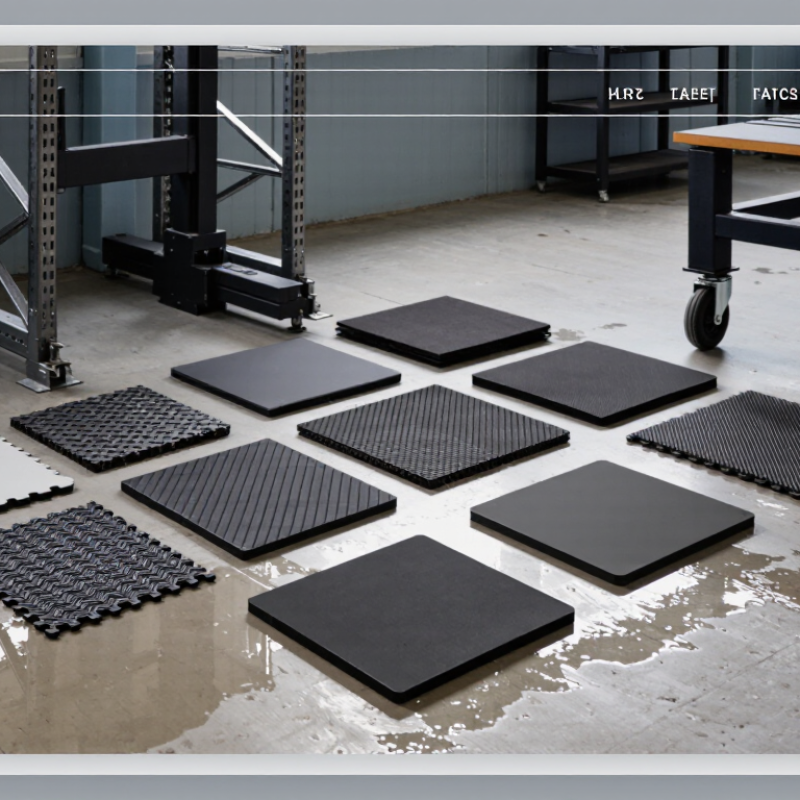
Industrial Rubber Pads: Materials, Functions, and Key Properties
10 Best Rubber Pads for Industrial Use in 2026?
Industrial Rubber Pads: Materials, Functions, and Key Properties
Industrial rubber pads do more than cushion machinery. They reduce vibration, limit impact, protect floors, and help equipment stay level under load. Material choice matters. Natural rubber offers strong elasticity and abrasion resistance, while nitrile rubber better resists oils. EPDM suits outdoor areas exposed to weather and ozone. Silicone can handle wider temperature swings, but may cost more and tear more easily.
The International Rubber Study Group’s 2024 statistical reporting puts global rubber consumption at roughly 30 million tonnes in 2023, including natural and synthetic rubber. That scale reflects rubber’s broad industrial role, but it does not tell buyers which pad will perform best. Check the actual application: load, temperature, oil contact, and vibration frequency. A pad that feels firm by hand may still compress too much beneath a machine.
For reliable comparisons, ASTM D2240 measures rubber hardness, while ASTM D412 tests tensile properties. Neither result alone predicts service life. Compression set, thickness, and the pad’s loaded area matter too. Small details matter. A slightly uneven floor can concentrate force at one corner and accelerate wear. I would also question any specification that gives hardness without test conditions; it leaves an important gap. ISO 10846 provides methods for measuring vibration transfer through resilient supports, helping engineers assess performance beyond a simple hardness number.
10 Best Rubber Pads for Industrial Use in 2026?
Industrial Rubber Pads: Materials, Functions, and Key Properties
| Rubber Pad Material | Typical Hardness (Shore A) | Typical Service Temperature | Key Properties and Function | Common Industrial Uses | Main Selection Consideration |
|---|---|---|---|---|---|
| Natural Rubber (NR) | 40–80 | About −40 to +80 °C | High resilience, tensile strength, and resistance to repeated impact and abrasion; effective for vibration isolation. | Machine mounts, impact pads, conveyor components, and general vibration-control pads. | Limited resistance to oils, ozone, weathering, and many chemicals; protect it from prolonged outdoor exposure. |
| Styrene-Butadiene Rubber (SBR) | 50–80 | About −40 to +100 °C | Good abrasion resistance and mechanical strength at a practical cost; suitable for general-purpose cushioning. | Floor protection, general-purpose gaskets, anti-vibration pads, and industrial lining. | Not a preferred choice for sustained contact with oils, fuels, or strong outdoor ozone exposure. |
| Nitrile Rubber (NBR) | 40–90 | About −30 to +100 °C | Good resistance to petroleum oils, greases, and many fuels; hardness and formulation affect wear and flexibility. | Oil-resistant machine pads, seals, pump components, and workshop equipment supports. | Ozone, sunlight, and weather resistance are generally limited unless the compound is specially protected. |
| EPDM Rubber | 40–80 | About −40 to +120 °C | Strong resistance to weathering, ozone, water, and many dilute acids and alkalis; maintains flexibility outdoors. | Outdoor equipment pads, water-system seals, weather-exposed supports, and electrical enclosures. | Generally unsuitable for petroleum oils, fuels, and many hydrocarbon-based fluids. |
| Chloroprene Rubber (CR, commonly called Neoprene) | 40–80 | About −30 to +100 °C | Balanced resistance to weather, ozone, moderate oils, and abrasion; useful where several properties are needed. | Outdoor machine mounts, bridge and structural bearing pads, gaskets, and vibration isolators. | Compatibility with specific chemicals and oils depends on the fluid, temperature, and compound formulation. |
| Silicone Rubber | 30–80 | About −55 to +200 °C | Retains flexibility across a wide temperature range and offers good heat and weather resistance. | Heat-exposed equipment cushioning, thermal-interface pads, and selected sealing applications. | Often has lower tear and abrasion resistance than tougher industrial elastomers; check load and wear requirements. |
| Fluoroelastomer (FKM) | 60–90 | About −20 to +200 °C | High resistance to many oils, fuels, and aggressive chemicals, with good performance at elevated temperatures. | Process-equipment seals, chemical-service pads, and components exposed to hot oils or fuels. | Typically more costly; low-temperature flexibility and compatibility with hot water or steam depend on the grade. |
| Butyl Rubber (IIR) | 40–70 | About −40 to +120 °C | Very low gas permeability and good resistance to ozone and weathering; provides useful damping. | Sealing pads, vibration-damping components, and applications requiring reduced gas transmission. | Not generally suited to petroleum oils and fuels; check the compound for the intended chemical environment. |
| Hydrogenated Nitrile Rubber (HNBR) | 50–90 | About −30 to +150 °C | Improved heat, aging, and mechanical performance compared with standard NBR, while retaining useful oil resistance. | Oilfield equipment, automotive and industrial seals, and supports exposed to heat and mechanical stress. | Performance varies by grade; confirm compatibility with the exact fluid, temperature, and duty cycle. |
| Cork-Rubber Composite | Typically specified by density and compression rather than Shore A | Often about −20 to +100 °C | Compressible composite that can seal uneven surfaces and help damp vibration; available with different cork contents and binders. | Equipment gaskets, enclosure seals, low-pressure cushioning, and vibration-isolating pads. | Load capacity, fluid resistance, and recovery after compression depend strongly on the binder and composite construction. |
Note: Temperature and hardness figures are broad, typical ranges, not guaranteed specifications. Actual properties vary by compound, manufacturing method, thickness, load, and exposure conditions. Verify the supplier’s technical data and chemical-compatibility guidance before selecting a pad.

Criteria for Evaluating Industrial Rubber Pads in 2026
Industrial rubber pads should be judged against the actual load, surface, and operating environment—not just a listed hardness. Check the pad’s rated load and compression behavior, since a pad that deforms too much can shift machinery or lose contact. Temperature range matters near motors, ovens, or cold storage. Oil, cleaning fluids, and outdoor exposure can also affect rubber over time. Small details matter. Ask for test data on compression set, abrasion, and relevant chemical resistance, and verify that the data matches the intended material grade.
Evaluate dimensions and installation fit as carefully as material properties. Measure the equipment feet and floor, including any unevenness that could concentrate pressure on one edge. For vibration control, compare operating frequency and machine weight with the pad’s stated performance; thickness alone does not predict isolation. If practical, trial a sample under normal operating conditions and inspect it for cracking, flattening, or movement after repeated use. One limitation: short trials may miss slower aging, so review maintenance records where available. Clear documentation and traceable test methods make comparisons more dependable.
Tips: Record load, temperature, fluids, and vibration before ordering. Test under load. Recheck pad thickness after installation, then inspect periodically for wear or permanent compression. When results are borderline, get a qualified engineer to review the setup rather than assuming a thicker pad will solve it.
Criteria for Evaluating Industrial Rubber Pads in 2026
Suggested evaluation weights for comparing industrial rubber pads.
Load capacity and compression-set resistance receive the highest weights because pads must support operating loads while retaining their shape. Confirm each product’s specifications against the application’s temperature, chemical exposure, and vibration requirements. These percentages are a suggested evaluation framework, not laboratory test results.
Profiles of 10 Leading Rubber Pads for Industrial Applications
Profiles of 10 leading rubber pads begin with the job, not the material name. Natural rubber handles repeated compression; SBR offers economical general-purpose cushioning. Neoprene resists weathering, while nitrile suits oily machinery. EPDM tolerates outdoor exposure; silicone serves hotter, cleaner environments. Polyurethane resists abrasion under wheeled loads. Cork-rubber blends damp vibration. Fabric-reinforced pads resist tearing, and ribbed pads improve grip. No pad wins everywhere.
Grand View Research estimated the global industrial rubber market at about US$28.4 billion in 2023, reflecting broad demand—not proof that any pad fits a given machine. ASTM D2000 classifies rubber by properties such as heat and oil resistance; buyers should match those properties to actual service conditions. Check load, temperature, fluids, thickness, and compression set. A soft pad may isolate vibration, yet creep under a heavy press. That trade-off is easy to miss.
Tips: Measure the machine’s feet and note its operating weight before ordering. Compare load ratings with the real contact area, not just the pad’s overall dimensions. Inspect for cracking or permanent flattening during maintenance. I’d still test a sample under working conditions; catalog figures can’t capture every uneven floor.
How to Match Rubber Pads to Equipment and Operating Conditions
Rubber pads work best when matched to the equipment, floor, and operating conditions—not chosen by thickness alone. Start with the machine’s weight and how that weight reaches the floor. Four feet carrying uneven loads need different consideration from a broad, flat base. Check pad dimensions, hardness, and the manufacturer’s stated load range. A pad that compresses too much may let equipment wobble; one that is too stiff may transmit vibration. Small details matter.
Tips: Note whether the floor is oily, wet, hot, or exposed to cleaning chemicals. Confirm that the rubber compound suits those conditions. Measure the contact area, and check for gaps or rocking after installation. Test before scaling.
Operating conditions can change the right choice. A pump running continuously may need vibration control, while a cart needs grip and resistance to repeated movement. Look for signs of wear after the first operating period, such as cracking, permanent flattening, or shifting. Catalog ratings are a starting point, not a guarantee; floor surfaces and real load distribution vary. If the setup is uncertain, trial one station and record what changes. That extra check can prevent a costly mismatch.
Installation, Maintenance, and Replacement of Industrial Rubber Pads
Installation starts with the surface, not the pad. Remove grit, oil, and loose paint so the rubber sits flat. Check the pad’s thickness and hardness against the equipment load and operating conditions. Misalignment can concentrate pressure on one edge. That small error may shorten service life. Place pads evenly, then tighten fasteners to the equipment maker’s specified settings. Avoid stretching or forcing rubber into position; it can distort before the machine even runs.
During maintenance, inspect pads when equipment is shut down and safe to access. Look for splits, hardening, permanent flattening, or rubber pushed out from beneath a support. Feel for unusual vibration, too, and compare readings over time. Oil, cleaning chemicals, heat, and sharp debris can all affect rubber, though the damage is not always obvious at first. Wipe pads with a compatible cleaner and keep nearby surfaces free of debris. Not every mark means failure.
Replace a pad when it no longer holds its shape, shows deep cracking, or allows repeated movement or vibration. Change pads in matching sets where uneven support could shift the load. Before fitting replacements, check the mounting surface and investigate why the old pads wore unevenly. The answer may be a loose fastener, a tilted base, or an incorrect pad specification. It is easy to blame the rubber. Sometimes that is not the real problem.
Article Source:
Get in touch with us,
We will contact you shortly!
What is the difference between Unline(Non-Epoxy Coated) or Lining(Epoxy Coated) Metal Drum?

Unline drums with internally bare metal surface is more susceptible to corrosion and rust while Lining drums are internally coated with Phenolic Epoxy Coating to provide a non-reactive barrier between the drum surface and your product, less risk of contamination. Note: Our Unline drums are coated with an anti-rust agent after washing to reduce risk of rust.
What are Unline(Non-Epoxy Coated) and Lining(Epoxy Coated) drums compatible with?

In Singapore, Recon Unline Drums are usually more costly than Recon Lining Drums. Hence, we recommend Recon Unline Drums to fill aromatics like Thinner, Xylene, Toulene& other solvents like Hexane, BA, CA, EA, MC, White spirit, etc.
We recommend the lower-priced Recon Lining Drums to fill hydrocarbons like IPA, Methanol, Ethanoland oil-based products like diesel, petrol, lubricants, engine, hydraulic, base, transmission fluid, additives, waste oil, etc.;
What is the difference between Grade A and Grade B Metal Drum ?

Grading of used drums are usually based on physical conditions like rustiness, deformities and residual contents. Grade A drums are totally free from internal rust, serious dents and are easy to clean. Grade B drums have different degrees of rust internally and aesthetically inferior compared to Grade A drums.
What content is suitable to fill in a Recon Grade A or Grade B Drum?

Recon Grade A drum is suitable to fill more costly virgin grade products while Recon Grade B drum is more suitable for recycled or waste products.
What is the difference between Open Top and Close Top Drums and their usage?

Closed top drums are for water and other liquid products. Open Top drums can be used for liquid too but are primarily for more viscous products. The Open Top (or open head with a lid) allows you to get in and out of the drum with your product easier.
What type of content are Metal or Plastic Drums suitable for?

Metal drums offer additional protection when dealing with potentially flammable substances. They provide superior fire resistance, impact protection, and longevity for storing class 1, 2, and 3 volatile chemicals.
Plastic HDPE Drums are suitable for corrosive chemicals like acids, alkaline and also water-based products.
Will there be any contamination in the reconditioned metal, plastic drums or IBC tanks?

All our reconditioned containers (metal/plastic drums, carboys, IBC tanks) are washed thoroughly with specially formulated cleaning agent, rinsed with clean water, dried, and tested for possible leakages during the recondition process. Stringent quality inspection is being conducted 100% on every reconditioned product before they are qualified for sale & delivery.
What is the drum gauge(thickness) and weight for reconditioned metal drums?

Reconditioned metal drums gauge can be 0.9mm to 1.0mm all round. Their weight can vary from 16 to 18kg.
Do you sell New Packaging Products too?

Yes, we are also a distributor for new pallets, metal drums, plastic drums, carboys, IBCs and stainless-steel tanks.
What additional services do you provide apart from selling reconditioned and new containers.?

We are an NEA licensed toxic industrial waste collector, who can collect and dispose of used toxic waste containers in Singapore.
Do you offer labelling and silkscreen on the containers ?

We can provide labelling and silk-screening on the containers.
Are you able to ship overseas ?

Yes, we can arrange export our products to any country in the world.
Leading the Way
to Carbon Neutrality