
China Best Pick and Place Machine Suppliers?
Choosing among China’s best Pick and Place Machine suppliers requires more than comparing speed, price, or attractive product photos. A reliable supplier should demonstrate real installation experience, stable component handling, precise placement performance, and responsive technical support. Buyers should examine feeder quality, nozzle availability, software usability, changeover time, and maintenance records. These details become important when a production line runs eight hours daily, with tiny 0201 components moving under bright inspection lights.
Michael Ford, a recognized SMT manufacturing expert, has said, “The best machine is the one that supports the entire manufacturing process, not just placement speed.” This practical view deserves attention. A machine may advertise 100,000 components per hour, yet struggle with mixed boards, fragile parts, or frequent product changes. Speed alone can mislead.
The strongest Chinese suppliers usually provide factory demonstrations, application testing, training, spare parts, and documented accuracy data. Ask for sample placement results using your own boards. Request references from manufacturers with similar volumes. Observe how engineers respond when a feeder jams or a vision system needs adjustment. That moment reveals more than a polished showroom.
Certification matters, but paperwork is not enough. Long-term reliability depends on design quality, operator training, preventive maintenance, and honest communication. Some suppliers may promise too much. That deserves careful questioning. A thoughtful buyer should compare total ownership cost, not only the initial quotation. The right Pick and Place Machine should fit the products, workforce, floor space, and future production plans. Perfect choices are rare. A measurable, test-based decision is safer.
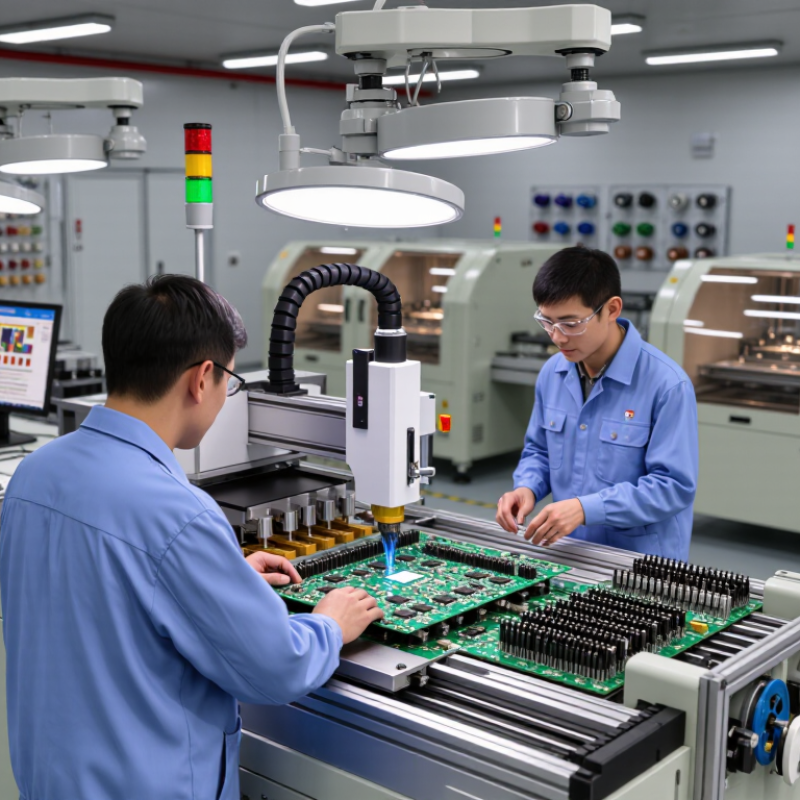
Types of Pick and Place Machines Available from Chinese Suppliers
China Best Pick and Place Machine Suppliers?
Chinese suppliers offer several pick and place machine types for different production needs. Desktop machines suit small workshops, prototypes, and short production runs. They usually occupy less floor space and support flexible product changes. High-speed machines are designed for large batches, placing compact components quickly on standard circuit boards. Modular systems combine multiple placement heads, allowing manufacturers to balance speed and accuracy. Inline machines connect with printers, conveyors, and inspection equipment for continuous production. Some suppliers also provide odd-form machines for connectors, relays, and larger components.
Choosing the right type requires more than comparing placement speed. Check feeder compatibility, component range, board size, placement accuracy, and software usability. A fast machine may perform poorly with delicate parts or frequent product changes. Request a live demonstration using your own components whenever possible. Production data is more reliable than a polished specification sheet. No machine is perfect.
Tips: Confirm spare-part availability, training, warranty terms, and remote support before ordering. Ask for sample placement results and maintenance schedules. Inspect the feeder system carefully, because unstable feeding can reduce real productivity. It is also wise to review electrical safety documentation and factory quality records. Some buyers focus heavily on speed, then discover that setup time consumes much of the expected benefit. A careful trial can reveal that weakness early.

Key Factors for Evaluating Chinese Pick and Place Machine Suppliers
China Best Pick and Place Machine Suppliers?
Evaluating Chinese pick and place machine suppliers requires more than comparing advertised placement speed. Check accuracy at normal production speed, not only during a polished showroom demonstration. Ask for test results using your actual components, including tiny resistors, connectors, and uneven packages. Verify feeder compatibility, nozzle availability, vision-system performance, and changeover time. A machine may appear fast, yet slow operators down during setup.
Supplier experience should be visible in practical details. Request installation records, maintenance schedules, calibration procedures, and customer references from similar production environments. Review factory quality controls, electrical documentation, software support, and spare-parts response times. Certifications matter, but they do not replace a live machine trial. I have found that clear technical communication often predicts after-sales reliability better than impressive brochures. Still, this judgment can be imperfect. Test the evidence yourself. Also calculate the total cost, including training, shipping, tooling, downtime, and future upgrades.
Tips: Prepare a written acceptance checklist before negotiations. Measure placement accuracy, first-pass yield, feeder stability, and recovery after a simulated fault. Ask the supplier to explain one difficult repair in plain language. If answers remain vague, pause. A lower purchase price may hide expensive delays, limited documentation, or unavailable components. Keep all specifications, service terms, and performance promises in the final contract.
Leading Manufacturing Regions and Supplier Specializations in China
China’s pick and place machine suppliers often develop around electronics manufacturing clusters. Shenzhen and Dongguan are strong choices for high-speed SMT assembly equipment. Their suppliers commonly support dense PCB layouts, fine-pitch components, and rapid production changes. Local engineering teams often understand feeder calibration and vision alignment in practical detail.
The Suzhou and Shanghai region focuses more on automotive electronics, industrial controls, and stable factory automation. Suppliers there usually emphasize repeatability, process documentation, and integration with inspection equipment. Ningbo and nearby coastal cities serve smaller factories with flexible configurations and competitive lead times. Some suppliers also build machines for LED boards, connectors, and mixed-size components.
A reliable evaluation should include a live placement test. Ask for measured speed, placement accuracy, feeder compatibility, and maintenance records. Request sample boards similar to your production needs. A polished factory tour proves little by itself. I have seen impressive demonstrations hide difficult software settings and slow technical support. That risk deserves attention. Supplier specialization can change quickly, especially among smaller manufacturers. Check spare-part availability, operator training, remote diagnostics, and service response times before signing an order. The cheapest machine may create higher costs through stoppages, rework, and operator frustration. Performance should be judged on your boards, not only on a specification sheet.
How to Compare Machine Features, Pricing, and Production Capacity
Choosing among China’s best pick and place machine suppliers requires more than comparing catalog prices. The WSTS Spring 2024 forecast valued global semiconductor sales at 611 billion dollars, with 16% growth expected that year. Rising demand makes capacity planning important. Ask for verified placements per hour, not only the maximum figure. A machine rated at 80,000 placements per hour may achieve much less with fine-pitch components, frequent feeder changes, or inspection pauses. I would also check nozzle range, feeder capacity, component size limits, placement accuracy, and changeover time.
Pricing should include installation, software licenses, training, spare parts, and service response. A cheaper machine can become expensive when production stops for several hours. IPC industry reports repeatedly identify labor availability, delivery performance, and supply-chain uncertainty as major manufacturing concerns. Therefore, compare local technical support and documented uptime, not just the purchase quotation. Request a sample production trial using your actual board, including small passive parts, connectors, and mixed component packages. My first comparison often misses changeover labor. That mistake matters.
Tips: Build a simple cost-per-board model. Include hourly output, operators, electricity, maintenance, rejected boards, and financing. Ask suppliers to provide twelve-month service records and references from similar factories. Capacity claims need evidence. Also, leave expansion room for another line or future component sizes. A perfect spreadsheet cannot replace a factory visit, and even a careful forecast may prove wrong when product mix changes.
Quality Control, Certifications, After-Sales Service, and Export Support
Choosing a pick and place machine supplier in China requires more than comparing prices. Quality control should be visible on the factory floor. Ask for inspection records covering feeder accuracy, placement speed, nozzle wear, and solder paste alignment. During a factory visit, request a live placement test with your own component samples. Watch the operator change reels, correct an error, and export production data. Small details often reveal process maturity.
Reliable suppliers can provide current certificates for quality management, electrical safety, and environmental compliance. Confirm that each document matches the machine model and your destination market. A certificate alone proves little. Check calibration records, component traceability, and final inspection procedures. Suppliers should also explain how they control software updates and replacement parts. These details show professional knowledge, not just sales confidence.
Export support can include reinforced wooden packaging, clear manuals, installation guidance, and accurate customs documents. Confirm voltage, language options, spare parts availability, and delivery responsibilities before signing. After-sales service matters even more once production starts. Look for remote diagnostics, technician response times, operator training, and a written warranty. Ask how quickly common feeders, nozzles, and sensors can be shipped. No supplier is perfect. An honest supplier should admit possible delays and explain the recovery plan. Vague promises deserve careful questioning. A practical evaluation should include references from similar production lines and a documented service contact.
China Best Pick and Place Machine Suppliers? - Quality Control, Certifications, After-Sales Service, and Export Support
Supplier evaluation framework based on verifiable technical, compliance, service, and export-support evidence
| Evaluation Dimension | What to Request from the Supplier | Objective Evidence or Standard | Buyer Verification Method | Recommended Status |
|---|---|---|---|---|
| Quality Management System | Documented incoming inspection, assembly inspection, calibration control, final testing, nonconformance handling, and corrective-action procedures. | A current ISO 9001 certificate issued by an accredited certification body, with the certificate scope covering manufacturing or assembly of relevant equipment. | Check certificate number, validity, scope, issuing body, and certification-body database where available. | Required |
| Placement Accuracy and Repeatability | Published placement accuracy, repeatability, supported component range, feeder compatibility, board dimensions, and machine configuration. | A controlled test report using a defined component package, board size, speed setting, inspection method, and sample quantity. Accuracy claims should not be assessed without test conditions. | Request a video or factory acceptance test using representative components and a mutually approved inspection standard. | Verify |
| Process Control and Traceability | Serial-number control, bill-of-material records, firmware or software revision control, supplier-part traceability, and final inspection records. | Sample inspection forms, calibration records, production traveler documents, and a documented retention period for quality records. | Review redacted records from a completed machine and confirm that critical components can be traced to purchase or inspection documents. | Required |
| Regulatory Certifications | Declaration of conformity and a technical file appropriate for the destination market, including electrical, electromagnetic compatibility, and machinery-safety documentation where applicable. | For European shipments, CE compliance may involve applicable requirements such as the Machinery Directive or Regulation, EMC requirements, and electrical safety requirements depending on the equipment design and transition rules. | Confirm that the declaration matches the exact model, electrical rating, applicable legislation, standards used, and responsible economic operator. | Market-specific |
| Factory Acceptance Testing | A written FAT protocol covering machine operation, placement performance, feeder operation, software functions, alarms, safety devices, and documentation completeness. | Signed FAT report with test conditions, measured results, open issues, corrective actions, and approval signatures from both parties. | Use sample boards and components that reflect the buyer’s actual production requirements before shipment. | Required |
| After-Sales Service | Warranty duration, remote diagnostic process, response-time commitment, escalation procedure, preventive-maintenance guidance, and availability of service engineers. | A signed warranty and service-level agreement specifying exclusions, response targets, working hours, remote-support channels, and chargeable services. | Request anonymized service records or customer references and confirm support coverage in the buyer’s time zone. | Required |
| Spare Parts and Training | Recommended spare-parts list, part numbers, lead times, storage conditions, operator training, maintenance training, and manuals in the agreed language. | Parts list linked to the machine bill of materials, training agenda, attendance record, maintenance schedule, and revision-controlled manuals. | Check the availability and price of critical wear parts before signing the purchase contract. | Verify |
| Export and Documentation Support | Commercial invoice, packing list, shipping marks, certificate of origin when required, export packing specification, installation instructions, and customs classification information. | Documents must match the contract, machine serial number, package count, gross and net weights, country of origin, and destination requirements. | Approve draft export documents before shipment and have the importer or customs broker review classification and local requirements. | Required |
| Packaging and Transport Risk | Export-grade packaging plan, moisture protection, shock protection, vibration control, lifting points, center-of-gravity marking, and unpacking instructions. | Packing photographs, package dimensions, weight data, inspection checklist, and transport insurance responsibilities defined in the sales contract. | Inspect packaging before dispatch and require photographs of the machine, protective materials, crate labels, and sealed packages. | Verify |
| Commercial and Supplier Risk | Legal entity details, bank-account consistency, quotation validity, payment milestones, delivery terms, warranty remedies, ownership of software, and change-control provisions. | Company registration information, signed contract, proforma invoice, agreed Incoterm under Incoterms® 2020, and documented acceptance criteria. | Perform legal-entity and bank-detail checks independently; avoid payments to unrelated third parties without documented contractual justification. | Required |
Article Source:
Get in touch with us,
We will contact you shortly!
What is the difference between Unline(Non-Epoxy Coated) or Lining(Epoxy Coated) Metal Drum?

Unline drums with internally bare metal surface is more susceptible to corrosion and rust while Lining drums are internally coated with Phenolic Epoxy Coating to provide a non-reactive barrier between the drum surface and your product, less risk of contamination. Note: Our Unline drums are coated with an anti-rust agent after washing to reduce risk of rust.
What are Unline(Non-Epoxy Coated) and Lining(Epoxy Coated) drums compatible with?

In Singapore, Recon Unline Drums are usually more costly than Recon Lining Drums. Hence, we recommend Recon Unline Drums to fill aromatics like Thinner, Xylene, Toulene& other solvents like Hexane, BA, CA, EA, MC, White spirit, etc.
We recommend the lower-priced Recon Lining Drums to fill hydrocarbons like IPA, Methanol, Ethanoland oil-based products like diesel, petrol, lubricants, engine, hydraulic, base, transmission fluid, additives, waste oil, etc.;
What is the difference between Grade A and Grade B Metal Drum ?

Grading of used drums are usually based on physical conditions like rustiness, deformities and residual contents. Grade A drums are totally free from internal rust, serious dents and are easy to clean. Grade B drums have different degrees of rust internally and aesthetically inferior compared to Grade A drums.
What content is suitable to fill in a Recon Grade A or Grade B Drum?

Recon Grade A drum is suitable to fill more costly virgin grade products while Recon Grade B drum is more suitable for recycled or waste products.
What is the difference between Open Top and Close Top Drums and their usage?

Closed top drums are for water and other liquid products. Open Top drums can be used for liquid too but are primarily for more viscous products. The Open Top (or open head with a lid) allows you to get in and out of the drum with your product easier.
What type of content are Metal or Plastic Drums suitable for?

Metal drums offer additional protection when dealing with potentially flammable substances. They provide superior fire resistance, impact protection, and longevity for storing class 1, 2, and 3 volatile chemicals.
Plastic HDPE Drums are suitable for corrosive chemicals like acids, alkaline and also water-based products.
Will there be any contamination in the reconditioned metal, plastic drums or IBC tanks?

All our reconditioned containers (metal/plastic drums, carboys, IBC tanks) are washed thoroughly with specially formulated cleaning agent, rinsed with clean water, dried, and tested for possible leakages during the recondition process. Stringent quality inspection is being conducted 100% on every reconditioned product before they are qualified for sale & delivery.
What is the drum gauge(thickness) and weight for reconditioned metal drums?

Reconditioned metal drums gauge can be 0.9mm to 1.0mm all round. Their weight can vary from 16 to 18kg.
Do you sell New Packaging Products too?

Yes, we are also a distributor for new pallets, metal drums, plastic drums, carboys, IBCs and stainless-steel tanks.
What additional services do you provide apart from selling reconditioned and new containers.?

We are an NEA licensed toxic industrial waste collector, who can collect and dispose of used toxic waste containers in Singapore.
Do you offer labelling and silkscreen on the containers ?

We can provide labelling and silk-screening on the containers.
Are you able to ship overseas ?

Yes, we can arrange export our products to any country in the world.
Leading the Way
to Carbon Neutrality








