
What Is the Best Food Bucket for Bulk Storage?

Choosing the best food bucket for bulk storage is not simply a question of size or price. The right container must protect dry foods from moisture, insects, light, odors, and accidental damage. A practical food bucket should use food-grade plastic, include a tight-fitting lid, and remain easy to label and inspect.

Dr. Elizabeth Andress, a respected food preservation specialist, has said, “Safe storage begins with safe food.” Her point matters. Even the strongest bucket cannot rescue damp grains, spoiled ingredients, or careless handling. Rice, flour, beans, and oats need different storage considerations. A gasketed lid may improve protection, while an oxygen absorber can help certain dry foods when used correctly. It should never replace proper drying or sanitation.

Look closely at the details. Can you lift the bucket when full? Does the lid seal without cracking? Is the plastic odor-free? A bright label showing the food name and storage date prevents guesswork months later. Rotation matters, too. Store newer supplies behind older ones.

There is no perfect bucket for every household. A five-gallon model may suit a family, but it can become awkward in a small pantry. Smaller buckets offer easier handling and faster rotation. I once assumed bigger meant better. It did not. Convenience changed the decision.

The best food bucket balances safety, durability, capacity, and daily practicality. It should protect your supplies without creating another storage problem.
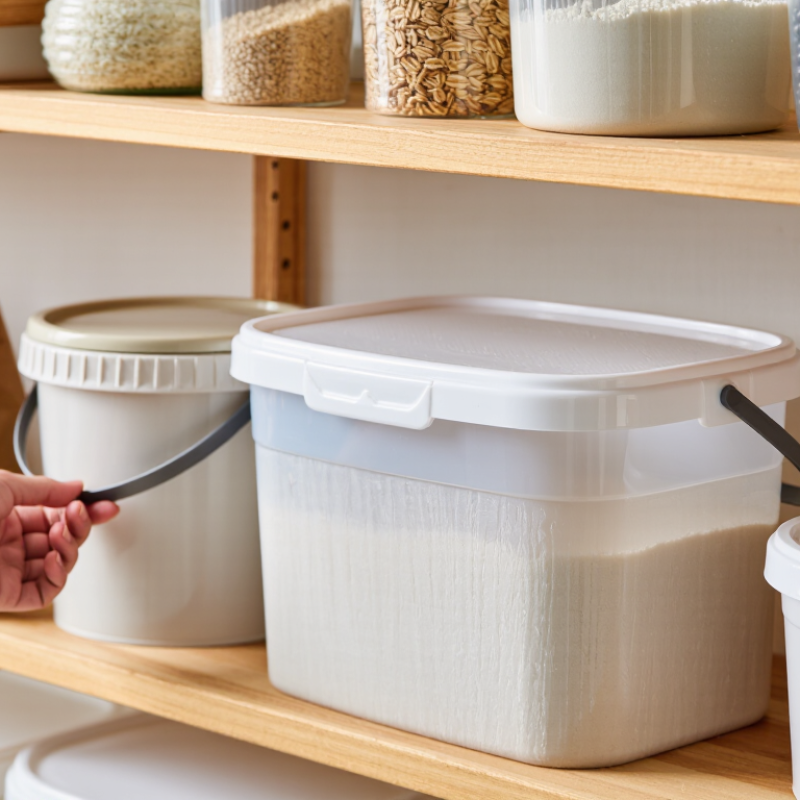
What Is the Best Food Bucket for Bulk Storage?

What Makes a Food Storage Bucket Suitable for Bulk Storage?

The best food bucket for bulk storage is not simply the largest one. It must protect food from moisture, pests, light, and accidental contamination. Food-grade HDPE is a practical choice because it is durable, odor-resistant, and suitable for many dry foods. The walls should feel firm, not thin or flexible. A sturdy base matters when rice or flour creates heavy pressure. I have learned that a clean bucket can still be unsuitable if it previously held chemicals or strong-smelling materials.

The lid deserves careful attention. A gasketed, airtight lid helps limit humidity and keeps insects outside. Press the seal around the entire rim. No gaps. A screw-top design can be easier to reopen than a tight snap lid, especially in a cold pantry. Choose a size that one person can lift safely. A 20-liter bucket may hold a lot, but a smaller container reduces repeated exposure when the lid opens. Translucent plastic helps with visibility, although opaque walls provide better light protection.

For long-term storage, dry the bucket completely before filling it. Even a small water film can encourage mold. Label the food, packing date, and expected use-by period. Store containers on raised shelving, away from walls and standing water. My own mistake was stacking buckets too high; the bottom lid slowly warped under pressure. I now leave room between stacks and inspect seals every few months. Some dry foods may work with oxygen absorbers, but only when the food type and packaging instructions support them.


Which Bucket Materials Are Safe for Long-Term Food Storage?

When choosing a bulk-storage bucket, material safety matters more than color or thickness. High-density polyethylene, marked HDPE or recycling code 2, is widely used for food-contact containers because it resists moisture, impact, and many household chemicals. Polypropylene, marked PP or code 5, also performs well, especially for rigid lids and snap-fit components. However, recycling codes do not prove food safety. The container should be specifically labeled for food contact, unused, and free from odors.

The FDA Food Code 2022 describes suitable food-contact equipment as smooth, durable, nonabsorbent, and easy to clean. That standard is useful when inspecting a bucket’s inner wall and lid seal. Avoid containers that previously held paint, detergents, fuel, or unknown powders. Tiny residues can remain in scratches. A tight gasket helps, but it cannot correct unsafe plastic. The USDA FoodKeeper database lists white rice at roughly two years in a pantry, while brown rice lasts about six months because of its oils. That difference shows why material selection alone is not enough. Dry food also needs low humidity, darkness, pest protection, and stable temperatures. I would choose a food-grade HDPE bucket with a dependable gasket for grains, beans, and flour. Still, I would inspect every lid before storage. One imperfect seal can spoil an otherwise careful setup.

How Should Bucket Size Match Different Bulk Foods?

The right bucket is not the largest one. It is the size your household can safely move and rotate.

USDA FoodKeeper guidance separates pantry life sharply. Uncooked white rice keeps quality for about two years unopened, while brown rice lasts about six months. That difference supports smaller brown-rice containers and more frequent replacement.

A one-gallon bucket suits seeds, sugar, salt, dried beans, and small flour portions.

A three-gallon bucket usually fits around 12–18 pounds of rice or 8–12 pounds of flour.

A five-gallon bucket holds roughly 25–35 pounds of white rice, 20–25 pounds of flour, or 15–20 pounds of rolled oats, based on typical bulk-density calculations.

These are estimates, not promises. Flour compacts. Oats trap air. Leave practical headspace for a liner or oxygen-control packet.

Do not ignore lifting. At 35 pounds, a full bucket becomes awkward for many adults. Two smaller buckets often improve rotation and reduce spill risk.

The FDA Food Code 2022 recommends keeping stored food at least six inches above the floor. This matters in garages, basements, and utility rooms where moisture or pests may appear.

A common planning mistake is choosing capacity before checking daily use. Measure one week’s consumption, then select a bucket that empties within a reasonable rotation period. Five gallons may look efficient, but it can quietly encourage stale food.

What Features Protect Food from Moisture, Pests, and Contamination?

What Is the Best Food Bucket for Bulk Storage?

The best food bucket creates a dependable barrier against moisture, pests, and contamination. Choose a food-safe plastic bucket with a thick wall and a tight, flexible gasket. The lid should close evenly around the entire rim. A strong lid is not enough. The rim must stay clean, smooth, and undamaged. I prefer buckets with sturdy handles because awkward lifting can cause drops and cracked seals. Opaque material also helps protect dry foods from light exposure.

Moisture control starts before storage. Fill the bucket only with completely dry food, then check the seal by pressing around the lid. A loose corner can admit humid air, insects, or dust. Keep buckets away from concrete floors, leaking pipes, and direct sunlight. Elevate them on shelving or a clean pallet. Never reuse a container that held chemicals, paint, or unknown substances. That shortcut can create contamination risks that washing may not remove.

Pest protection also depends on the storage room. Sweep crumbs, inspect nearby packages, and leave space between buckets and walls. Label each container with its contents, packing date, and any preparation notes. I once stored a bucket without checking the gasket, and condensation later softened the food inside. It was an avoidable mistake. Inspect seals every few months, especially after moving the containers. Small errors matter.

What Is the Best Food Bucket for Bulk Storage?

Relative protection provided by common food-storage bucket features

A food-grade HDPE bucket with a gasket-sealed lid provides the strongest overall protection in this comparison. Food-grade materials reduce contamination risk, a tight gasket limits moisture and air exchange, and a secure lid helps keep insects and rodents out. Store buckets in a cool, dry place and use clean, dry containers before filling.

Scores use a practical 0–5 comparison scale: 0 = little or no protection, 5 = strongest protection. They are guidance ratings rather than laboratory test results.

How Can You Select and Prepare the Best Food Storage Bucket?

The best food storage bucket is food-grade, durable, and easy to inspect. High-density polyethylene is a practical choice for dry staples. Choose a thick wall that resists cracking during handling. A tight gasket lid helps block moisture, insects, and pantry odors. Opaque plastic also protects light-sensitive foods. Smaller buckets are often safer to lift and rotate.

Check the lid before buying. It should close evenly without warping or brittle edges. Avoid containers that previously held paint, detergent, fuel, or other chemicals. Even a clean-looking bucket may retain harmful residues. For a home pantry, a bucket holding 10 to 20 liters is usually manageable. Large containers can become awkward, especially when filled with grains.

Wash the bucket with unscented soap and warm water, then rinse it thoroughly. Let it dry completely, because trapped moisture can spoil food. Add only low-moisture foods, such as rice, wheat, beans, or oats. Use a clean liner when suitable, and seal the lid firmly. Oxygen absorbers may help with compatible dry foods, but they are not a cure for damp storage. Label the food, packing date, and expected use date. Store the bucket in a cool, dry, elevated area. I would not stack heavy buckets too high; convenience matters more than saving a little floor space. Inspect the seal and food condition every few months. Mistakes happen. A careful check catches them early.

Get in touch with us,
We will contact you shortly!

Get in touch with us by filling up the enquiry form. We will contact you shortly!

    What is the difference between Unline(Non-Epoxy Coated) or Lining(Epoxy Coated) Metal Drum?

    What are Unline(Non-Epoxy Coated) and Lining(Epoxy Coated) drums compatible with?

    What is the difference between Grade A and Grade B Metal Drum ?

    What content is suitable to fill in a Recon Grade A or Grade B Drum?

    What is the difference between Open Top and Close Top Drums and their usage?

    What type of content are Metal or Plastic Drums suitable for?

    Will there be any contamination in the reconditioned metal, plastic drums or IBC tanks?

    What is the drum gauge(thickness) and weight for reconditioned metal drums?

    Do you sell New Packaging Products too?

    What additional services do you provide apart from selling reconditioned and new containers.?

    Do you offer labelling and silkscreen on the containers ?

    Are you able to ship overseas ?

    Leading the Way
    to Carbon Neutrality

    Drumming sustainability into every aspect of our operations, we strive to create a greener and more conscious future for generations to come.
    Contact Us
    WhatsApp
    Email
    Join Our Newsletter

    Sign up for our newsletter for exclusive discounts and latest news of new launches!

      Logo Logo Logo Logo Logo
      Scroll to Top