What Are the Best CNC Cutting Tools in 2026?
Choosing the best Cnc Cutting Tools in 2026 starts with the material, the machine, and the job. A cutter that performs well in aluminum may struggle in stainless steel or hardened alloys. Spindle power, toolholder runout, coolant delivery, and workpiece stability also affect results. Small differences matter.
A carbide end mill, a coated drill, or an indexable turning insert can each be the right choice under specific conditions. The question is not simply which tool is newest or most expensive. It is whether its geometry, coating, and chip-control features suit your cutting conditions. A tool chart can look decisive, but it rarely captures every shop-floor variable.
This guide compares common tool types for milling, drilling, turning, and routing. It considers material compatibility, surface finish, tool life, setup demands, and overall cost. It also explains where specialized options, such as ceramic or diamond-tipped tools, may make sense—and where they may not. Not always.
Actual results depend on feeds and speeds, machine rigidity, maintenance, and operator choices. A recommended tool may need adjustment before it performs well on your machine. That is worth admitting. Use the comparisons as a practical starting point, then verify recommendations against manufacturer data and controlled test cuts. The goal is a reliable match, not a universal winner.
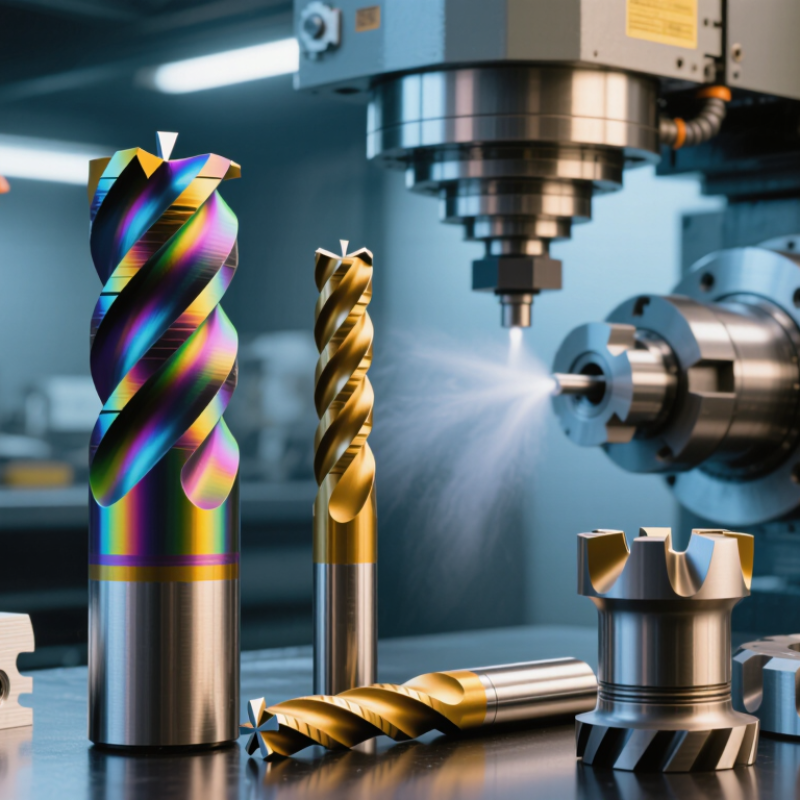
Types of CNC Cutting Tools and Their Main Functions
CNC Cutting Tools: Types and Their Main Functions
CNC tools turn programmed motion into cuts, holes, and finished surfaces. Grand View Research estimated the global CNC machine market at $101.22 billion in 2023, projecting 9.5% annual growth from 2024 to 2030. This measures machines, not cutting-tool sales, but it signals the scale of automated machining. Small details matter.
End mills cut slots, pockets, and contours; their flutes carry chips away from the workpiece. Drills create round holes, while reamers refine hole size and finish. Face mills level broad surfaces. For turning, inserts remove material as the workpiece rotates, shaping outside diameters and shoulders. Each tool has a distinct job.
Material and operation should guide selection. Carbide tools often tolerate higher cutting speeds than high-speed steel, but they can chip under impact or unstable setups. Coatings may reduce wear, yet they cannot fix excessive runout, poor chip evacuation, or a dull edge. Not always. Watch the chips: long, tangled ribbons can signal that feed, speed, or chip-breaker geometry needs adjustment. Shop-floor results may differ from catalog figures, so verify settings with a controlled test cut.
What Are the Best CNC Cutting Tools in 2026?
Common cutting-tool materials, their main functions, and typical cutting-speed ranges for steel turning.
High-speed steel is commonly used for drills and taps; carbide tools suit general-purpose turning and milling; ceramic inserts are used for high-speed, continuous turning. Speeds are approximate reference ranges in meters per minute and vary with tool grade, workpiece condition, and setup.
Tool Materials, Coatings, and Geometry in 2026
In 2026, CNC tool selection still begins with the workpiece, machine rigidity, and production goal. Carbide suits many high-speed operations because it holds an edge under heat, but it can chip when the setup vibrates. High-speed steel offers more toughness for slower cuts or less rigid machines. For abrasive nonferrous materials, polycrystalline diamond may last longer, though its cost and limits on suitable workpieces matter.
Coatings help manage heat, friction, and wear. A titanium-aluminum-nitride coating can be useful in dry or high-temperature cutting, while other coating types may better suit softer materials or lower cutting temperatures. The best choice depends on the material and cutting conditions, not just the coating name. Small details matter. A coating cannot rescue a dull edge, poor chip evacuation, or an unstable fixture.
Geometry controls how the tool enters the cut and clears chips. A higher helix can improve chip flow in some milling operations, while a stronger edge may be safer in interrupted cuts. Fewer flutes often leave more room for chips in softer materials; more flutes can support higher feed rates when chip space is not the bottleneck. These are useful rules, not guarantees. That distinction is easy to miss. Check spindle load, chip shape, and edge wear, then adjust one variable at a time. A clean finish may still hide excessive tool wear.
How to Match a Cutting Tool to the Workpiece and Operation
The best CNC cutting tool depends on what it must cut and how it must move. For aluminum, a sharp edge and open flute space help clear long, sticky chips. For stainless steel, a tougher cutting edge and steady engagement can reduce chipping and heat. Hard materials may need a tool with suitable wear resistance, but a harder coating cannot fix poor setup. Small details matter.
Match the tool geometry to the operation. A long-reach end mill can access a deep pocket, yet its extra flexibility may cause chatter. A shorter tool is usually more rigid when the part allows it. For slotting, check chip evacuation and avoid assuming that a tool suited to side milling will perform equally well in a full-width cut. Drilling also calls for attention to hole depth, coolant access, and the material’s tendency to form stringy chips.
Then consider the machine, fixture, and finish requirement. A modest spindle may not use a large cutter effectively, while a thin-walled part can deflect under heavy cutting forces. Start with conservative, material-appropriate cutting data, inspect chips and the machined surface, and adjust one variable at a time. That process takes longer than copying a chart. It is also more informative. Even a well-matched tool may need a rethink when the workholding is less rigid than expected.
Comparing CNC Tools for Milling, Turning, and Drilling
What Are the Best CNC Cutting Tools in 2026?
The best tool depends on the operation, workpiece material, and machine setup. Milling tools handle interrupted cuts, so flute count and chip space matter. A small end mill cutting a deep pocket can trap chips and heat quickly. Reduce engagement or improve evacuation before assuming the tool itself is at fault. Small details matter.
Turning tools work differently. Their cutting edge stays in contact with the rotating workpiece, making rigidity and insert geometry central to surface finish. A larger nose radius may improve finish, but it can also increase cutting forces on a slender part. Match the edge preparation and chipbreaker to the material and cut. The comparison is not always tidy: a setting that works for a roughing pass may fail during finishing.
Drills need reliable alignment, suitable point geometry, and effective chip removal, especially in deeper holes. Through-tool coolant can help, but it does not fix poor runout or an unstable setup. Check the hole depth, material, and machine limits before selecting a drill. Tool life figures are useful, not guarantees. In 2026, selection still comes down to the cut in front of you, not a universal ranking.
Selection Criteria for Performance, Cost, and Tool Life
Choosing a CNC cutting tool starts with the workpiece, not the catalog. Match substrate and coating to the material, then check hardness, abrasiveness, and heat behavior. For aluminum, a sharp, polished edge can help limit built-up material; hardened steel may need a tougher carbide grade and controlled heat. Verify cutting speed, feed, and depth of cut with a short test run. Watch the chip shape and listen for chatter. Small clues matter.
Compare cost per acceptable part, not price per insert. Include tool changes, setup time, scrap, and machine stoppages. A low-cost edge can become expensive if it fails unpredictably. Record tool life under repeatable conditions, using the same wear limit and machining settings. ISO 3685 provides standardized tool-life test methods, though shop-floor results can differ. That is worth remembering.
A 2017 McKinsey analysis reports that predictive maintenance can reduce machine downtime by 30–50%; this concerns equipment, not cutting-tool life. Still, it shows why reliable condition data matters. Track edge wear, cycle time, and rejected parts across several batches before changing grades. One batch is weak evidence. I would also question any “best tool” claim that omits workholding, coolant, or operator variation. Those details often decide whether a tool lasts longer—or simply cuts slower.

















