What Are the Best Auto Wrap Vinyl Types in 2026?
Choosing the right Auto Wrap Vinyl in 2026 means looking beyond color swatches. Film construction, adhesive, stretch, finish, and removal behavior all affect the result. A glossy sample may look flawless under showroom lights, yet reveal seams or surface defects outdoors. Small details matter.
Grand View Research estimated the global automotive wrap films market at about $4.76 billion in 2023, with continued growth projected through 2030. SEMA’s 2024 Market Report placed U.S. specialty-equipment sales at $52.3 billion in 2023. That wider category includes far more than wraps, so it should not be mistaken for wrap-film sales. Market estimates also depend on how researchers define the category. The figures show commercial interest, not which film suits a particular vehicle.
This guide compares cast and calendered films, color-change options, printed wraps, and popular gloss, satin, and matte finishes. It also considers where manufacturer data sheets can help: conformability, recommended installation conditions, and care guidance. Those specifications are useful, but they cannot replace a clean test panel or an experienced installer’s judgment. There is no universal best. A film that performs well on a flat door may be harder to apply around a deep bumper recess. That is easy to overlook. Expect trade-offs, and check current product information before choosing.
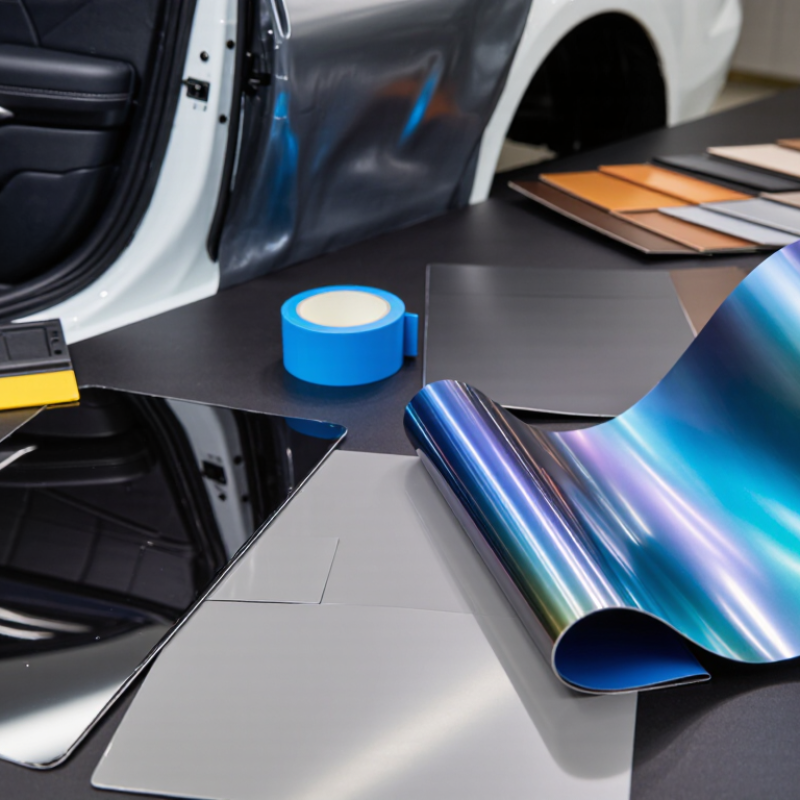
How Automotive Wrap Vinyl Is Made and Classified
Automotive wrap vinyl is a layered material, not simply colored plastic. Most films use polyvinyl chloride (PVC), blended with plasticizers, pigments, and stabilizers. During production, the mixture becomes a thin sheet by casting or calendering. Manufacturers then add a pressure-sensitive adhesive and a release liner. Some films also receive a clear protective top layer. Each layer affects appearance, handling, and resistance to sunlight and abrasion.
The main categories are cast and calendered vinyl. Cast film starts as a liquid mixture spread onto a carrier and cured with heat. It generally has lower internal stress, so it can conform more readily to complex curves and recessed details. Calendered film is compressed through heated rollers; it is often thicker and better suited to flatter panels. “Best” depends on the surface and expected service life. Grand View Research estimated the global automotive wrap films market at USD 4.76 billion in 2023, with projected growth through 2030. That signals rising demand, not equal performance across every film. Small details matter.
Tips: Check the film’s technical data sheet for thickness, adhesive type, and intended surface. Inspect an offcut around a mirror or deep recess before wrapping a full panel. Keep the panel clean and dry. One caveat: installation conditions and surface preparation can change results, so a specification alone cannot promise a perfect finish.
Cast, Calendared, and Specialty Vinyl: The Main Material Types
Cast vinyl is usually the most flexible choice for full-vehicle wraps. Its thinner film can conform around mirrors, door handles, and shallow body lines with less tension. That matters on a warm afternoon, when a panel’s curves can reveal every rushed stretch. Cast film often holds its shape well, but installation quality and exposure still affect its service life. Clean, dry paint is essential. Tiny bits of grit show through.
Calendared vinyl is generally thicker and less pliable. It can suit flatter areas, simpler shapes, or shorter-term projects, though tight recesses may challenge it. Heat can help during application, but too much stretching may encourage the film to pull back later. The categories are useful, not perfectly tidy; product construction and care vary, so check technical specifications before choosing.
Specialty vinyl describes distinctive appearances or functions, including matte, satin, textured, metallic, and color-shifting finishes. Some films imitate brushed metal; others change hue as light moves across a panel. These effects can make scratches, seams, or fingerprints more noticeable, so inspect a sample outdoors before committing. Specialty describes the surface effect, not always the film’s construction: a decorative finish may still use cast or calendared material underneath. A striking sample can mislead.
What Are the Best Auto Wrap Vinyl Types in 2026? — Cast, Calendared, and Specialty Vinyl: The Main Material Types | Vinyl Type | How It Is Made | Conformability | Typical Outdoor Durability | Best-Suited Applications | Installation Considerations | Relative Cost |
| Cast vinyl | Liquid vinyl is cast into a thin film and cured, producing a film with relatively low internal stress. | High. It generally conforms well to compound curves, recesses, and complex vehicle contours. | Often about 5–10 years on vertical surfaces, depending on the product, color, climate, and care. | Full vehicle wraps, complex body panels, long-term graphics, and applications where a smooth finish is important. | Requires careful cleaning, positioning, and post-heating where specified, especially around edges and recessed areas. | High |
| Calendared vinyl | Vinyl compound is heated and pressed through rollers to form a film. It is generally thicker and more dimensionally stressed than cast film. | Low to moderate. It works best on flat or gently curved surfaces and is less suitable for deep recesses or compound curves. | Economy grades are often rated around 1–3 years; intermediate grades may be rated around 3–5 years on vertical surfaces. | Shorter-term graphics, flat panels, simple shapes, fleet markings, and budget-conscious projects. | May shrink or lift more readily when stretched or used on complex contours. Follow the film maker’s application limits. | Low to moderate |
| Specialty vinyl | A broad category that can include chrome-like, color-shifting, matte, textured, reflective, and other effect films. Construction varies by product. | Varies. Some specialty films are designed for vehicle contours; others have limited stretch or are intended for simpler panels. | Highly variable. Many effect films have shorter outdoor ratings than standard cast colors; check the specific product’s technical data. | Accent panels, roofs, trim, custom finishes, and designs that require a distinctive appearance or surface effect. | Film-specific techniques may be needed. Some finishes show fingerprints, scratches, seams, or installation marks more readily. | Moderate to very high |
Note: Durability figures are typical broad ranges, not guarantees. Actual service life depends on the particular film, exposure, surface preparation, installation, maintenance, and whether the film is applied vertically or horizontally. Always consult the product’s current technical data and care instructions.
Gloss, Matte, Satin, and Textured Vinyl Finishes
Gloss, matte, satin, and textured films change more than a car’s color. They alter reflections, reveal different surface flaws, and affect daily cleaning. Gloss gives paint-like shine and sharp highlights, but it can make shallow scratches and uneven panels easier to spot. Matte softens reflections for a flatter look. It also shows fingerprints and oily marks, especially around door handles. Small trade-offs matter.
Satin sits between the two: it catches light gently without the mirror effect of gloss. For many vehicles, that balance feels practical. Textured finishes, such as brushed or patterned surfaces, add visible depth and can disguise minor marks. Yet their seams need careful alignment; a pattern that shifts across a panel is hard to ignore. Cleaning textured film may also take more effort. The finish is not a substitute for sound installation.
Grand View Research’s 2024 automotive wrap films market report estimated the global market at $4.76 billion in 2023 and forecast a 22.2% compound annual growth rate through 2030. That signals expanding interest, not proof that one finish lasts longest. Durability depends on film construction, exposure, cleaning, and installation quality. Ask to inspect a sample outdoors and under workshop lighting. Then check it from several angles. A finish can look perfect in a small swatch and feel too loud across a full hood.
What Are the Best Auto Wrap Vinyl Types in 2026?
Comparing gloss, matte, satin, and textured finishes
Scores are qualitative comparisons, not product specifications: higher sheen indicates a glossier appearance, while higher texture indicates more visible surface pattern. The best finish depends on the look you want and the vehicle’s design.
How to Compare Wrap Vinyl by Durability, Appearance, and Cost
When comparing wrap vinyl, separate three questions: how long it lasts, how it looks in daylight, and what the full installation costs. Premium cast film generally conforms better to deep curves and recessed door handles than calendared film. That matters around mirrors and bumpers, where poor fit can cause lifting. Flat panels are less demanding. Don’t pay for flexibility you won’t use.
Grand View Research’s automotive wrap films market analysis valued the global market at $4.76 billion in 2023 and forecast 22.2% annual growth through 2030. That signals a growing category, not proof that every film performs equally. SEMA’s 2024 U.S. market report estimated specialty-equipment sales at $52.3 billion in 2023; this broader figure reflects customization spending, not vinyl sales specifically. Keep that distinction clear.
For durability, ask for the film’s stated outdoor-life range, warranty exclusions, and care requirements. Roofs and hoods face more sun than door panels, so fading may appear unevenly. Gloss finishes show reflections sharply; satin softens them, while textured finishes can hide minor surface flaws. Matte looks striking. It can also be harder to clean. Compare written quotes that include surface preparation, removal, and edge finishing, not just material price. A cheaper roll may cost more after rework. Lifespan claims are estimates, and installation skill can change the result.