
What is Asphalt Emulsifier and How Does It Work?

Asphalt Emulsifiers play a crucial role in modern road construction and maintenance. These specialized substances help mix asphalt and water to create a stable emulsion. This process enhances the workability and adhesion of asphalt mixtures. With the right asphalt emulsifier, paving projects can achieve better durability and performance.

Understanding how asphalt emulsifiers work is vital for engineers and contractors. They help improve the bond between asphalt and aggregates. This bonding is essential for the longevity of road surfaces. However, choosing the correct type and dosage can be challenging. Too little emulsifier may lead to poor adhesion, while too much can weaken the mixture.

In the realm of construction, quality control and consistency are often questioned. Emulsification can vary due to temperature and mixing conditions. This variability can affect the overall integrity of the asphalt mixture. Professionals need to be aware of these factors to ensure optimal results in their projects.
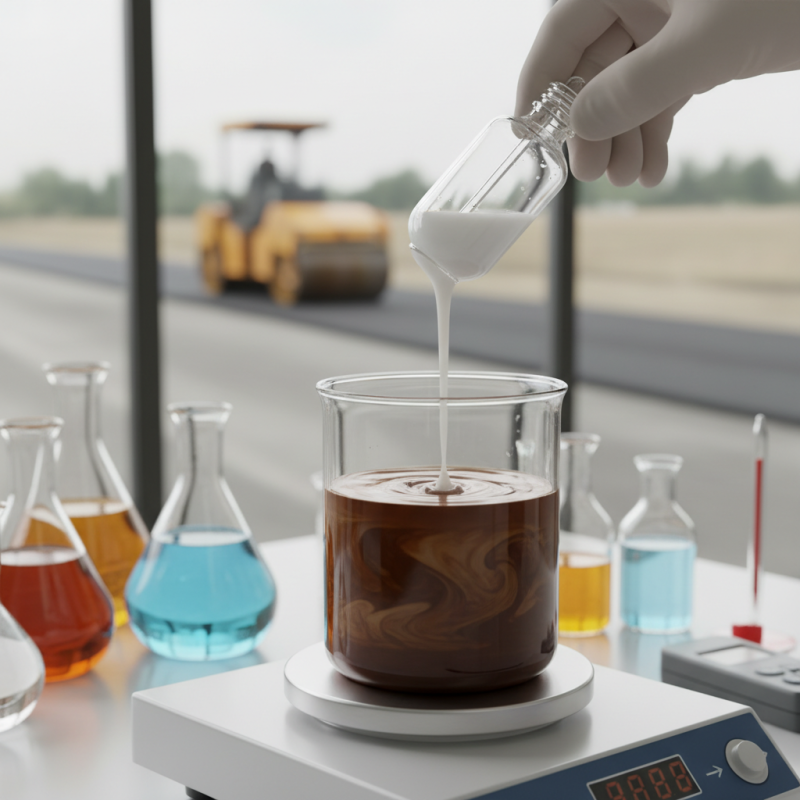
What is Asphalt Emulsifier and How Does It Work?

What is Asphalt Emulsifier?

Asphalt emulsifiers play a crucial role in road construction and maintenance. An asphalt emulsifier is a chemical additive that helps in mixing asphalt with water and other materials. This mixture is essential for creating stable and effective asphalt mixes. By enabling the process of emulsification, these agents allow for a uniform distribution of asphalt, ensuring better adhesion and performance.

Using the right emulsifier can improve the quality of your asphalt mixture. However, it’s essential to select one that matches your specific project needs. Not all emulsifiers are created equal; some may not blend well under particular conditions. Experimenting with various emulsifiers can lead to better results.

Tips: Always conduct trials with small batches before large-scale applications. This approach helps identify the best emulsifier for your needs. Keep in mind the environmental factors, such as temperature and humidity, which can affect mixing. A well-informed choice requires some trial and error, reflecting the complexity of asphalt emulsification.

What is Asphalt Emulsifier and How Does It Work?

Property Description
Definition A chemical agent that facilitates the mixing of asphalt with water to form an emulsion.
Function Stabilizes the emulsion, allowing for better application and adhesion of asphalt in pavement construction.
Types Cationic, Anionic, and Non-ionic emulsifiers, each with different properties and uses.
Applications Used in road construction, maintenance, and repair, particularly for cold mix asphalts.
Benefits Improves workability, reduces temperature requirements, and enhances adhesion properties.
Stability Maintains emulsified asphalt's stability during storage and application.
Environmental Impact Generally considered more environmentally friendly than traditional hot mix asphalt.

The Composition of Asphalt Emulsifiers

Asphalt emulsifiers are essential in road construction and maintenance. They help bind the components of asphalt together, improving its performance and longevity. The composition of asphalt emulsifiers typically includes surfactants, stabilizers, and water. These ingredients work together to create a stable mixture that can be easily applied.

Surfactants reduce the surface tension between asphalt and water, allowing them to mix. They are crucial for forming the emulsion. Stabilizers help maintain the emulsion's consistency over time. Without proper stabilization, the emulsion may break down, leading to reduced performance. The balance of these components is vital. An incorrect mix can lead to issues that may require rework.

The quality of the emulsifier directly affects the asphalt's performance. Poor emulsification can cause uneven surfaces, leading to cracks and potholes. Evaluating the effectiveness of a chosen emulsifier can take time. It's important to test various mixtures in real-world conditions. Careful consideration and ongoing research can lead to better formulations. This field continues to evolve with new findings and improved materials.

How Asphalt Emulsifiers Function in Road Construction

Asphalt emulsifiers are critical in road construction. They enhance the performance of asphalt mixtures by promoting a uniform distribution of oil in water. This technology has revolutionized paving. According to the National Asphalt Pavement Association, asphalt emulsions constituted nearly 40% of the asphalt market in recent years. Their application has increased due to environmental regulations and technological advancements.

In practice, emulsifiers improve the bonding between aggregates and asphalt. They allow for a lower application temperature, which is environmentally friendly. A study from the Federal Highway Administration noted that using asphalt emulsifiers can reduce energy consumption by 30%. This efficiency is particularly beneficial for contractors and municipalities looking to optimize costs while adhering to sustainability practices.

However, challenges remain. The choice of emulsifier affects the durability of the asphalt mixture. Not all emulsifiers perform equally well in various conditions. Some projects have reported premature surface failures due to inappropriate emulsifier selection. Engineers must carefully evaluate the specific project conditions and requirements. The right choice can lead to lasting infrastructure, while poor decisions can lead to costly repairs.

Types of Asphalt Emulsifiers and Their Applications

Asphalt emulsifiers play a crucial role in the road construction industry. They help in breaking down asphalt into smaller particles, allowing for better mixing with water. There are various types of asphalt emulsifiers, each designed for specific applications. Understanding these types can greatly enhance project efficiency.

Cationic emulsifiers are commonly used for surface treatments. They work well with negatively charged aggregates. Anionic emulsifiers, in contrast, are more suited for mixes with positively charged aggregates. These emulsifiers facilitate bond strength, ensuring a durable pavement. Nonionic emulsifiers provide flexibility in mixing; they are less sensitive to pH levels in the material.

Tips: Always test the emulsifier with your aggregate type before full-scale application. This ensures compatibility and performance. Keep in mind that temperature can affect emulsification. Proper temperatures lead to better emulsifier stability and mix quality.

The choice of emulsifier can impact the longevity of the road. It’s essential to consider environmental factors, such as humidity. These can alter the behavior of asphalt emulsions. A mismatched emulsifier could lead to early pavement failures.

Benefits of Using Asphalt Emulsifiers in Pavement Projects

Asphalt emulsifiers play a crucial role in modern pavement projects. They enhance the properties of asphalt, making it easier to work with. By breaking down asphalt into smaller droplets, emulsifiers allow for better mixing with water and aggregates. This leads to more uniform mixtures, which can significantly improve pavement durability.

The use of asphalt emulsifiers can reduce material costs. A study by the Federal Highway Administration noted that using emulsified asphalt can save up to 20% on material expenses. Furthermore, these emulsifiers improve the performance of pavement under varying weather conditions. Projects using emulsified asphalt showed enhanced resistance to cracking and raveling, extending the lifespan by several years, according to industry data.

However, reliance on emulsifiers may pose challenges, such as environmental concerns regarding runoff. The impact of using emulsifiers on local ecosystems needs careful consideration. Striking a balance between performance benefits and environmental stewardship is vital. Exploring sustainable alternatives in the emulsifier formulation can help address these concerns while maintaining the advantages in pavement projects.

Get in touch with us,
We will contact you shortly!

Get in touch with us by filling up the enquiry form. We will contact you shortly!

    What is the difference between Unline(Non-Epoxy Coated) or Lining(Epoxy Coated) Metal Drum?

    What are Unline(Non-Epoxy Coated) and Lining(Epoxy Coated) drums compatible with?

    What is the difference between Grade A and Grade B Metal Drum ?

    What content is suitable to fill in a Recon Grade A or Grade B Drum?

    What is the difference between Open Top and Close Top Drums and their usage?

    What type of content are Metal or Plastic Drums suitable for?

    Will there be any contamination in the reconditioned metal, plastic drums or IBC tanks?

    What is the drum gauge(thickness) and weight for reconditioned metal drums?

    Do you sell New Packaging Products too?

    What additional services do you provide apart from selling reconditioned and new containers.?

    Do you offer labelling and silkscreen on the containers ?

    Are you able to ship overseas ?

    Leading the Way
    to Carbon Neutrality

    Drumming sustainability into every aspect of our operations, we strive to create a greener and more conscious future for generations to come.
    Contact Us
    WhatsApp
    Email
    Join Our Newsletter

    Sign up for our newsletter for exclusive discounts and latest news of new launches!

      Logo Logo Logo Logo Logo
      Scroll to Top