
7 Best Roots Blowers for Industrial Buyers in 2026
Industrial buyers entering 2026 face a practical question: which Roots Blower delivers dependable airflow without quietly inflating energy costs? The answer depends on pressure, flow, gas composition, duty cycle, and maintenance access. There is no universal winner. A food-processing line, a wastewater aeration basin, and a pneumatic conveying system need different operating profiles.
Industry data supports careful selection. The U.S. Department of Energy’s Improving Compressed Air System Performance guide identifies compressed air as a significant industrial electricity user and highlights leakage, pressure losses, and poor controls as common waste sources. The U.S. DOE’s Pumping System Assessment Tool also demonstrates how system design affects lifecycle energy consumption. Meanwhile, MarketsandMarkets’ Industrial Air Compressor Market research reports continued demand from manufacturing, water treatment, and process industries, although published market forecasts vary by methodology. That disagreement deserves attention.
This guide evaluates seven Roots Blower options for industrial buyers in 2026. It considers rated airflow, pressure stability, motor efficiency, noise, lubrication design, controls, service support, and total cost of ownership. Look beyond the nameplate. A dusty conveying room can expose weak filtration within weeks. A wastewater plant may run continuously, making a small efficiency gap financially important. A lower purchase price is not always lower cost.
Performance matters most.
Each recommendation should be checked against ISO 1217 testing practices, ISO 8573 air-quality requirements, and the manufacturer’s actual performance curves. Independent verification is valuable. Brochures can simplify reality. A careful buyer should request measured data, warranty terms, spare-parts availability, and references from comparable facilities before approving a purchase.
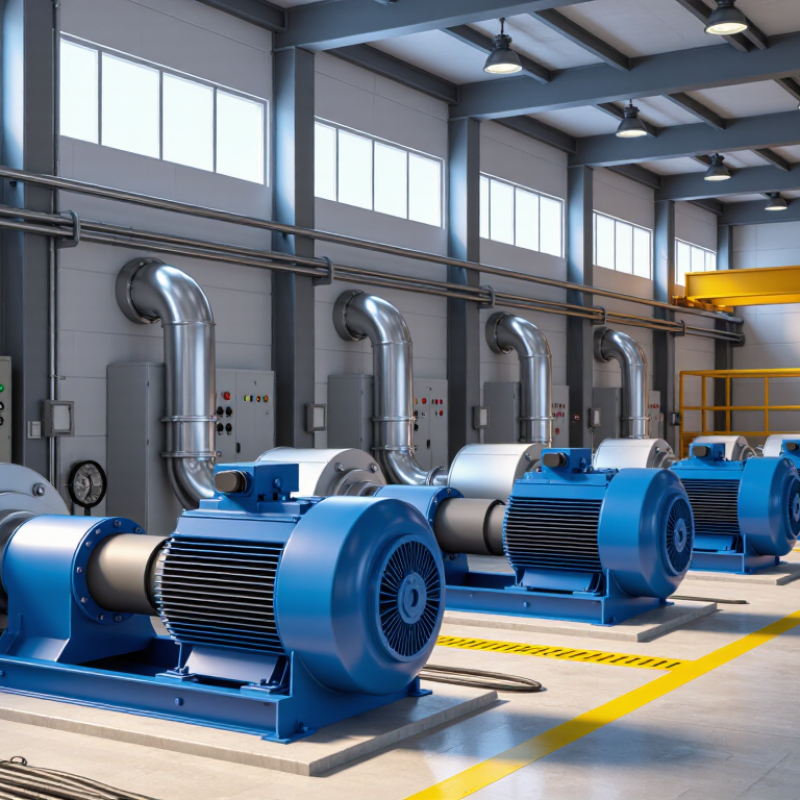
Roots Blower Fundamentals: Positive-Displacement Airflow and 0.3–1.0 bar(g)
Roots blowers create airflow through positive displacement. Each rotation traps a measured air volume and moves it downstream. Pressure does not come from the blower alone; system resistance creates it. This distinction matters when industrial buyers compare seven units for 2026 projects.
The practical operating window is often 0.3–1.0 bar(g). Lower pressure can suit wastewater aeration, pneumatic conveying, and low-pressure gas handling. Near 1.0 bar(g), heat, shaft load, and power demand rise sharply. The U.S. Department of Energy’s compressed-air sourcebook reports that compressed-air systems commonly consume 10–30% of plant electricity. That figure is not a Roots-blower rating, but it exposes the cost of poor system design. CAGI guidance also emphasizes matching displacement, pressure, controls, and filtration to actual demand.
Field selection should begin with measured flow, not catalog airflow. Check inlet temperature, altitude, moisture, backpressure, and duty cycle. A silencer can reduce noise, yet it may increase pressure loss if undersized. A variable-speed drive can improve part-load performance, but savings depend on the demand pattern. This is where buyers sometimes overtrust projected efficiency. The estimate may look precise. Real plants are rarely precise. Verify performance against ISO 1217 testing principles, operating logs, and a site pressure survey before approval.



Get in touch with us,
We will contact you shortly!
What is the difference between Unline(Non-Epoxy Coated) or Lining(Epoxy Coated) Metal Drum?

What are Unline(Non-Epoxy Coated) and Lining(Epoxy Coated) drums compatible with?
What is the difference between Grade A and Grade B Metal Drum ?
What content is suitable to fill in a Recon Grade A or Grade B Drum?
What is the difference between Open Top and Close Top Drums and their usage?
What type of content are Metal or Plastic Drums suitable for?
Will there be any contamination in the reconditioned metal, plastic drums or IBC tanks?
What is the drum gauge(thickness) and weight for reconditioned metal drums?
Do you sell New Packaging Products too?
What additional services do you provide apart from selling reconditioned and new containers.?
Do you offer labelling and silkscreen on the containers ?
Are you able to ship overseas ?
Leading the Way
to Carbon Neutrality