
5 Tips to Understand RCCB Meaning
Understanding Rccb Meaning starts with a simple question: what does this device actually protect against? An RCCB, or residual current circuit breaker, monitors the current flowing through live and neutral conductors. When some current leaks elsewhere, such as through damaged insulation or a faulty appliance, the imbalance can trigger a rapid disconnection. That response may reduce the risk of electric shock and electrical fires. It is not a magic shield.
A familiar example is a kettle with a damaged cable. If current escapes its intended path, an RCCB may detect the difference and disconnect the circuit. Its exact performance depends on the device rating, installation, and condition. Important detail. An RCCB generally does not provide overload or short-circuit protection by itself, so suitable overcurrent protection is also needed. The right arrangement depends on the circuit and local electrical requirements.
These five tips will explain how an RCCB works, what its ratings mean, and how to distinguish it from related devices. They will also cover testing and common selection questions. A test button can help check basic operation, but it does not confirm that the whole installation is safe. Small distinction, big consequence. Terminology and product specifications can vary, so check the manufacturer’s instructions and ask a qualified electrician when unsure. Even clear labels can be misread. Understanding the basics helps you ask better questions, though it cannot replace professional inspection.
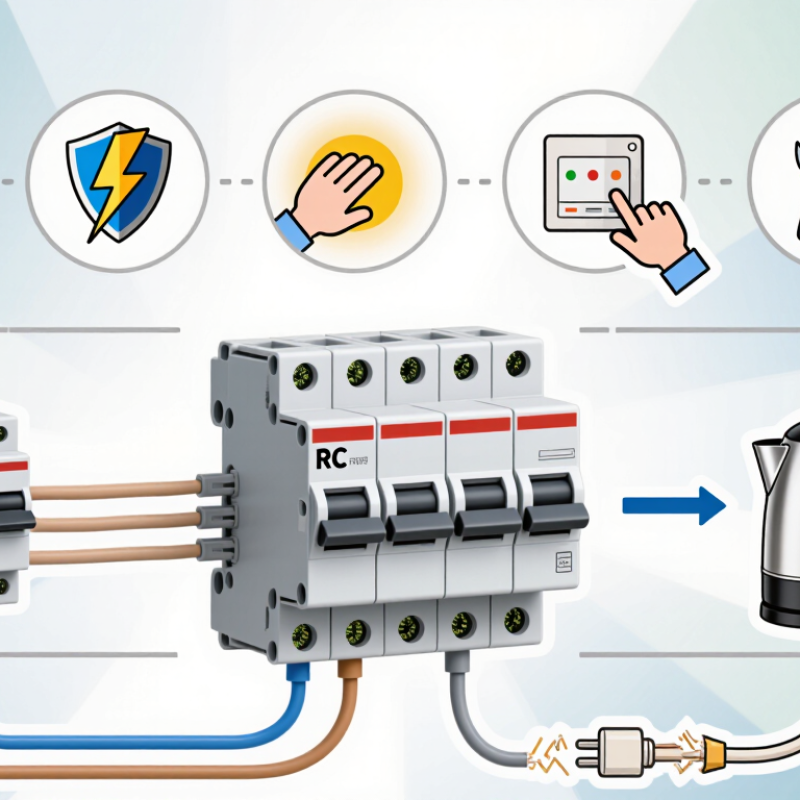
Define RCCB: A Residual Current Circuit Breaker Under IEC 61008-1
RCCB means Residual Current Circuit Breaker. Under IEC 61008-1, an RCCB detects residual current and disconnects a circuit. It compares current flowing through the live and neutral conductors. If some current escapes through an unintended path, the difference may trigger a trip. That matters. An RCCB does not include integral overcurrent protection, so a separate fuse or circuit breaker is generally needed. It cannot detect every electrical danger or compensate for damaged wiring.
Tip: Read the device markings before choosing or checking an RCCB. The rated residual operating current, often shown in milliamps, describes its sensitivity to leakage current. Also check its rated current and pole configuration against the circuit design. A small label can hold important details. Similar-looking devices may serve different purposes.
Tip: Use the test button as directed by the manufacturer and applicable guidance. A successful test checks the device’s operating mechanism, not the entire electrical installation. If the RCCB trips repeatedly, do not keep resetting it without finding the cause. The fault may be intermittent, which can make diagnosis less straightforward. Have a qualified electrician assess the circuit.



Get in touch with us,
We will contact you shortly!
What is the difference between Unline(Non-Epoxy Coated) or Lining(Epoxy Coated) Metal Drum?

What are Unline(Non-Epoxy Coated) and Lining(Epoxy Coated) drums compatible with?
What is the difference between Grade A and Grade B Metal Drum ?
What content is suitable to fill in a Recon Grade A or Grade B Drum?
What is the difference between Open Top and Close Top Drums and their usage?
What type of content are Metal or Plastic Drums suitable for?
Will there be any contamination in the reconditioned metal, plastic drums or IBC tanks?
What is the drum gauge(thickness) and weight for reconditioned metal drums?
Do you sell New Packaging Products too?
What additional services do you provide apart from selling reconditioned and new containers.?
Do you offer labelling and silkscreen on the containers ?
Are you able to ship overseas ?
Leading the Way
to Carbon Neutrality












