
2026 Top Vertical Concrete Mixer Buying Guide

Choosing a Vertical Concrete Mixer in 2026 requires more than comparing drum size and motor power. Construction sites are becoming more cost-sensitive, while contractors still demand consistent batches, easier transport, and dependable service. Grand View Research’s construction equipment market analysis identifies infrastructure investment, rental demand, and equipment modernization as major growth factors. Those forces directly influence mixer purchasing decisions.

Concrete quality depends on details.

A vertical mixer can offer strong blending performance in compact spaces, especially for small batches, repair work, precast production, and remote sites. However, capacity labels may confuse buyers. A 300-liter drum does not always deliver 300 liters of practical output. Material type, loading sequence, moisture content, and discharge design can reduce usable capacity. This guide examines those differences carefully.

Concrete educator Mike Day expresses the field principle clearly: “Buy the mixer that fits your daily pour, not your biggest imagined pour.” His advice supports a practical evaluation method. Buyers should compare mixing efficiency, blade design, power supply, cleaning access, frame strength, operator safety, and local parts availability. MarketsandMarkets’ construction equipment research also highlights automation, productivity, and lifecycle cost as important industry trends.

The cheapest machine may become expensive later.

This guide is not flawless, and market specifications can change quickly. Some manufacturers publish limited performance data, making direct comparisons difficult. Therefore, readers should verify output claims through demonstrations, warranty terms, maintenance records, and independent operator feedback. The best Vertical Concrete Mixer is not necessarily the largest model. It is the machine that performs reliably under the actual conditions of your work.
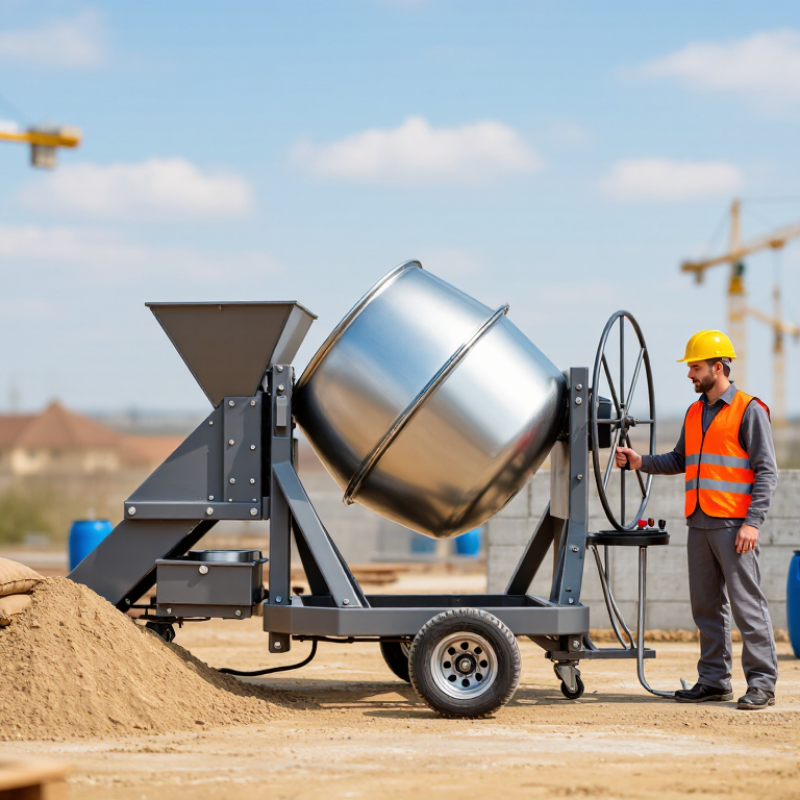
2026 Top Vertical Concrete Mixer Buying Guide

Vertical Concrete Mixers: Definition, Structure, and Operating Principles

A vertical concrete mixer uses an upright drum to blend cement, aggregates, water, and selected admixtures. Unlike horizontal mixers, it relies on upward material movement and gravity-assisted circulation. Its compact footprint suits small construction sites, repair work, and areas with limited access. The design is not automatically better for every mixture. Very dry or heavily graded materials may require longer mixing time.

The main structure includes a vertical mixing vessel, central shaft, mixing blades, drive motor, frame, charging opening, and discharge outlet. Some models use replaceable liners or adjustable blades to manage wear. During inspection, check shaft alignment, blade clearance, weld quality, and guard protection. These details reveal more than painted surfaces. A common buying mistake is judging capacity without considering usable volume.

During operation, workers load aggregate and cement before adding water gradually. The rotating shaft lifts material from the bottom and pushes it outward. Gravity then returns the mixture toward the blades. This repeated circulation helps reduce dry pockets and uneven moisture. In field use, I have found that overloading causes slow mixing and extra motor strain. The result can look acceptable, yet contain hidden inconsistencies. Operators should monitor sound, vibration, discharge texture, and mixing time for each batch. Stop the machine before removing hardened material or reaching into the vessel.


Key Specifications to Compare Before Buying a Vertical Concrete Mixer

Choosing a vertical concrete mixer starts with the work, not the advertised capacity. Compare usable batch volume with your daily output, aggregate size, and available labor. A mixer rated for 500 liters may produce less when filled with heavy, dry material. That difference affects scheduling.

Check motor power, mixing speed, and shaft design together. Higher power can handle stiff mixtures, but it may increase energy use and maintenance demands. Adjustable speed helps when switching between mortar, concrete, and fiber-reinforced mixes. Inspect the mixing blades, liner, and discharge opening. Thick steel parts usually tolerate abrasive aggregates better. Fit matters too.

Measure the installation area before ordering. Include clearance for loading, cleaning, and repairs. Confirm the power supply, phase, voltage, and overload protection with a qualified technician. A small detail here can stop production. Noise matters. So does dust control. Look for accessible grease points, replaceable wear parts, guarded moving components, and clear operating instructions. During a site evaluation, test the mixer with your actual recipe rather than relying only on laboratory claims. Moisture, aggregate shape, and operator habits can change results. I have seen buyers choose a larger machine, then struggle with uneven batches because the motor and blade layout were poorly matched. More capacity is not always better. Recheck the discharge height against your pump, cart, or formwork. A convenient outlet saves time and reduces spilled material. Keep a written record of batch consistency, cleaning time, and power use during the first week. That evidence can reveal whether the specifications fit your real operation.

How to Choose the Right Mixer for Your Materials and Workload

2026 Top Vertical Concrete Mixer Buying Guide

Choosing a vertical concrete mixer starts with the material, not the advertised capacity. The GCCA Concrete Future Roadmap reports that more than 14 billion cubic metres of concrete are produced globally each year. That scale hides major differences in aggregate size, moisture, cement content, and mixing time. A stiff, low-slump mix needs stronger torque than a fluid grout. Fiber-reinforced batches may also wrap around poorly designed mixing tools.

Match the mixer’s working volume to your real batch size. Do not fill the vessel to its stated maximum. A practical target is often 70–85% of usable capacity, leaving room for circulation and moisture changes. Check motor torque, shaft speed, discharge height, and cleanout access. ASTM C94 guidance emphasizes uniformity and delivery control, but a compliant process still depends on suitable equipment. Measure your typical output per hour, then allow time for loading, mixing, discharge, and cleaning.

Small details matter. Wet sand can quietly reduce usable volume. Test it. A vertical mixer can handle dense materials efficiently, yet excessive speed may separate aggregate or trap fibers. The U.S. Department of Energy’s Industrial Decarbonization Roadmap links cement production with significant energy demand, so avoid oversized motors running lightly loaded. I once favored capacity over control; that choice created uneven batches and longer cleanup. The better decision may feel conservative: trial the hardest material, record cycle time, and question every supplier specification.

Safety, Maintenance, and Service Requirements for Long-Term Use

2026 Top Vertical Concrete Mixer Buying Guide

Safety, Maintenance, and Service Requirements for Long-Term Use

Vertical concrete mixers demand more than strong motors and large drums. Their upright design saves floor space, but it can hide buildup around the shaft, blades, and discharge gate. Before each shift, inspect guards, emergency stops, cables, and access covers. Lock out power before reaching inside. Never trust a stopped switch alone.

Operator training should cover loading limits, wet concrete behavior, and abnormal vibration. A mixer may continue rotating briefly after power removal. Keep loose clothing and tools away from moving parts. Record inspections with dates, findings, and corrective actions. These records support reliable decisions and reveal repeated faults. In my experience, small leaks become expensive when ignored. Still, inspection routines are not perfect. Dust, rushed cleaning, and poor lighting can defeat a good checklist.

Tips: Clean the drum and blades after every production cycle. Check grease points, fasteners, seals, and belt tension according to the service manual. Watch for uneven noise or rising motor temperature. Arrange qualified service support before peak season, and confirm spare-part availability, response times, and technician credentials. A practical service agreement should define preventive visits, emergency contact methods, and repair reporting. Test the mixer under a controlled load after maintenance. Do not return it to full production immediately.

Cost Factors, Supplier Evaluation, and Final Purchase Considerations

When planning a 2026 vertical concrete mixer purchase, calculate the full operating cost, not only the quoted machine price. Capacity, motor rating, mixing speed, and discharge height affect productivity and energy use. A mixer producing 12 cubic meters daily may need different wear protection than one running three batches weekly. Include freight, unloading equipment, installation, electrical work, spare liners, and routine maintenance. Small details matter. My first estimate was too optimistic because I ignored local delivery access and technician travel.

Supplier evaluation should begin with evidence, not polished photographs. Request a detailed specification sheet, recent test records, material grades, and clear tolerance information. Ask how quickly replacement paddles, seals, and bearings can be supplied. A capable supplier should explain noise, dust control, cleaning access, and overload protection in practical terms. Contact several existing users with similar aggregate sizes and production schedules. Vague answers are warning signs. However, one unanswered question does not prove poor quality; allow time for technical clarification.

Before signing, compare total cost over three to five years. Check warranty exclusions, commissioning support, payment milestones, delivery inspection procedures, and operator training. Confirm that the frame, gearbox, electrical system, and safety guarding match local site requirements. Request a live demonstration using a comparable mix if possible. Record output, batch consistency, discharge time, and cleaning effort. Do not choose the largest model automatically. Oversizing can increase idle power and maintenance. I would also keep a contingency budget, because concrete dust finds weaknesses quickly.

2026 Top Vertical Concrete Mixer Buying Guide - Cost Factors, Supplier Evaluation, and Final Purchase Considerations

Practical comparison framework for selecting a vertical concrete mixer in 2026
Section Evaluation Dimension Typical Data or Range Why It Matters Recommended Buying Check
Machine Configuration Nominal Batch Capacity 0.25–2.0 m³ per batch Capacity determines output per cycle and affects loading, discharge, transport, and installation requirements. Match the batch size to the actual daily demand rather than selecting the largest available model.
Machine Configuration Practical Output 3–30 m³ per hour Actual production is lower than the theoretical maximum because it includes loading, mixing, discharge, and repositioning time. Request a production estimate based on the intended mix, cycle time, operator skill, and site layout.
Machine Configuration Mixing Cycle 60–180 seconds Shorter cycles can improve productivity, but mixing quality depends on aggregate size, moisture, admixtures, and mixer design. Verify the supplier’s test procedure and confirm that the cycle produces uniform concrete at the target slump.
Machine Configuration Drive Power 7.5–45 kW for many small and medium units Motor power influences mixing performance, electrical demand, start-up requirements, and operating cost. Check motor efficiency, starting current, overload protection, and compatibility with the available power supply.
Machine Configuration Aggregate Size Compatibility Commonly up to 20–40 mm; model-dependent Oversized aggregate can reduce mixing quality, increase wear, and cause blockages or excessive torque loads. Confirm the maximum aggregate size in writing and compare it with the project’s approved mix design.
Machine Configuration Discharge Arrangement Bottom, side, or tilting discharge The discharge method affects cycle time, placement accuracy, cleaning effort, and compatibility with pumps or carts. Review discharge height, opening dimensions, residual material, and access for cleaning.
Cost Factors Purchase Price Approximately US$4,000–US$45,000 before freight and taxes Price varies with capacity, steel thickness, motor power, automation, safety equipment, and included accessories. Compare equivalent specifications and request a line-item quotation instead of comparing headline prices only.
Cost Factors Freight and Delivery Often 5%–20% of equipment value; location-dependent Shipping method, packaging dimensions, port charges, inland transport, and delivery terms can materially change the landed cost. Obtain a delivered-cost estimate that identifies freight, insurance, customs handling, and unloading responsibilities.
Cost Factors Installation and Commissioning Typically 5%–15% of equipment value Costs may include foundations, electrical work, assembly, calibration, testing, and operator training. Clarify whether installation support is included and identify all site-preparation requirements before ordering.
Cost Factors Electrical Consumption Based on motor rating, load, duty cycle, and local energy tariff Energy use is usually lower than the initial purchase cost over the equipment’s service life, but it affects recurring operating expenses. Ask for expected kWh per cubic metre under a stated mix and production rate.
Cost Factors Wear Parts and Maintenance Budget approximately 2%–6% of purchase price annually for routine upkeep Replacement blades, liners, bearings, belts, seals, lubricants, and electrical components affect total ownership cost. Request a spare-parts list, recommended replacement intervals, and prices valid for at least 12 months.
Cost Factors Expected Service Life Commonly 8–15 years with suitable maintenance Service life depends on workload, abrasive aggregate, corrosion protection, operator practice, and parts availability. Evaluate frame construction, shaft support, liner thickness, weld quality, and documented maintenance procedures.
Supplier Evaluation Technical Documentation Specification sheet, manual, drawings, wiring diagram, parts list Complete documentation reduces installation errors and simplifies maintenance, troubleshooting, and resale. Do not approve the purchase until the documents match the quoted model and configuration.
Supplier Evaluation Quality Management Evidence Documented inspection and traceability procedures Consistent fabrication and component control reduce the risk of premature failures and specification deviations. Request inspection records for the frame, welds, gearbox, motor, safety devices, and final test run.
Supplier Evaluation Factory Acceptance Testing No-load and loaded test recommended Testing can reveal abnormal vibration, overheating, leakage, incorrect rotation, poor discharge, or control faults before shipment. Use a signed checklist covering noise, vibration, current draw, cycle time, discharge, and emergency stopping.
Supplier Evaluation Warranty Coverage Commonly 12–24 months, subject to terms Warranty length alone is insufficient; exclusions, response times, labor coverage, and shipping responsibilities determine its practical value. Confirm the warranty start date, covered components, claim process, exclusions, and remedy for repeated faults.
Supplier Evaluation After-Sales Response Target initial technical response within 1 business day Downtime can cost more than a replacement component, particularly on continuous or time-critical projects. Ask for service contacts, escalation procedures, remote diagnostic capability, and typical parts dispatch times.
Supplier Evaluation Spare-Parts Availability Critical parts ideally available within 2–8 weeks Long lead times for proprietary components can interrupt production and increase emergency procurement costs. Identify interchangeable components and purchase critical spares with the original machine.
Safety and Compliance Guarding and Emergency Controls Fixed guards, interlocks where applicable, emergency stop, lockout provisions Moving shafts, belts, gears, and discharge mechanisms create serious entanglement and crushing hazards. Inspect the physical machine and verify that safety functions are included, labeled, and tested before operation.
Safety and Compliance Electrical Protection Overload, short-circuit, phase-loss, and earthing protection as applicable Correct protection reduces motor damage, electrical hazards, and unplanned downtime. Have a qualified electrician verify local voltage, frequency, enclosure rating, cabling, and grounding requirements.
Final Purchase Site and Foundation Requirements Level, load-bearing surface with access for loading, discharge, cleaning, and maintenance Insufficient space or an unsuitable foundation can create vibration, alignment problems, unsafe access, and installation delays. Approve a site drawing showing dimensions, operating clearances, anchor points, drainage, and lifting access.
Final Purchase Automation Level Manual, semi-automatic, or programmable batching Automation can improve repeatability and labor efficiency but increases purchase price and control-system complexity. Select only the level of automation supported by the operator skills, maintenance resources, and production requirements.
Final Purchase Water and Admixture Control Manual measurement to metered dosing systems Accurate water and admixture dosing improves mix consistency and helps control strength and workability. Confirm measurement accuracy, calibration access, cleaning requirements, and compatibility with the mix design.
Final Purchase Operator Requirements Usually 1 trained operator for small and medium units Labor requirements affect production cost, safety, and the ability to maintain consistent batching practices. Include operating, cleaning, inspection, and emergency-response training in the procurement plan.
Final Purchase Total Cost of Ownership Purchase, delivery, installation, energy, labor, maintenance, downtime, and disposal The lowest initial price may not provide the lowest cost per cubic metre over the machine’s useful life. Compare at least a five-year ownership model using the same output, labor, energy, maintenance, and downtime assumptions.
Final Purchase Contract Protection Clear specification, delivery date, payment milestones, acceptance criteria, and remedies A detailed contract reduces disputes over performance, missing accessories, delays, and non-conforming equipment. Attach the final technical specification and make final payment conditional on successful inspection and acceptance testing.
Final Purchase Recommended Decision Rule Select the best verified value, not simply the lowest quote Reliability, support, safety, parts access, and demonstrated performance can outweigh a modest price difference. Use a weighted scorecard: performance 25%, total cost 25%, supplier support 20%, safety 15%, build quality 15%.

Get in touch with us,
We will contact you shortly!

Get in touch with us by filling up the enquiry form. We will contact you shortly!

    What is the difference between Unline(Non-Epoxy Coated) or Lining(Epoxy Coated) Metal Drum?

    What are Unline(Non-Epoxy Coated) and Lining(Epoxy Coated) drums compatible with?

    What is the difference between Grade A and Grade B Metal Drum ?

    What content is suitable to fill in a Recon Grade A or Grade B Drum?

    What is the difference between Open Top and Close Top Drums and their usage?

    What type of content are Metal or Plastic Drums suitable for?

    Will there be any contamination in the reconditioned metal, plastic drums or IBC tanks?

    What is the drum gauge(thickness) and weight for reconditioned metal drums?

    Do you sell New Packaging Products too?

    What additional services do you provide apart from selling reconditioned and new containers.?

    Do you offer labelling and silkscreen on the containers ?

    Are you able to ship overseas ?

    Leading the Way
    to Carbon Neutrality

    Drumming sustainability into every aspect of our operations, we strive to create a greener and more conscious future for generations to come.
    Contact Us
    WhatsApp
    Email
    Join Our Newsletter

    Sign up for our newsletter for exclusive discounts and latest news of new launches!

      Logo Logo Logo Logo Logo
      Scroll to Top