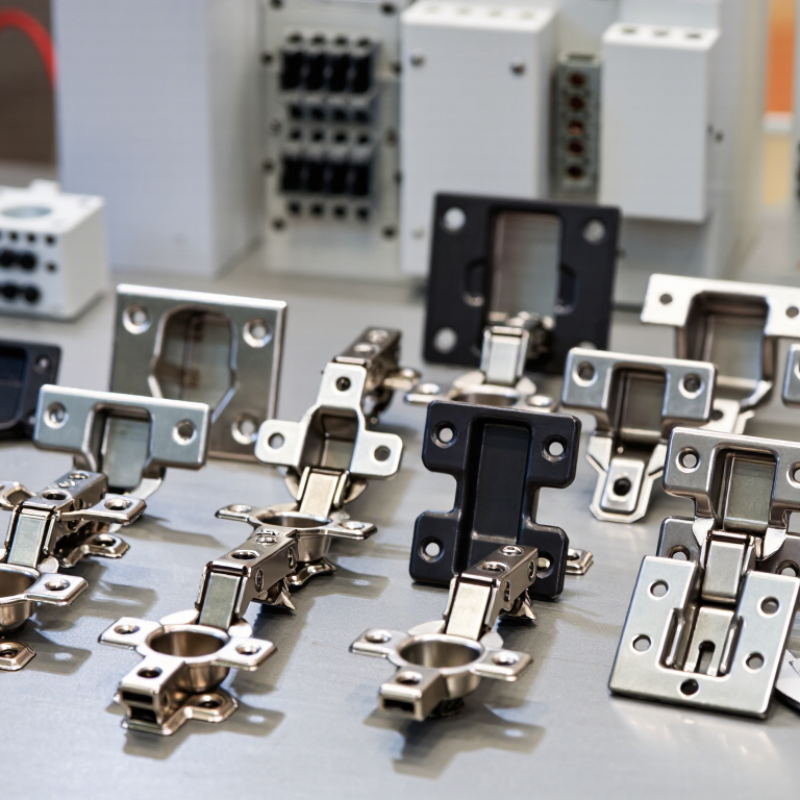
2026 Top Industrial Panel Hinge Manufacturers for Global Buyers

Choosing the right Industrial Panel Hinge manufacturer can affect enclosure safety, service access, and long-term maintenance costs. For global buyers, the decision involves more than comparing unit prices. Material grade, machining accuracy, sealing performance, and production consistency deserve close attention.

This 2026 guide examines leading manufacturers serving industrial enclosure, electrical cabinet, automation, and machinery markets. It considers practical evidence, including load ratings, corrosion-resistant finishes, hinge-cycle testing, dimensional tolerances, and documented quality procedures. Factory experience matters. So does communication.

A reliable supplier should explain its process clearly. Can it provide drawings, samples, inspection records, and traceable material information? Can it maintain the same fit across repeated orders? These questions often reveal more than a polished website. They matter greatly.

Global purchasing adds further challenges. Buyers must review packaging quality, export experience, lead times, minimum order quantities, and technical support across time zones. Regional compliance requirements may also influence material selection and documentation. Requirements vary.

The manufacturers discussed here are assessed through a practical buyer’s lens, not through advertising claims alone. Product catalogs can be incomplete. Independent verification remains valuable. Even experienced sourcing teams may overlook hinge movement under vibration or coating damage around mounting holes.

This is not a perfect ranking. Supplier capabilities change, and published information may age quickly. Still, the comparison offers a clear starting point for engineering teams, distributors, and procurement managers seeking dependable Industrial Panel Hinge solutions in 2026. Test before scaling.

2026 Top Industrial Panel Hinge Manufacturers for Global Buyers

Industrial Panel Hinges: Definition, Functions, and Main Applications

Industrial panel hinges are load-bearing connection components used to attach doors, covers, and access panels to cabinets or machine enclosures. Unlike household hinges, they must tolerate vibration, repeated opening, dust, moisture, and occasional impact. Their main functions include controlled movement, stable alignment, secure closure, and easier maintenance access.

Common designs include lift-off, concealed, friction, weld-on, and adjustable hinges. Material selection matters. Stainless steel suits washdown areas and corrosive environments, while zinc-plated steel often supports cost-sensitive indoor equipment. A hinge may look small, but poor alignment can distort a cabinet door, damage seals, or create unsafe pinch points. That detail is often underestimated.

Applications span electrical control cabinets, factory automation equipment, HVAC systems, transport machinery, energy storage units, and outdoor telecommunications enclosures. MarketsandMarkets reported that the industrial automation market could grow from about 205.9 billion US dollars in 2023 to 265.0 billion by 2028. This expansion increases demand for dependable access hardware, including panel hinges. Grand View Research also identifies enclosure durability and protection as continuing priorities in industrial equipment design. However, major market reports rarely separate hinge sales from broader enclosure hardware. That limitation deserves attention. Buyers should verify cycle testing, load capacity, corrosion resistance, operating temperature, and compatibility with the selected gasket before approval. A hinge that works on a clean factory floor may fail quickly near salt spray or abrasive dust. Field testing remains valuable.

2026 Top Industrial Panel Hinge Manufacturers for Global Buyers - Industrial Panel Hinges: Definition, Functions, and Main Applications

A buyer-oriented comparison of industrial panel hinge types, construction features, operating functions, typical specifications, and application environments. Specifications are typical market ranges and must be confirmed against the final product drawing and test requirements.

Hinge Type Definition and Construction Primary Functions Typical Technical Data Main Industrial Applications Important Buyer Requirements
Concealed Lift-Off Hinge A two-part hinge installed inside or behind the enclosure edge. The panel can usually be lifted away after opening to a specified angle. Provides a clean exterior appearance, supports removable doors, and simplifies maintenance access where complete panel removal is useful. Typical opening: 90°–120°
Materials: zinc alloy, stainless steel, steel, or reinforced polymer
Load: commonly selected for light- to medium-weight doors
Electrical control cabinets, automation panels, machine guards, instrument enclosures, and removable service doors. Check lift-off direction, door clearance, hinge-side space, corrosion resistance, door weight, and alignment tolerance.
External Butt Hinge A visible hinge with two leaves connected by a pin. One leaf is fixed to the enclosure body and the other to the door or panel. Provides a simple, robust pivot with easy installation and straightforward replacement. Typical opening: 90°–180° depending on geometry
Materials: stainless steel, plated steel, aluminum, or zinc alloy
Configuration: fixed-pin or removable-pin
Industrial cabinets, equipment doors, HVAC housings, generator enclosures, and general-purpose sheet-metal panels. Verify mounting-hole pattern, pin retention, door stop requirements, load distribution, and resistance to vibration.
Continuous Piano Hinge A long hinge extending along part or most of the panel edge, distributing the door load over a larger length. Improves door alignment, reduces local stress, limits panel distortion, and supports long or wide access doors. Length: supplied in cut-to-length or standard lengths
Construction: interleaved knuckles with a continuous pin
Materials: stainless steel, steel, aluminum, or brass
Large electrical enclosures, battery cabinets, server and network cabinets, machine covers, and long access panels. Specify hinge length, pin diameter, leaf width, mounting method, required clearance, and cut-edge protection.
Adjustable Concealed Hinge An internal hinge with adjustment features for vertical, horizontal, or depth alignment after installation. Corrects installation tolerances, maintains an even door gap, and helps achieve reliable gasket compression. Adjustment: commonly two-way or three-way
Typical use: precision enclosure doors
Installation: screw-mounted or captive fastener design
Precision automation cabinets, cleanroom equipment, electronic enclosures, and panels requiring repeatable sealing. Confirm adjustment range, tool access, maximum door mass, gasket compression, and compatibility with the enclosure profile.
Spring-Loaded Hinge A hinge incorporating a spring element that assists door opening, closing, positioning, or return to a preferred position. Reduces operating effort, helps hold or return a cover, and can support controlled access to frequently serviced equipment. Spring action: opening-assist or closing-return
Materials: steel, stainless steel, or zinc alloy with spring steel components
Selection: based on door mass and center of gravity
Machine safety covers, control boxes, battery compartments, mobile equipment, and service access doors. Match spring torque to door weight, define operating temperature, check pinch-point risks, and verify cycle-life testing.
Friction or Torque Hinge A hinge with controlled resistance that holds a panel at an intermediate angle without a separate stay or prop. Provides position control, prevents uncontrolled movement, and improves access to display, inspection, and service panels. Operating range: commonly 90°–180°
Torque: specified in N·m and dependent on panel geometry
Adjustment: fixed or adjustable resistance
Operator interfaces, monitor covers, inspection windows, portable instruments, and compact machinery enclosures. Calculate torque at the actual center of gravity, test repeated cycles, and consider temperature-related changes in resistance.
Detachable or Quick-Release Hinge A hinge designed to allow rapid panel removal through a lift-off pin, sliding action, captive release, or tool-assisted mechanism. Reduces service time and provides fast access where doors or covers must be removed regularly. Release method: lift-off, slide-out, pin release, or quarter-turn mechanism
Safety: may include captive pins or secondary retention
Maintenance panels, production machinery, test equipment, packaging lines, and modular electrical enclosures. Specify accidental-release protection, retention method, repeatability, operator access, and service frequency.
Heavy-Duty Weld-On Hinge A robust hinge welded directly to steel or stainless-steel doors and frames for high-load or demanding industrial service. Supports heavy doors, withstands mechanical abuse, and provides a strong permanent mounting connection. Construction: welded barrels, knuckles, and pins
Materials: carbon steel or stainless steel
Use: high-load doors and structural access covers
Industrial machinery, outdoor cabinets, transport equipment, energy systems, heavy steel enclosures, and safety guarding. Evaluate weld procedure, heat distortion, pin lubrication, load rating, door sag, corrosion protection, and field repair needs.
Lift-Off Door Hinge with Gasket Clearance A hinge geometry that permits the door to move away from the frame before or during opening, protecting the gasket from excessive shear. Supports reliable sealing, reduces gasket wear, and allows doors with compression seals to open without binding. Common seal use: EPDM, silicone, neoprene, or polyurethane gaskets
Motion: lift-off, cam action, or offset movement
IP-rated electrical enclosures, outdoor control boxes, washdown equipment, and dust- or moisture-sensitive systems. Confirm gasket profile, compression distance, IP or NEMA enclosure target, door gap, and drainage requirements.
Tamper-Resistant Hinge A hinge designed to make removal or unauthorized access more difficult, often using concealed mounting or non-removable pins. Improves physical security, protects internal components, and discourages unauthorized panel removal. Features: concealed leaves, fixed pins, security fasteners, or captive hardware
Materials: stainless steel, plated steel, zinc alloy, or hardened components
Outdoor utility cabinets, infrastructure equipment, public-access panels, traffic systems, and security-sensitive enclosures. Define threat level, tool access, corrosion exposure, service procedure, emergency opening requirements, and security hardware compatibility.
Stainless-Steel Hygienic Hinge A corrosion-resistant hinge with smooth surfaces, rounded edges, and limited dirt traps for hygienic or washdown environments. Supports frequent cleaning, resists corrosion, and reduces locations where contaminants can accumulate. Common grade: 304 stainless steel; 316 stainless steel for higher chloride exposure
Finish: polished, brushed, or electropolished depending on design
Food-processing machinery, pharmaceutical equipment, medical systems, beverage lines, and coastal or chemical environments. Check material grade, surface roughness requirement, cleanability, chemical compatibility, drainage, and applicable hygiene rules.
EMI or Shielding-Compatible Hinge A hinge selected or designed to maintain enclosure continuity while allowing movement of a shielded access door. Supports electromagnetic shielding, grounding continuity, and controlled door movement in sensitive electronic systems. Typical materials: conductive metals or plated conductive surfaces
Design focus: low-resistance bonding and compatible contact surfaces
Telecommunications cabinets, test equipment, radio-frequency systems, data infrastructure, and industrial control electronics. Evaluate bonding path, surface finish, galvanic compatibility, shielding gasket arrangement, and required EMC validation method.
Multi-Point Door Hinge System A coordinated hinge arrangement using two or more hinge points to support tall, heavy, or high-sealing doors. Improves load sharing, door stability, gasket compression, and resistance to sag during long service life. Configuration: two-point, three-point, or engineered multi-point layout
Selection basis: door height, mass, stiffness, and opening frequency
Large switchboards, industrial control rooms, battery energy storage cabinets, machine housings, and tall outdoor enclosures. Review hinge spacing, frame stiffness, installation sequence, door sag allowance, load distribution, and maintenance access.
Explosion-Protected Equipment Hinge A hinge used on equipment designed for hazardous locations, where the hinge geometry and materials must not compromise the certified enclosure design. Allows safe access while preserving the enclosure’s mechanical integrity and certified protection concept. Application: hazardous-area equipment only when integrated into an approved design
Requirements: certified assembly, controlled clearances, and specified materials
Oil and gas equipment, chemical processing systems, mining equipment, and classified-area electrical enclosures. Do not select the hinge independently; verify the complete certified assembly, applicable hazardous-area standard, temperature class, and installation method.

General selection note: For international purchasing, compare hinge material, load capacity, opening angle, cycle life, corrosion resistance, enclosure sealing requirements, mounting interface, available drawings, inspection documentation, and applicable regional standards. IP, NEMA, EMC, hygienic, and hazardous-area performance applies to the complete enclosure or equipment assembly, not automatically to the hinge alone.

Key Criteria for Evaluating Industrial Panel Hinge Manufacturers

Industrial panel hinge manufacturers should be judged by performance, not catalog size. A hinge may look robust yet fail after repeated door movement. Ask for load ratings, cycle-test results, and dimensional tolerances. Request samples before approving production. Check whether the hinge supports the panel’s weight without sagging.

Material selection needs practical attention. Stainless steel suits humid or corrosive areas, while coated steel may fit controlled indoor environments. Review surface treatment, salt-spray data, pin hardness, and weld quality. A reliable manufacturer should provide inspection records and traceable batch information. Clear technical drawings matter too.

During supplier audits, examine machining consistency and assembly methods. Measure several samples with calipers, not only one perfect piece. Ask how defects are handled, including replacement terms and root-cause reports. Packaging deserves attention; loose hinges can arrive scratched or contaminated. Lead time, minimum order quantity, tooling ownership, and communication speed also affect purchasing risk. A low price can hide weak testing or unstable materials. I have seen polished samples fail to represent regular production. That lesson still matters. No supplier gets every detail right. Choose one willing to disclose limits, correct mistakes, and support field feedback.

Leading Industrial Panel Hinge Manufacturers in 2026

Leading Industrial Panel Hinge Manufacturers in 2026

Industrial panel hinge manufacturers are adapting to stricter enclosure and automation requirements. According to Fortune Business Insights, the global industrial automation market was valued at approximately USD 229 billion in 2024. This growth increases demand for hinges with repeatable movement, corrosion resistance, and stable load performance. Leading manufacturers now focus on stainless steel, zinc-plated steel, and engineered polymers. These materials suit control cabinets, machine guards, and outdoor electrical enclosures.

Quality evidence matters more than catalog claims. ISO 9001-based production systems can improve traceability, inspection records, and batch consistency. The International Organization for Standardization also stresses documented quality processes across industrial supply chains. Buyers should request torque data, cycle-test results, salt-spray testing, and dimensional tolerances. A hinge that feels smooth today may loosen after thousands of cycles. That detail is easy to overlook.

Tips: Match hinge load ratings to the complete door assembly, not the hinge alone. Check mounting clearance with the gasket installed. Ask for samples before bulk purchasing. Test them under vibration, temperature changes, and repeated opening. Reports from MarketsandMarkets identify smart manufacturing and connected equipment as expanding sectors, but their forecasts do not directly measure panel hinges. This limitation deserves attention. Market estimates can guide planning, yet practical testing remains more reliable for a 2026 sourcing decision.

Comparing Materials, Designs, Standards, and Customization Options

Industrial panel hinges must match the enclosure, environment, and maintenance routine. Stainless steel suits washdown areas and coastal facilities. Zinc alloy offers strength with a clean appearance. Engineering polymers reduce weight and electrical conductivity, but they may age faster under heat. In field inspections, hinge pin wear often appears before visible surface damage. That detail is easy to overlook.

Design matters beyond appearance. Concealed hinges protect the mechanism and support a neat cabinet face. Lift-off hinges speed up servicing, while adjustable hinges help correct uneven doors. Buyers should check load ratings, opening angles, mounting clearance, and repeated-cycle performance. Standards add confidence, but certificates require verification. Ask for test reports related to corrosion, ingress protection, and material compliance. IEC 60529 and ISO 9227 may be relevant, depending on the application. A supplier’s quality system is useful evidence, not absolute proof.

Tips: Request samples before approving bulk production. Test the hinge with the actual panel weight, gasket pressure, and fasteners. Confirm thread size, surface treatment, and tolerances in writing. Customization can include pin length, hole spacing, torque, finish, and logo-free packaging. I have seen attractive prototypes fail because the hinge fouled nearby cables. That mistake is preventable. Still, no specification is perfect; field conditions often expose assumptions made during design. Reliable manufacturers explain limits clearly and provide traceable inspection records.

How to read this chart: The values show representative tensile-strength levels for commonly used industrial panel-hinge materials. Stainless steel grades generally provide higher strength and corrosion resistance, while aluminum offers lower weight. Actual performance depends on alloy grade, hinge geometry, pin diameter, load direction, surface treatment, and operating environment.

Industrial buyers should also verify the required design type, mounting configuration, applicable ASTM, EN, or ISO specifications, cycle-life requirements, finish, locking features, and available customization options before approving a hinge for production.

Global Purchasing Factors for Industrial Panel Hinges

2026 Top Industrial Panel Hinge Manufacturers for Global Buyers

Global Purchasing Factors for Industrial Panel Hinges

Global buyers should evaluate hinges beyond unit price. Grand View Research projects the industrial automation market to grow at a 10.5% CAGR from 2024 to 2030. That expansion increases demand for reliable enclosure hardware. A hinge must match panel weight, opening angle, mounting space, and service frequency. Stainless steel suits washdown areas. Zinc-plated steel may fit dry indoor equipment. The choice is rarely universal.

Environmental performance needs measurable evidence. Check corrosion results from ISO 9227 testing, not vague claims. Confirm the enclosure’s IP rating under IEC 60529 when dust or water protection matters. Buyers should also request cycle-test data, load limits, dimensional drawings, and material certificates. A hinge that feels smooth on a sample may loosen after thousands of cycles. That risk is easy to underestimate.

Supply reliability deserves equal attention. The World Bank’s 2023 Logistics Performance Index scored economies from 1.1 to 4.3, showing major differences in delivery capability. Ask about safety stock, packaging, replacement parts, and inspection records. A low price can still be expensive. In my experience, unclear tolerances create more trouble than visible defects. I would also compare two production batches, because one sample proves very little. Procurement teams should document every assumption before approval.

Get in touch with us,
We will contact you shortly!

Get in touch with us by filling up the enquiry form. We will contact you shortly!

    What is the difference between Unline(Non-Epoxy Coated) or Lining(Epoxy Coated) Metal Drum?

    What are Unline(Non-Epoxy Coated) and Lining(Epoxy Coated) drums compatible with?

    What is the difference between Grade A and Grade B Metal Drum ?

    What content is suitable to fill in a Recon Grade A or Grade B Drum?

    What is the difference between Open Top and Close Top Drums and their usage?

    What type of content are Metal or Plastic Drums suitable for?

    Will there be any contamination in the reconditioned metal, plastic drums or IBC tanks?

    What is the drum gauge(thickness) and weight for reconditioned metal drums?

    Do you sell New Packaging Products too?

    What additional services do you provide apart from selling reconditioned and new containers.?

    Do you offer labelling and silkscreen on the containers ?

    Are you able to ship overseas ?

    Leading the Way
    to Carbon Neutrality

    Drumming sustainability into every aspect of our operations, we strive to create a greener and more conscious future for generations to come.
    Contact Us
    WhatsApp
    Email
    Join Our Newsletter

    Sign up for our newsletter for exclusive discounts and latest news of new launches!

      Logo Logo Logo Logo Logo
      Scroll to Top