2026 Top Types of Conveyor Equipment for Global Buyers
Global buyers are entering 2026 with higher expectations for speed, traceability, and labor efficiency. Conveyors Equipment remains a practical foundation for these goals. It moves cartons, pallets, parcels, and components through measurable workflows. Modern systems also connect with scanners, warehouse software, robotics, and safety controls. The right choice depends on load weight, product dimensions, throughput, layout, and maintenance access. There is no universal conveyor solution.
The MHI 2024 Annual Industry Report found that 55% of supply chain leaders planned to increase technology and innovation investment. That finding supports continued interest in automated material handling. The International Federation of Robotics reported 541,302 industrial robots were installed worldwide in 2023. Robotics cannot work efficiently without dependable product presentation and movement. Conveyors often provide that connection, especially in distribution centers, factories, airports, and parcel hubs.
This guide examines the top conveyor types global buyers should evaluate in 2026. Belt, roller, chain, overhead, screw, and flexible conveyors each solve different operational problems. A belt conveyor may carry sealed cartons smoothly across a long line. A powered roller conveyor may handle pallets near a loading dock. A screw conveyor may move bulk materials through enclosed processing equipment. Small details matter. Consider noise, cleaning, spare parts, controls, energy use, and operator safety. Buyers should request verified capacity data, tested cycle performance, and documented service support. Some supplier claims look impressive. They still require careful checking. A lower purchase price can become expensive when downtime, difficult repairs, or incompatible controls appear later.
Conveyor Equipment Basics and Their Role in Modern Material Handling
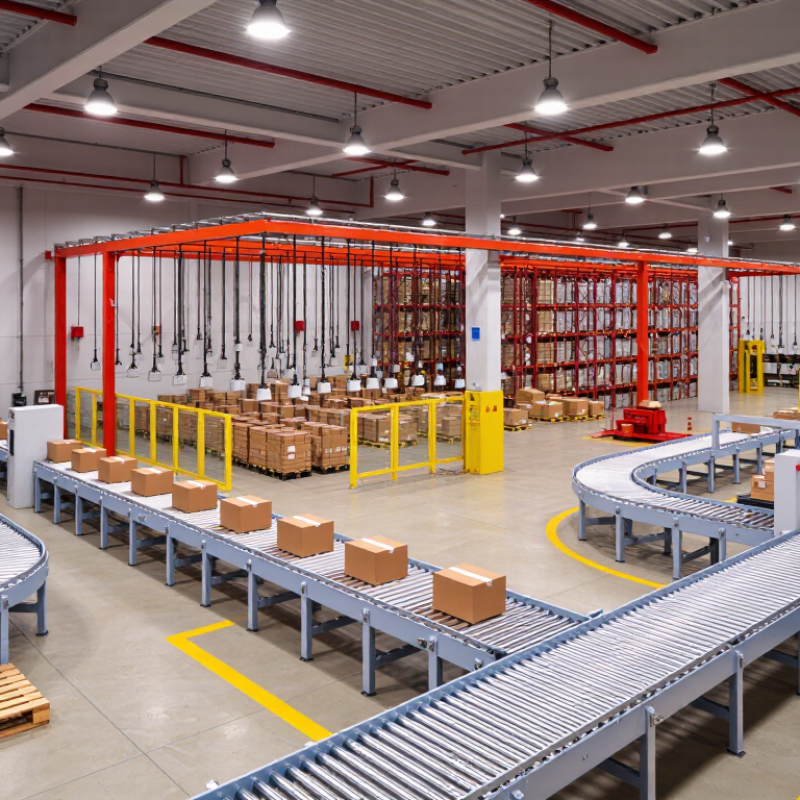
Conveyor equipment forms the working backbone of modern material handling. It moves cartons, parcels, pallets, and bulk materials through warehouses, factories, and distribution centers. Common options include belt, roller, chain, screw, and flexible conveyors. Each design supports a different load, distance, speed, and workplace condition. Speed matters. A belt conveyor suits packaged goods, while powered rollers handle rigid cartons with stable bases.
Good selection starts with the material, not the equipment catalogue. Measure product weight, dimensions, surface, temperature, and daily throughput. Also record loading points, discharge heights, available floor space, and cleaning needs. A small carton can stall on a wide roller gap. Dust can shorten component life. Moisture can affect traction and electrical protection. These details often decide whether a system runs smoothly or creates repeated manual handling.
Conveyors improve flow by reducing lifting, walking, and unnecessary transfers. They can connect receiving areas with storage, packing, inspection, and shipping stations. In practice, a simple layout often performs better than a crowded one. Leave access around motors, guards, sensors, and emergency stops. Maintenance teams need room to work. Not always. An early design may look efficient but ignore noise, operator posture, or future volume. Reviewing real operating data after installation can reveal those weaknesses. Measure twice. Then adjust the layout before adding more equipment.
Main Conveyor Types and How Each System Moves Materials
2026 Top Types of Conveyor Equipment for Global Buyers
Main Conveyor Types and How Each System Moves Materials
Conveyor equipment moves materials differently, so application details matter more than catalog speed. Belt conveyors carry cartons, bulk solids, and uneven loads on a continuous moving belt. Roller conveyors use powered or gravity-driven rollers, making them practical for boxes with firm, flat bases. Chain conveyors push pallets or heavy containers through fixed positions. They are strong, but often louder and less flexible.
Screw conveyors rotate a helical flight inside a trough, moving powders, granules, or wet mixtures over short distances. Bucket elevators lift loose materials vertically in repeated compartments. Pneumatic conveyors suspend powder in an air stream, reducing floor congestion but increasing energy demand. Overhead systems move products above workers and equipment, often through painting or assembly areas. Very useful there.
MarketsandMarkets estimated the global conveyor system market at about USD 9.4 billion in 2024, with continued growth projected through 2029. Its analysis also identifies belt systems as a leading segment because of their broad material-handling range. The Freedonia Group’s industry research highlights expanding automation demand in distribution and manufacturing facilities. Yet market figures differ by equipment scope, and that weakness deserves attention. A buyer comparing only purchase price may miss motor efficiency, belt replacement, transfer points, and cleaning time. In a dusty plant, one poorly sealed transfer can become the real operating cost. Pilot testing is still wiser than trusting a perfect spreadsheet.
Key Features for Comparing Conveyor Equipment Across Industries
When global buyers compare conveyor equipment in 2026, capacity is only one measure. Grand View Research valued the global conveyor systems market at about USD 7.4 billion in 2023. It forecasts roughly 5.1% annual growth through 2030. That growth hides major differences. A parcel hub may need high-speed belt tracking, while a food plant needs washdown resistance and controlled contact surfaces. Start with the product, not the catalog.
Compare payload, dimensions, elevation, speed, accumulation, and duty cycle in one table. Roller conveyors suit firm cartons and flexible layouts. Belt conveyors handle irregular packages and inclines more reliably. Chain systems tolerate heavier loads, but usually require stronger guarding and lubrication controls. Check the motor’s continuous rating, not only peak output. MHI’s 2024 Annual Industry Report identifies robotics and automation as expanding priorities for supply-chain leaders. Conveyors must exchange signals cleanly with scanners, sensors, and warehouse software. Compatibility is practical, not decorative.
Ask for noise readings, emergency-stop spacing, spare-part lead times, and maintenance access. Measure energy use per operating hour where possible. Safety expectations also make guarding, pinch-point control, and lockout procedures essential. Local requirements still need verification. Total cost is easy to underestimate. Installation, downtime, cleaning, training, and belt replacement may exceed the purchase price. Commissioning reviews often reveal elegant layouts that operators cannot reach safely. That weakness matters. Supplier test data helps, but witnessed trials under real loads are better. No spreadsheet captures every surprise.
2026 Top Types of Conveyor Equipment for Global Buyers
Indicative operating-speed ranges help buyers compare conveyor technologies across manufacturing, warehousing, mining, food processing, and logistics applications. Actual performance depends on material characteristics, conveyor length, incline, load, and safety requirements.
Operating speeds are representative engineering ranges commonly used for preliminary equipment comparison, not guaranteed performance limits.
Global Buying Factors: Standards, Costs, Installation, and Maintenance
In 2026, global buyers will compare belt, roller, chain, screw, and flexible conveyors. The best choice depends on product weight, floor space, hygiene, and speed. Belt conveyors suit cartons and packaged goods. Roller conveyors support pallets and rigid boxes. Screw conveyors handle powders, but cleaning them can be slower.
Compliance should guide the purchase before price discussions begin. Buyers should request risk assessments aligned with ISO 12100 and safety controls aligned with ISO 13849-1. Electrical requirements may differ across regions. The MHI 2024 Annual Industry Report found that 55% of supply chain leaders expected increased technology investment. That interest can raise demand for sensors and connected controls. However, smart features do not automatically improve a weak layout. Installation costs often include foundations, guarding, controls, testing, training, and temporary production losses. These hidden items can exceed the equipment quotation. I have seen projects fail because the conveyor fit the product, but not the building.
Tips: Ask for a five-year ownership estimate. Include energy, spare belts, inspections, cleaning, and technician hours. Request maintenance access around bearings and motors. The U.S. Department of Energy reports that motor systems represent a major share of industrial electricity use, so efficient drives deserve careful review. Still, efficiency claims need measured operating data. Leave room for doubt. A low-cost conveyor may become expensive after repeated stoppages.