
2026 Best Capacitive Switch Manufacturers for Global Buyers
As global demand for responsive interfaces grows, capacitive switch technology is entering more control panels, appliances, medical devices, and industrial equipment. The 2026 Best Capacitive Switch Manufacturers for Global Buyers guide examines suppliers beyond attractive product pages. It considers engineering experience, material quality, customization capability, testing discipline, and long-term service.
A dependable manufacturer should understand more than touch sensitivity. It should manage overlay design, printed circuitry, adhesive selection, environmental sealing, and connector reliability. Buyers should also review evidence, including ISO certifications, electrical test procedures, sample approval records, and documented quality controls. A switch may feel excellent in a showroom yet fail after repeated cleaning, moisture exposure, or temperature changes. Real performance matters.
No single supplier is ideal for every project. That is worth admitting. Some manufacturers excel at small prototypes, while others handle high-volume production more effectively. Pricing can also hide tooling fees, inspection costs, packaging requirements, or extended lead times. This guide compares notable Capacitive Switch manufacturers through a practical global purchasing lens. It highlights their technical strengths, typical applications, production flexibility, communication standards, and export readiness. Readers should still request current specifications and test samples before making a final decision. Supplier information can change quickly. Careful verification remains essential.
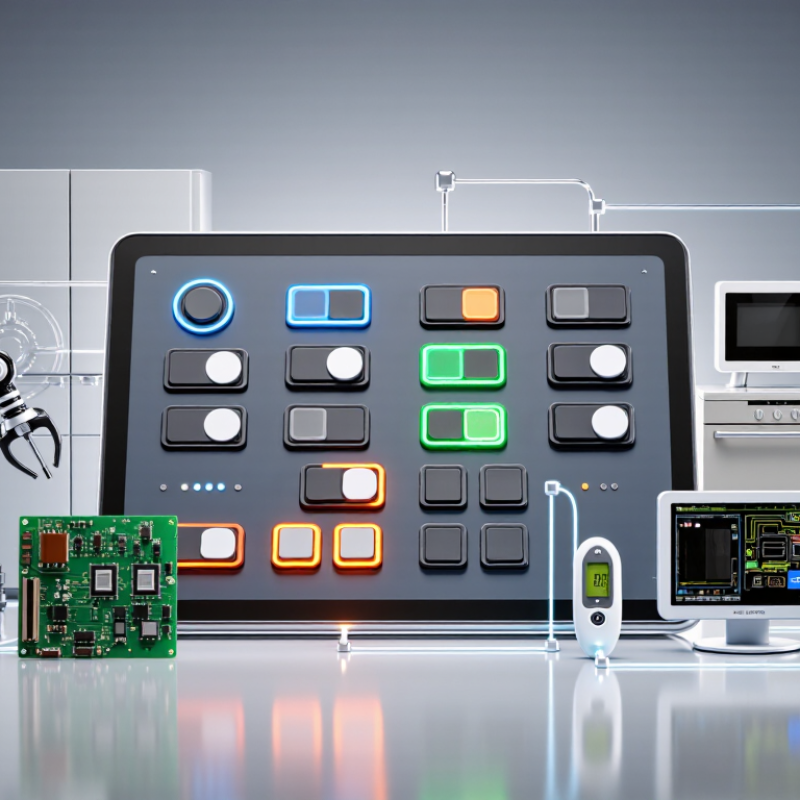
What Capacitive Switches Are and Why Global Buyers Use Them
Capacitive switches detect changes in electrical capacitance when a finger approaches or touches a sensing area. Unlike mechanical buttons, they have no moving contact to wear out. This allows a smooth surface, often behind glass, plastic, or a sealed overlay. Operators can wipe it clean quickly. That matters in medical equipment, kitchen appliances, industrial panels, and public control systems. The response feels quiet and modern, though it may seem less tactile than a physical button.
Global buyers choose capacitive switches for flexible designs, low maintenance, and strong resistance to dust or moisture when properly sealed. However, performance depends on electrode layout, overlay thickness, grounding, firmware, and installation conditions. Wet fingers, thick gloves, or nearby metal can reduce sensitivity. A reliable manufacturer should explain these limits, provide test samples, and document electrical ratings, environmental testing, and quality controls. Specifications alone are not enough. Real testing reveals uncomfortable details.
Tips: Ask for samples that match your final overlay and enclosure. Test dry hands, wet hands, gloves, and repeated cleaning. Confirm operating temperature, response time, surface durability, and controller compatibility. Request traceable inspection records and clear change-control procedures. Do not assume a switch tested in a laboratory will behave identically on your production line. That assumption can fail. A small pilot run may cost more initially, but it can expose alignment, grounding, or false-trigger problems before larger orders begin.

How to Evaluate Capacitive Switch Manufacturers in 2026
Evaluating capacitive switch manufacturers in 2026 requires more than comparing catalog prices. A reliable supplier should explain the sensing method, overlay materials, circuit design, and expected operating life. Ask for samples using your actual glove, moisture, and lighting conditions. A switch that works perfectly in a showroom may fail beside a machine.
Examine manufacturing experience through measurable evidence. Request drawings, tolerance data, inspection records, and traceability for critical components. Review test results for temperature cycling, abrasion, chemical exposure, and repeated activation. Independent laboratory reports can strengthen confidence, but they should match the proposed production version. Ask how firmware, adhesives, and printed conductors are controlled during changes.
Details reveal capability. A serious manufacturer can describe connector placement, backlight uniformity, tactile feedback, and cleaning limits without vague promises. Check whether engineers join design reviews and provide practical recommendations for mounting pressure and panel thickness. Response speed also matters when prototypes need revision.
Do not trust a polished brochure alone. Test reports may hide conditions that differ from your factory. We once treated a successful dry-room trial as sufficient evidence; humidity later changed the touch response. That mistake was avoidable. Require a pilot batch, define acceptance criteria, and record failures openly. The strongest supplier is not the one claiming zero problems, but the one showing how problems are detected, corrected, and prevented.
Leading Capacitive Switch Manufacturers for International Markets
Capacitive switch manufacturers serving international markets must offer more than attractive front panels. Buyers need stable sensing performance across different climates, production standards, and installation conditions. Experienced suppliers discuss actuation force, sensitivity, response time, surface materials, and expected service life before quoting a design.
Testing evidence matters. Reliable manufacturers should provide sample results, electrical specifications, inspection records, and traceable production information. Their switches may need to operate behind glass, acrylic, stainless steel, or printed overlays. Outdoor equipment also demands careful attention to moisture, dust, temperature changes, and ultraviolet exposure. Small details can decide whether a switch works well in a factory or fails after shipment.
Communication is another practical test. A capable supplier explains tolerances clearly and confirms whether the product supports regional certification requirements. They should also manage packaging, labeling, documentation, and replacement parts for overseas delivery. Custom symbols and multilingual markings can reduce installation mistakes. Short lead times sound impressive, but rushed validation creates risk. No manufacturer is perfect. A sample can perform well while mass production reveals inconsistent adhesive strength or uneven illumination. Buyers should inspect pilot batches and ask difficult questions before approving large orders. That extra review may feel slow, yet it protects quality across international projects.
Key Technologies and Customization Options to Compare
2026 Best Capacitive Switch Manufacturers for Global Buyers
Choosing a capacitive switch manufacturer requires more than comparing unit prices. Key technologies affect accuracy, durability, and user comfort. Self-capacitance suits simple touch points, while mutual-capacitance designs support multiple inputs and better gesture control. Ask how the controller handles water, gloves, electrical noise, and accidental touches. These details often decide whether a panel works reliably on a factory floor or inside medical equipment.
Tips: Request samples with your actual overlay, cable length, lighting, and operating conditions. Test them with wet fingers, protective gloves, and repeated presses. A supplier should explain its testing method, material choices, and failure limits clearly.
Customization can include glass or plastic overlays, printed symbols, LED backlighting, haptic feedback, connector placement, and sealed construction. Confirm the required IP rating, EMC performance, temperature range, and service life before approving tooling. In my experience, a polished sample can still hide weak adhesive bonding or uneven illumination. That risk deserves attention. Compare production records, inspection reports, prototype response time, and technical communication. A capable manufacturer should welcome design revisions, but buyers should also document every change. Small assumptions can become expensive defects during mass production.
| Manufacturer Profile | Primary Technology | Typical Applications | Operating Voltage | Switching Method | Ingress Protection Options | Front-Panel Materials | Customization Capabilities | Key Compliance Options | Typical Production Lead Time | Best Fit for Global Buyers | Evaluation Rating |
|---|---|---|---|---|---|---|---|---|---|---|---|
| Industrial HMI Specialist | Projected capacitance Mutual capacitance | Factory automation panels, process controls, machine interfaces, operator terminals | 12–24 VDC standard; other ranges subject to interface design | Momentary touch; maintained-state operation available through controller logic | IP54–IP69K front-panel assemblies, depending on gasket and enclosure design | Tempered glass, chemically strengthened glass, polyester overlays, coated metal | Key legends, symbols, LED indicators, backlighting, connector position, cable length, mounting cut-outs | RoHS, REACH, CE-related EMC and safety requirements where applicable | Approximately 4–8 weeks after approved drawings and samples | Buyers requiring durable controls, repeatable operation, and integration with industrial equipment | ★★★★★ |
| Medical Equipment Interface Specialist | Low-power capacitive sensing Glove-aware tuning | Patient monitors, diagnostic equipment, treatment systems, laboratory instruments | Commonly 3.3–24 VDC at the interface level | Touch activation with configurable sensitivity and debounce filtering | IP65–IP69K options; sealed front surfaces support wipe-down cleaning | Antimicrobial-coated glass, medical-grade overlays, stainless steel, polycarbonate | Glove operation, tactile or acoustic feedback, custom icons, membrane overlays, cleanable surfaces | RoHS, REACH, IEC 61000-series EMC testing; medical-system compliance remains system-level | Approximately 6–12 weeks for validated or regulated designs | Applications prioritizing cleanability, low false-trigger rates, and controlled user interaction | ★★★★★ |
| Outdoor and Harsh-Environment Specialist | Self-capacitance Shielded sensing | Outdoor kiosks, EV charging equipment, access control, agricultural and transport systems | 9–36 VDC is common for embedded control interfaces | Touch activation with environmental compensation and wet-touch filtering | IP65–IP69K; UV-resistant and weather-sealed constructions available | UV-stable glass, polycarbonate, powder-coated metal, stainless steel | Heater integration, anti-glare treatment, hydrophobic coating, sunlight-readable markings, custom sealing | RoHS, REACH, CE-related EMC requirements; UL or other marks may depend on the final assembly | Approximately 6–10 weeks, depending on tooling and environmental testing | Buyers needing reliable operation under moisture, dust, temperature changes, or direct sunlight | ★★★★★ |
| Consumer and Appliance Interface Specialist | Projected capacitance Decorative touch panel | Home appliances, smart controls, lighting products, consumer electronics | 3.3–12 VDC logic interfaces are common | Momentary touch, slider, proximity sensing, or multi-key touch layouts | Usually IP44–IP65, with higher protection available through sealed construction | Glass, printed polyester, acrylic, coated ABS, decorative metal panels | Custom graphics, color matching, printed windows, LED light pipes, touch sliders, icons and logos supplied by the buyer | RoHS, REACH, EMC and product-specific requirements | Approximately 3–7 weeks for established designs; tooling may extend development time | Projects focused on slim appearance, attractive graphics, high-volume production, and low profile | ★★★★☆ |
| Automotive and Transport Interface Specialist | Mutual capacitance Noise-resistant sensing | Vehicle controls, cabin interfaces, rail equipment, fleet and transportation systems | 12 V or 24 V vehicle electrical systems; interface electronics require dedicated protection | Touch, proximity, force-assisted touch, and multi-zone controls | IP54–IP69K depending on location and assembly architecture | Automotive glass, coated metal, hard-coated polymer, decorative film systems | EMI filtering, sunlight compensation, haptic or acoustic feedback, custom connectors, multi-zone layouts | RoHS, REACH, EMC requirements, and customer-specific automotive validation standards | Approximately 8–16 weeks for new designs and environmental validation | Buyers requiring strong EMC performance, vibration resistance, and long-term supply planning | ★★★★☆ |
| Low-Volume Custom Engineering Supplier | Single-touch capacitive Microcontroller-based sensing | Prototype equipment, laboratory devices, specialty machinery, replacement control panels | 3.3–24 VDC, subject to controller and interface requirements | Momentary or latching output; USB, GPIO, open-collector, or relay interfaces may be available | IP54–IP67 commonly available; higher ratings require application-specific validation | Glass, acrylic, polyester, aluminum, stainless steel, custom printed overlays | Small-batch tooling, custom dimensions, wiring harnesses, controller firmware, sample revisions, mixed materials | RoHS and REACH declarations; additional certifications should be verified per project | Approximately 2–6 weeks for prototypes and 4–10 weeks for production orders | Buyers needing engineering support, flexible minimum order quantities, and rapid design changes | ★★★★☆ |
| High-Volume Electronics Manufacturing Supplier | Projected capacitance Automated calibration | Large-scale appliance, consumer, industrial, and smart-device programs | 3.3–24 VDC depending on the controller, interface board, and system architecture | Multi-key touch arrays, sliders, rotary touch controls, and proximity functions | IP44–IP67 depending on the product enclosure and sealing method | Glass, polyester, polycarbonate, coated metal, decorative laminates | Automated testing, custom firmware, printed graphics, integrated LEDs, cable assemblies, production fixtures | RoHS, REACH, CE-related requirements, quality-system documentation, and customer audits | Approximately 6–14 weeks after tooling, process approval, and production qualification | Buyers prioritizing scalable capacity, process consistency, automated inspection, and unit-cost control | ★★★★★ |
Global Compliance, Supply Chains, Pricing, and Buyer Support
The 2026 capacitive switch market rewards manufacturers that make compliance visible. Global buyers should request current test reports, material declarations, and traceability records. Check conformity with relevant electrical safety, electromagnetic compatibility, and restricted-substance requirements. Documents alone are not enough. Review sample labels, inspection records, and change-control procedures.
Supply-chain strength matters when projects cross several regions. Experienced manufacturers should explain component origins, production capacity, safety stock, and realistic lead times. Ask how they handle shortages, tooling changes, and urgent replacement orders. Dual sourcing can reduce risk, but it may also create inconsistent touch performance. That detail is easy to overlook. Factory audits and pilot batches provide stronger evidence than attractive promises.
Pricing needs a wider calculation. Compare unit cost, tooling, packaging, freight, duties, warranty terms, and expected failure rates. A low quotation can hide high adjustment costs. Buyers should request tiered pricing for different volumes and written validity periods. Payment terms also affect cash flow. Reliable support includes engineering drawings, sensitivity guidance, firmware communication, multilingual documentation, and responsive technical contacts. Some manufacturers respond quickly before an order, then become difficult afterward. Ask for escalation procedures and service targets in writing. No supplier is flawless, so assess how openly the team discusses defects, delays, and corrective actions.
Article Source:
Get in touch with us,
We will contact you shortly!
What is the difference between Unline(Non-Epoxy Coated) or Lining(Epoxy Coated) Metal Drum?

Unline drums with internally bare metal surface is more susceptible to corrosion and rust while Lining drums are internally coated with Phenolic Epoxy Coating to provide a non-reactive barrier between the drum surface and your product, less risk of contamination. Note: Our Unline drums are coated with an anti-rust agent after washing to reduce risk of rust.
What are Unline(Non-Epoxy Coated) and Lining(Epoxy Coated) drums compatible with?

In Singapore, Recon Unline Drums are usually more costly than Recon Lining Drums. Hence, we recommend Recon Unline Drums to fill aromatics like Thinner, Xylene, Toulene& other solvents like Hexane, BA, CA, EA, MC, White spirit, etc.
We recommend the lower-priced Recon Lining Drums to fill hydrocarbons like IPA, Methanol, Ethanoland oil-based products like diesel, petrol, lubricants, engine, hydraulic, base, transmission fluid, additives, waste oil, etc.;
What is the difference between Grade A and Grade B Metal Drum ?

Grading of used drums are usually based on physical conditions like rustiness, deformities and residual contents. Grade A drums are totally free from internal rust, serious dents and are easy to clean. Grade B drums have different degrees of rust internally and aesthetically inferior compared to Grade A drums.
What content is suitable to fill in a Recon Grade A or Grade B Drum?

Recon Grade A drum is suitable to fill more costly virgin grade products while Recon Grade B drum is more suitable for recycled or waste products.
What is the difference between Open Top and Close Top Drums and their usage?

Closed top drums are for water and other liquid products. Open Top drums can be used for liquid too but are primarily for more viscous products. The Open Top (or open head with a lid) allows you to get in and out of the drum with your product easier.
What type of content are Metal or Plastic Drums suitable for?

Metal drums offer additional protection when dealing with potentially flammable substances. They provide superior fire resistance, impact protection, and longevity for storing class 1, 2, and 3 volatile chemicals.
Plastic HDPE Drums are suitable for corrosive chemicals like acids, alkaline and also water-based products.
Will there be any contamination in the reconditioned metal, plastic drums or IBC tanks?

All our reconditioned containers (metal/plastic drums, carboys, IBC tanks) are washed thoroughly with specially formulated cleaning agent, rinsed with clean water, dried, and tested for possible leakages during the recondition process. Stringent quality inspection is being conducted 100% on every reconditioned product before they are qualified for sale & delivery.
What is the drum gauge(thickness) and weight for reconditioned metal drums?

Reconditioned metal drums gauge can be 0.9mm to 1.0mm all round. Their weight can vary from 16 to 18kg.
Do you sell New Packaging Products too?

Yes, we are also a distributor for new pallets, metal drums, plastic drums, carboys, IBCs and stainless-steel tanks.
What additional services do you provide apart from selling reconditioned and new containers.?

We are an NEA licensed toxic industrial waste collector, who can collect and dispose of used toxic waste containers in Singapore.
Do you offer labelling and silkscreen on the containers ?

We can provide labelling and silk-screening on the containers.
Are you able to ship overseas ?

Yes, we can arrange export our products to any country in the world.
Leading the Way
to Carbon Neutrality








