How to Choose the Right Poly Drums for Your Storage Needs?

When it comes to liquid storage, choosing the right poly drums is crucial. Industry reports indicate a significant rise in demand for poly drums, driven by their durability and lightweight nature. In fact, the North American market for plastic containers is projected to grow at a compound annual growth rate of 4.2% over the next five years. Such growth highlights their importance in various sectors, from agriculture to pharmaceuticals.

Poly drums offer a range of advantages. They resist corrosion and can handle a variety of chemicals. Their designs allow for easy stacking and transportation. However, not all poly drums are equal. Factors like size, capacity, and chemical compatibility must be evaluated carefully. Choosing incorrectly can lead to spills or even hazardous situations.

There’s more to this decision than merely selecting a container. Reflect on your specific storage needs. Consider the environment in which these drums will be used. Overlooking these details can result in unnecessary complications. While poly drums are often a reliable choice, ensuring they are suitable for your requirements is essential.

How to Choose the Right Poly Drums for Your Storage Needs?

Understanding Different Types of Poly Drums for Storage

When selecting poly drums for storage, understanding the different types available is essential. Polyethylene drums are widely used due to their durability and resistance to various chemicals. According to a recent industry report, the global market for plastic drums is projected to reach $7.5 billion by 2025. This growth is attributed to the increasing demand for safe storage solutions across various sectors.

There are several types of poly drums. High-density polyethylene (HDPE) drums are popular for their strength and UV resistance. They can withstand harsh environments, making them suitable for outdoor storage. Medium-density polyethylene (MDPE) drums offer flexibility, ideal for liquids that require temperature control. However, not all poly drums are the same. Some have lower resistance to certain chemicals, which could lead to leaks or contamination.

Choosing the right drum often involves trade-offs. For instance, while lighter drums may be easier to handle, they might compromise on durability. An inappropriate choice can result in additional costs, such as spills or damage to stored materials. In fact, industry studies indicate that improper storage can lead to a 30% increase in waste generation. Understanding these nuances helps in making informed decisions for your storage needs.

How to Choose the Right Poly Drums for Your Storage Needs? - Understanding Different Types of Poly Drums for Storage

Type of Poly Drum Capacity (Gallons) Material Thickness (mm) Usage Chemical Resistance
Open Head Poly Drum 55 6 Bulk Storage Good
Closed Head Poly Drum 30 5 Transportable Liquid Excellent
Screw Top Poly Drum 15 4 Small Volume Storage Fair
Conical Bottom Poly Drum 55 7 Processes with Sediment Good
Drum with Liner 55 5 Chemical Storage Very Good

Evaluating Material Compatibility for Your Poly Drums

When selecting poly drums, material compatibility is crucial. Different substances react differently. Choosing the right material avoids damage and ensures safety during storage. For example, a drum made from high-density polyethylene (HDPE) may not suit all chemicals. Identify the materials you plan to store and check compatibility.

Here are some tips to help you evaluate material compatibility. Always refer to safety data sheets (SDS) for the chemicals. They provide vital information. Consider the temperature range of your storage needs. Some materials may warp or degrade under heat. A thorough assessment now prevents issues later.

Don’t overlook signs of potential problems. Pay attention to discoloration or unusual odors. They can signal chemical reactions. Keeping an eye on your inventory helps manage risks. It’s essential to adapt your choices as inventory changes. Being aware of your supplies can lead to better decisions.

Poly Drums Material Compatibility for Storage Needs

Assessing Size and Capacity Requirements for Your Needs

How to Choose the Right Poly Drums for Your Storage Needs?

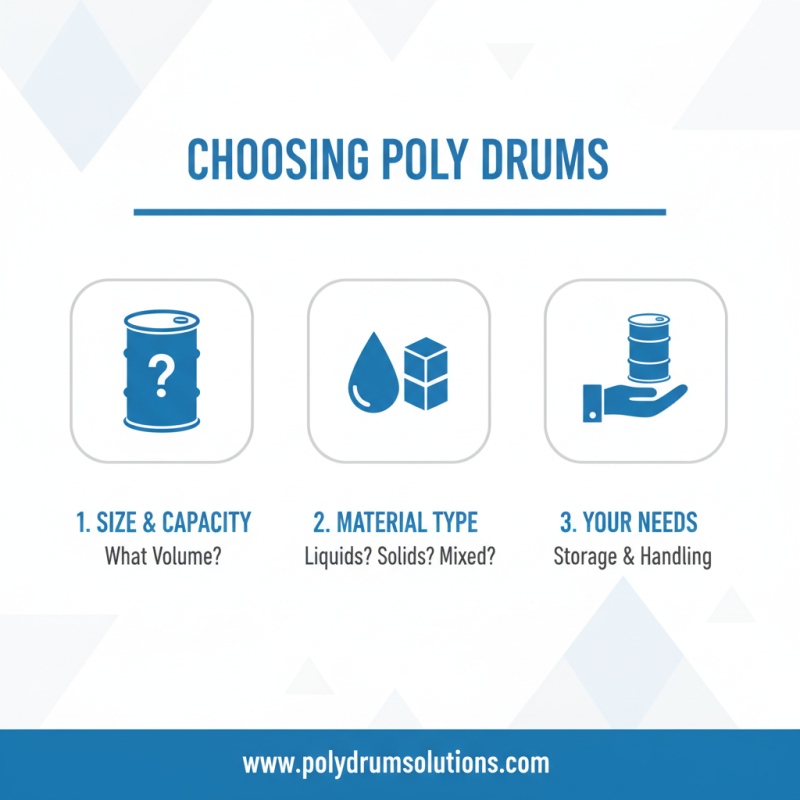
Choosing the right poly drums starts with understanding your size and capacity needs. Think about what you're storing. Consider the volume of materials you need to handle. Will you store liquids, solids, or a mix? Each type requires different considerations.

When assessing size, visualize the space available. Measure your storage area. Ensure that your chosen drums fit both physically and within your budget. If you're storing larger quantities, larger drums may seem tempting. But remember, they can be heavy and cumbersome.

Tips: Always overestimate your needs. It’s better to have extra capacity than to run short. Also, consider the potential for future growth in your storage demands. If your needs may increase, opt for a slightly larger size. Lastly, think about accessibility. Drums should be easy to move and retrieve.

Take into account that not every solution will be perfect. You might face space constraints or budget limitations. Reflect on these aspects while making decisions. By doing this, you create a storage solution that balances practicality with your evolving needs.

Considering the Environmental Conditions for Storage

When selecting poly drums for storage, environmental conditions are crucial. Temperature fluctuations can affect the integrity of your materials. For instance, high heat can cause some poly drums to warp or degrade. Cold conditions may make them brittle. Understanding the climate where drums will be stored is essential for long-term use.

Humidity is another factor. In damp environments, moisture can contaminate contents. Choosing a drum with a seal can prevent this issue. However, seals may not be foolproof. Regularly checking for wear and tear is necessary. Be mindful of potential leaks when stored outdoors as the elements can cause unexpected challenges.

Lastly, consider UV exposure. Direct sunlight can hasten the deterioration of some plastics. If storing outdoors, UV-resistant drums are ideal. Still, nothing guarantees complete protection. Reflect on the balance between cost and durability. It’s a common oversight to prioritize price over quality.

Budgeting and Comparing Costs of Poly Drums

When budgeting for poly drums, it's crucial to assess both initial costs and long-term expenses. According to industry reports, the average price for a standard poly drum ranges between $50 to $150. Prices can vary based on size, capacity, and type of material. Often, larger drums hold more liquid, but they also cost more upfront. This can create a dilemma for businesses with tight budgets.

Comparing costs is essential. Some suppliers may offer discounts for bulk purchases. However, the lowest price doesn’t always mean the best value. A cheaper drum might not be as durable, leading to potential leaks or failures. According to a recent study, 30% of companies reported increased maintenance costs due to poor-quality storage solutions. It’s worth considering these factors.

Understanding your specific storage needs can prevent overspending. For example, if you need drums for hazardous materials, investing in higher-quality options might save money in the long run. These drums often have better sealing techniques. Additionally, consider transportation costs, as heavier drums can increase shipping expenses. Analyze all these variables to make informed decisions.

Get in touch with us,
We will contact you shortly!

Get in touch with us by filling up the enquiry form. We will contact you shortly!

    What is the difference between Unline(Non-Epoxy Coated) or Lining(Epoxy Coated) Metal Drum?

    What are Unline(Non-Epoxy Coated) and Lining(Epoxy Coated) drums compatible with?

    What is the difference between Grade A and Grade B Metal Drum ?

    What content is suitable to fill in a Recon Grade A or Grade B Drum?

    What is the difference between Open Top and Close Top Drums and their usage?

    What type of content are Metal or Plastic Drums suitable for?

    Will there be any contamination in the reconditioned metal, plastic drums or IBC tanks?

    What is the drum gauge(thickness) and weight for reconditioned metal drums?

    Do you sell New Packaging Products too?

    What additional services do you provide apart from selling reconditioned and new containers.?

    Do you offer labelling and silkscreen on the containers ?

    Are you able to ship overseas ?

    Leading the Way
    to Carbon Neutrality

    Drumming sustainability into every aspect of our operations, we strive to create a greener and more conscious future for generations to come.
    Contact Us
    WhatsApp
    Email
    Join Our Newsletter

    Sign up for our newsletter for exclusive discounts and latest news of new launches!

      Logo Logo Logo Logo Logo
      Scroll to Top