How to Choose the Right Plastic Drum Barrel for Your Storage Needs

Choosing the right plastic drum barrel for your storage needs is crucial in optimizing storage efficiency and ensuring the safety of your materials. With the global plastic drum market projected to reach $7.25 billion by 2026, the demand for reliable and versatile storage solutions has never been higher. According to a report by the International Packaging Association, the use of plastic drum barrels has surged by 15% annually, reflecting their importance in various industries, including chemicals, food, and pharmaceuticals.

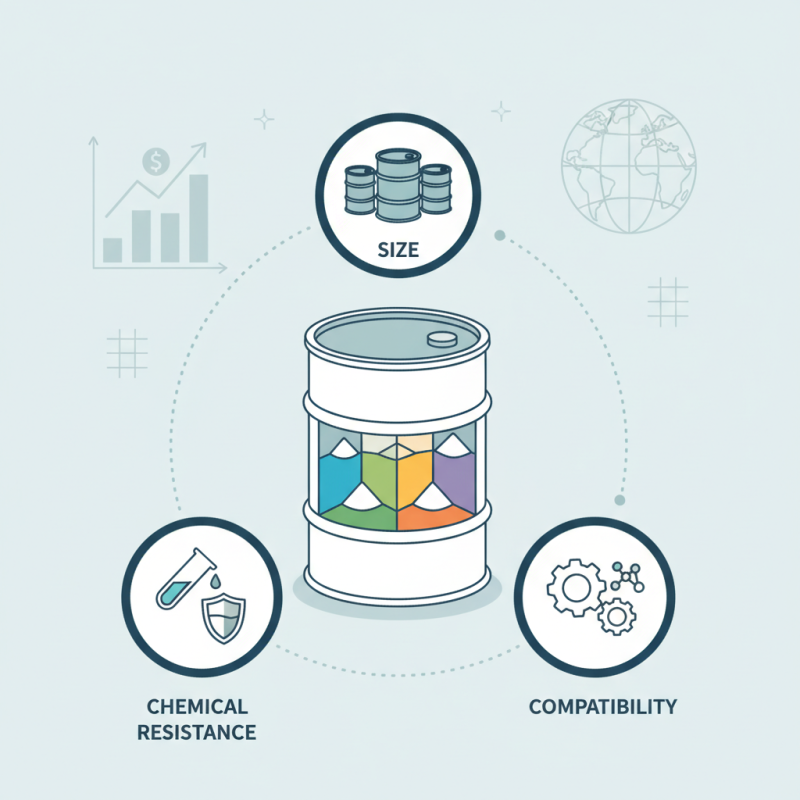
Industry expert Dr. Emily Thompson, a leading researcher in storage solutions, emphasizes the significance of selecting the appropriate plastic drum barrel: "A well-chosen plastic drum barrel not only increases operational efficiency but also minimizes the risk of contamination and material loss." Her insights highlight the necessity for businesses to consider factors such as size, resistance to chemicals, and compatibility with the stored contents when selecting a drum. Understanding your specific storage requirements and the attributes of different plastic drum barrels can lead to more effective inventory management and enhance overall productivity.
How to Choose the Right Plastic Drum Barrel for Your Storage Needs

Factors to Consider When Selecting Plastic Drum Barrels for Storage

When selecting plastic drum barrels for storage, several key factors come into play to ensure you make the right choice for your needs. Firstly, consider the capacity of the drum. Plastic barrels come in various sizes, typically ranging from 5 to 55 gallons. Assess the volume of materials you plan to store and choose a drum that can accommodate both current and anticipated storage needs. An adequately sized barrel reduces the risk of overflow or wasted space, making your storage system more efficient.

Another critical factor is the type of plastic used in the barrel's construction. Look for high-density polyethylene (HDPE) which provides excellent chemical resistance, durability, and UV protection. This characteristic is particularly important if you plan to store corrosive substances or if the barrels will be exposed to sunlight. Additionally, evaluate the barrel’s design features, such as the type of lid (removable or fixed) and seals. A well-sealed barrel helps to maintain the integrity of the stored contents and prevents contamination or spillage, which is essential for safe and efficient storage practices.

How to Choose the Right Plastic Drum Barrel for Your Storage Needs

Factor Description Recommended Size Typical Usage
Material Type Choose based on the chemical compatibility with contents. 30-55 Gallons Chemical storage
Closure Type Consider screw tops, lids, or bungs based on access. 55 Gallons Liquid storage
Weight Capacity Choose based on the density of the materials to be stored. Up to 500 lbs Heavy material storage
Temperature Resistance Select drums that withstand the expected temperature range. Standard and high-temp options Outdoor or industrial use
Portability Features Look for features like handles, wheels, or pallets. Varies based on design Transportable storage

Understanding Different Types of Plastic Drums and Their Applications

How to Choose the Right Plastic Drum Barrel for Your Storage Needs

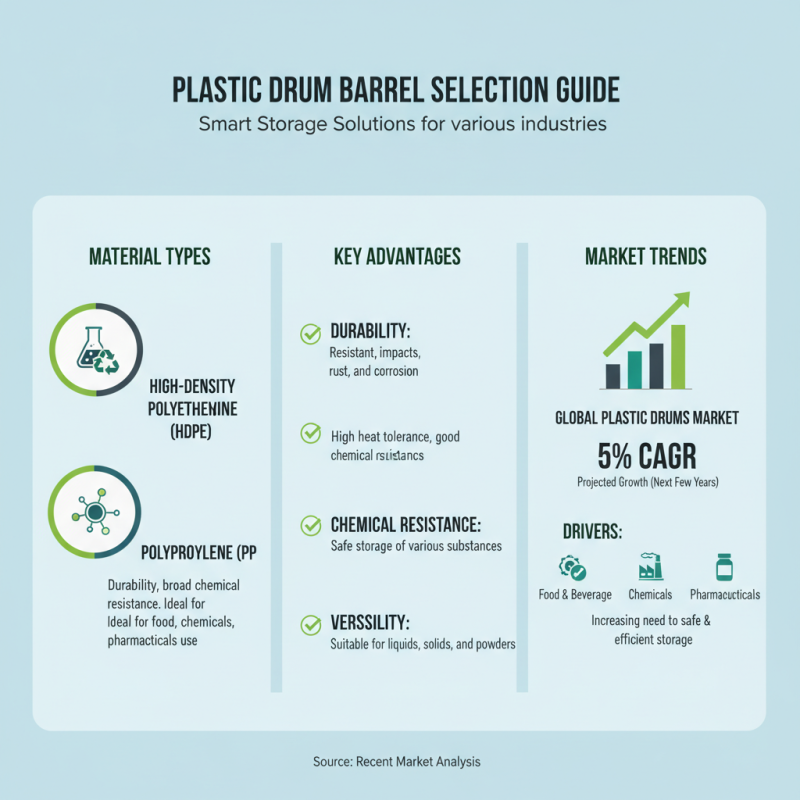
When selecting the right plastic drum barrel for storage purposes, it’s crucial to understand the variety of plastic drum types available and their specific applications. Typically, plastic drums are made from high-density polyethylene (HDPE) or polypropylene, both of which are known for their durability and chemical resistance. According to a recent market analysis, the global plastic drums market is expected to grow at a compound annual growth rate (CAGR) of approximately 5% over the next few years, driven by the increasing need for safe and efficient storage solutions in industries ranging from food and beverage to chemicals and pharmaceuticals.

Different types of plastic drums cater to distinct storage needs. For instance, a closed-head drum is ideal for storing liquids, as it is designed to be sealed tightly to prevent leaks and contamination. In contrast, open-head drums are more suitable for solid materials and allow easy access for loading and unloading. Additionally, choices like UN-rated drums are essential for hazardous materials, providing assurance that they meet regulatory standards. The Packaging Association's data indicates that more than 60% of industrial users prefer using plastic drums over metal alternatives due to benefits like lightweight handling and resistance to corrosion. Understanding these variations and their applications is essential for optimizing storage practices and ensuring material safety.

Capacity Requirements: Determining the Right Size for Your Needs

When selecting the appropriate plastic drum barrel for your storage needs, one of the foremost considerations should be capacity requirements. According to industry reports, the right capacity will largely depend on the volume of materials you intend to store and how frequently you need to access them. For instance, a typical plastic drum comes in various sizes, ranging from 5 gallons to 55 gallons or more. Businesses should carefully assess their inventory levels and usage rates to choose a drum that minimizes the risk of overstocking or underutilizing storage space.

Moreover, understanding the specifics of the materials being stored can help determine the most suitable barrel size. For example, if you are managing fluid materials, the flow rates and the viscosity can significantly affect how often a barrel is emptied and refilled. The American Institute of Chemical Engineers indicates that properly sizing storage containers can lead to increased efficiency and reduced costs by streamlining inventory turnover and reducing the frequency of replenishment. Hence, accurately calculating your capacity needs based on these factors is crucial to ensure that your operational workflow remains uninterrupted and efficient.

Chemical Compatibility: Ensuring Safe Storage with Material Specifications

How to Choose the Right Plastic Drum Barrel for Your Storage Needs

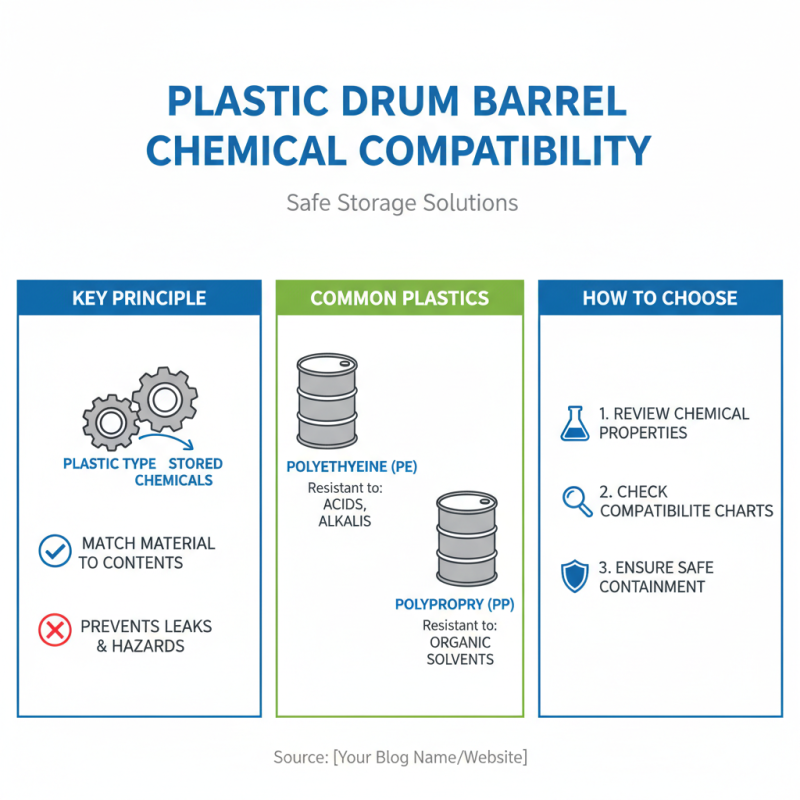
When selecting a plastic drum barrel for storage, understanding chemical compatibility is crucial to ensure safe and effective containment. Different plastics possess varying chemical resistance capabilities, making it essential to match the material of the drum with the substances being stored. For instance, polyethylene barrels are generally resistant to acidic and alkaline solutions, while polypropylene offers enhanced resistance to organic solvents. By reviewing the chemical properties of both the material and the contents, you can prevent reactions that could lead to leaks or potential hazards.

Moreover, considering the temperature and environmental conditions is also vital in determining chemical compatibility. Some plastics can degrade or lose their integrity when exposed to extreme temperatures or UV radiation, potentially compromising the safety of the stored materials. It’s important to consult compatibility charts, which provide detailed information about various chemicals and their interaction with different plastic types. This way, you will make an informed decision that not only safeguards the stored substances but also ensures the longevity and performance of the drum barrel itself.

Regulatory Compliance: Meeting Industry Standards for Plastic Drums

When selecting the appropriate plastic drum barrel for storage, regulatory compliance is a critical consideration that every business must address. Adhering to industry standards not only ensures the safety and integrity of stored materials but also minimizes the risk of legal repercussions. The United Nations has established regulations such as the UN Packaging Standards for hazardous materials, which dictate that plastic drums used for shipping dangerous goods must meet strict testing criteria. According to a report by the European Chemicals Agency, compliance with these regulations helps in preventing environmental contamination and protects public health, with non-compliance potentially leading to costly penalties and damage to reputation.

Moreover, understanding the specifics of regulatory requirements, such as the ASTM D3198 for testing plastic containers, is essential when choosing a drum. This standard focuses on the performance of plastic containers used for hazardous waste and emphasizes the importance of structural integrity, impact resistance, and compatibility with various chemicals. Failure to meet these industry standards can result in significant fines; for instance, in 2022 alone, the U.S. Environmental Protection Agency reported over $30 million in penalties imposed for violations related to improper storage and containment of hazardous materials. Therefore, companies must prioritize compliance not only as a legal obligation but also as a key aspect of operational sustainability and safety.

How to Choose the Right Plastic Drum Barrel for Your Storage Needs

This chart illustrates the distribution of plastic drum types according to their common storage capacities. When choosing a plastic drum, it's essential to consider compliance with industry standards, ensuring safety and effectiveness in storage.

Get in touch with us,
We will contact you shortly!

Get in touch with us by filling up the enquiry form. We will contact you shortly!

    What is the difference between Unline(Non-Epoxy Coated) or Lining(Epoxy Coated) Metal Drum?

    What are Unline(Non-Epoxy Coated) and Lining(Epoxy Coated) drums compatible with?

    What is the difference between Grade A and Grade B Metal Drum ?

    What content is suitable to fill in a Recon Grade A or Grade B Drum?

    What is the difference between Open Top and Close Top Drums and their usage?

    What type of content are Metal or Plastic Drums suitable for?

    Will there be any contamination in the reconditioned metal, plastic drums or IBC tanks?

    What is the drum gauge(thickness) and weight for reconditioned metal drums?

    Do you sell New Packaging Products too?

    What additional services do you provide apart from selling reconditioned and new containers.?

    Do you offer labelling and silkscreen on the containers ?

    Are you able to ship overseas ?

    Leading the Way
    to Carbon Neutrality

    Drumming sustainability into every aspect of our operations, we strive to create a greener and more conscious future for generations to come.
    Contact Us
    WhatsApp
    Email
    Join Our Newsletter

    Sign up for our newsletter for exclusive discounts and latest news of new launches!

      Logo Logo Logo Logo Logo
      Scroll to Top